
Loading, please wait...
LOT 1209
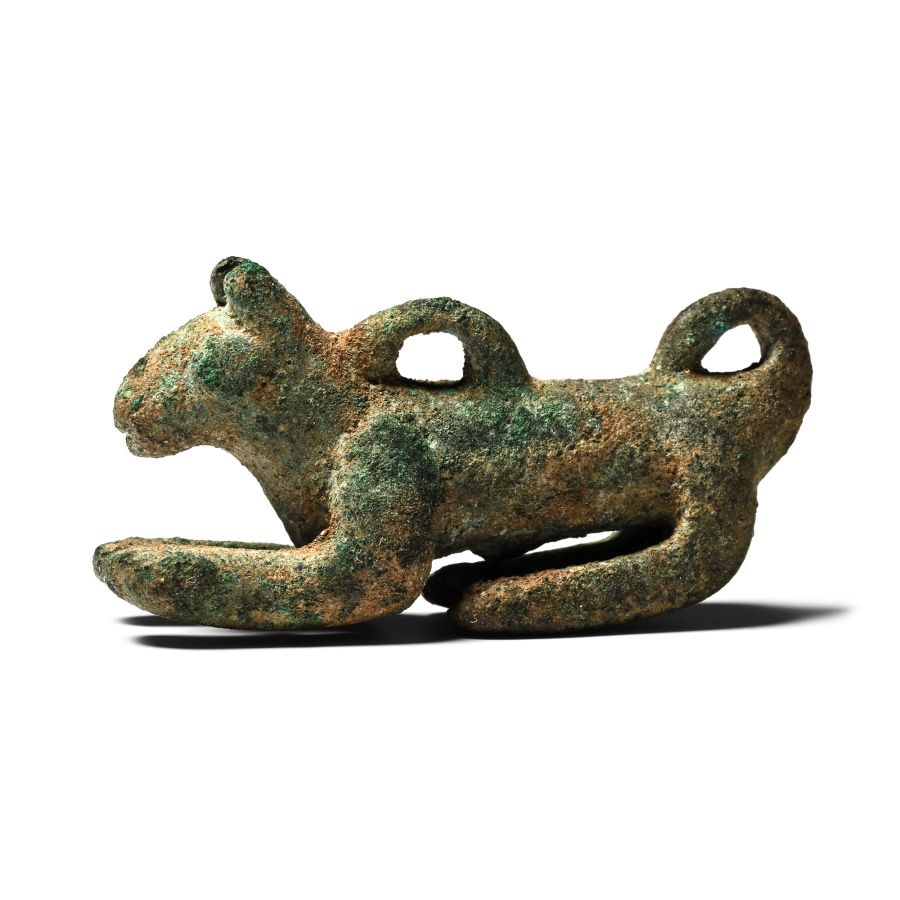
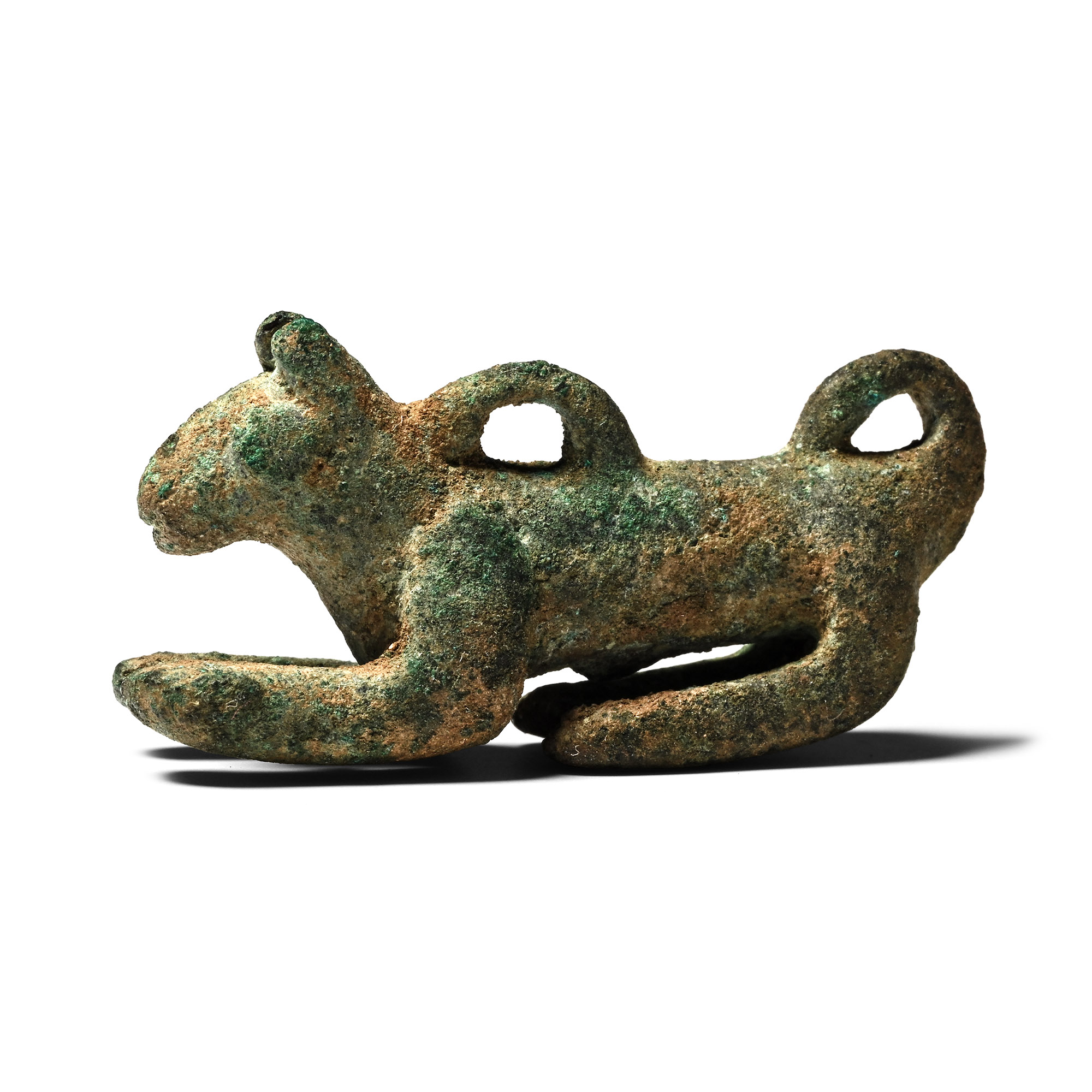
Mesopotamian Bronze Prone Hound
1ST MILLENNIUM B.C.
1 3/4 in. (28.9 grams, 44 mm).
Modelled in the round crouching dog with tail looped over the rump, suspension loop at the shoulders.
ProvenanceUK private collection before 2000.
Acquired on the UK art market.
Private collection, London, UK.
TimeLine Auctions follows a vetting process to ensure the authenticity and legality of all items, reinforcing our commitment to integrity and responsible trading. Each antiquity, antique, and coin lot undergoes thorough examination by a vetting committee of at least ten external specialists, professional trade association members, scientists, and archaeologists: Our Vetting Process
AUCTIONS:
TimeLine is a leading auction house specialising in antiquities, ancient art, collectables, natural history, coins, medals, and books. Our auctions offer museums, collectors, historians, and enthusiasts the opportunity to acquire unique and historically significant pieces.
LOT 1209
Mesopotamian Bronze Prone Hound
Estimate £400 - 600€460 - 700 (for guidance only)$540 - 810 (for guidance only)
-
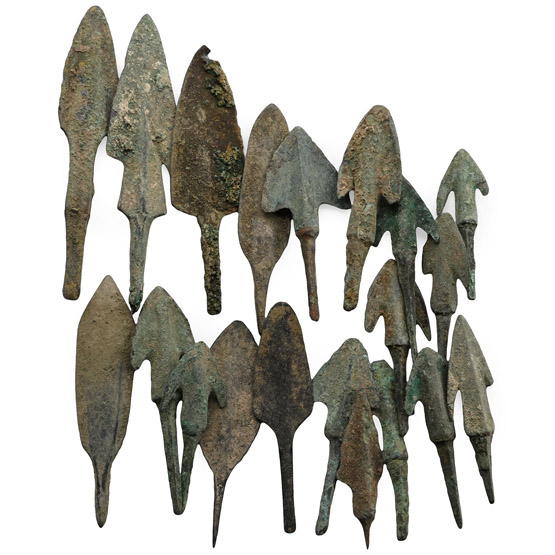
Western Asiatic Bronze Arrowhead Collection
1st millennium B.C.Estimate: £100 - 140 (+bp*)
Opening Bid: £50
Including barbed, barbed-and-tanged leaf-shaped and other types. 125 grams total, 40-75 mm
Ex London, UK, collection, 1990s. -
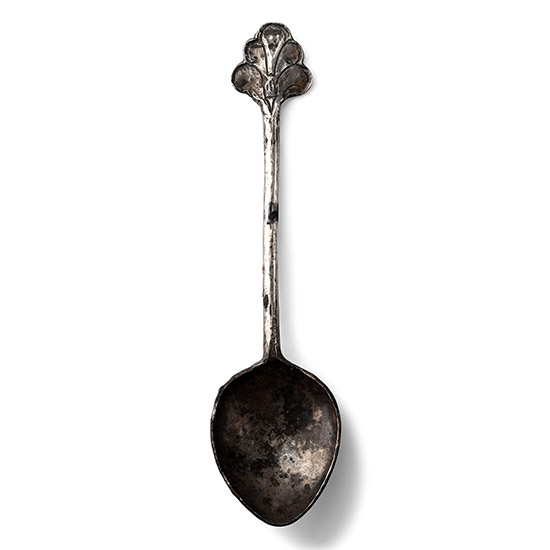
Late Kushan Period Silver Spoon with Brahmi Inscription
5th-6th century A.D.Sold for (Inc. bp): £455
Comprising a shallow piriform bowl with flange rim, round-section shank and palmette finial; incised legend to reverse. 84 grams, 19.8 cm
London, UK gallery, 1971-early 2000s. Private collection, London, UK. -
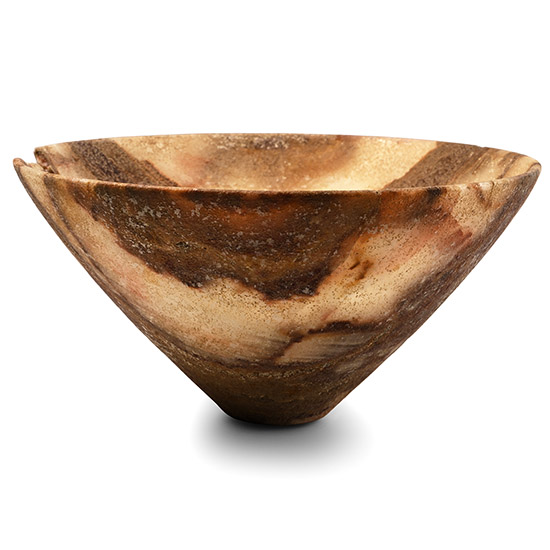
Western Asiatic Banded Alabaster Conical Bowl
2nd-1st millennium B.C.Sold for (Inc. bp): £143
With broad conical profile, narrow base; rim chipped. 434 grams, 15 cm wide
Private collection, UK.
