
Loading, please wait...
LOT 1472
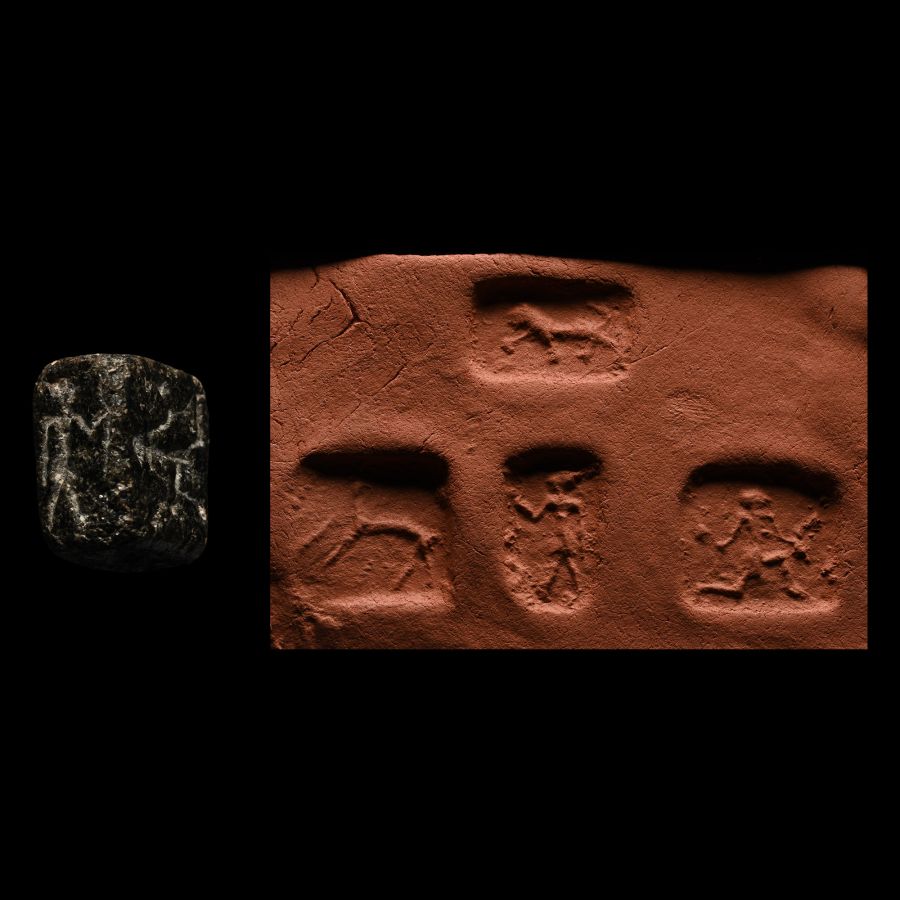
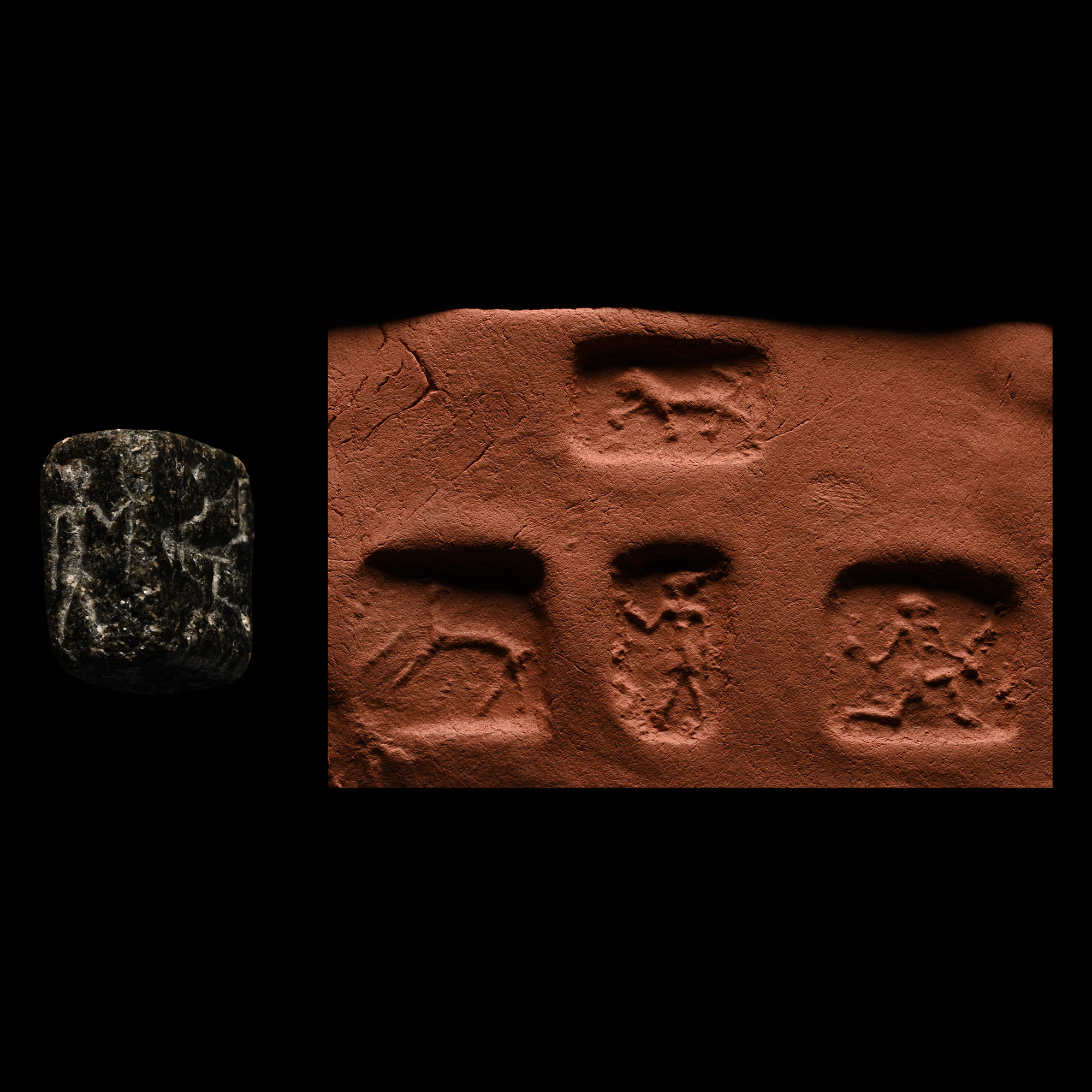
Mesopotamian Black Stone Four-Sided Seal with Heads and Animals
CIRCA 3000 B.C.
3/4 in (3.66 grams, 18.16 mm).
Rectangular in section with incuse design to each face: running feline; crouching figure with arms spread; rearing quadruped; advancing figure in tall headdress; supplied with a museum-quality impression. [No Reserve]
ProvenanceFrom the private collection of the late Mr W.
Magee, Hartlepool, County Durham, UK, 1960s-1990s, thence by descent.
Accompanied by a previous cataloguing information card.
TimeLine Auctions follows a vetting process to ensure the authenticity and legality of all items, reinforcing our commitment to integrity and responsible trading. Each antiquity, antique, and coin lot undergoes thorough examination by a vetting committee of at least ten external specialists, professional trade association members, scientists, and archaeologists: Our Vetting Process
AUCTIONS:
TimeLine is a leading auction house specialising in antiquities, ancient art, collectables, natural history, coins, medals, and books. Our auctions offer museums, collectors, historians, and enthusiasts the opportunity to acquire unique and historically significant pieces.
LOT 1472
Mesopotamian Black Stone Four-Sided Seal with Heads and Animals
Sold for (Inc. bp): £124
-
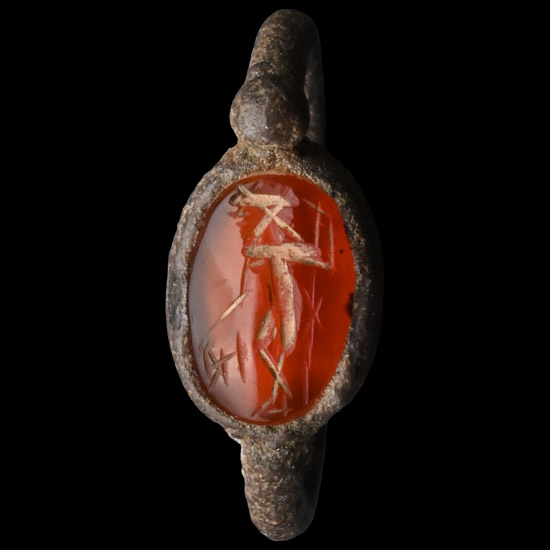
Sasanian Silver Ring with Standing Figure Gemstone
4th-7th century A.D.Sold for (Inc. bp): £176
Round-section hoop with ellipsoid bezel and knop; inset carnelian cabochon with stylised standing figure with spear. 4.38 grams, 25.95 mm overall, 20.46 x 15.85 mm internal diameter (approximate size British O, USA 7, Europe 14.98, Japan 14)
From the collection of a gentleman, acquired on the London art market in the 1990s. -
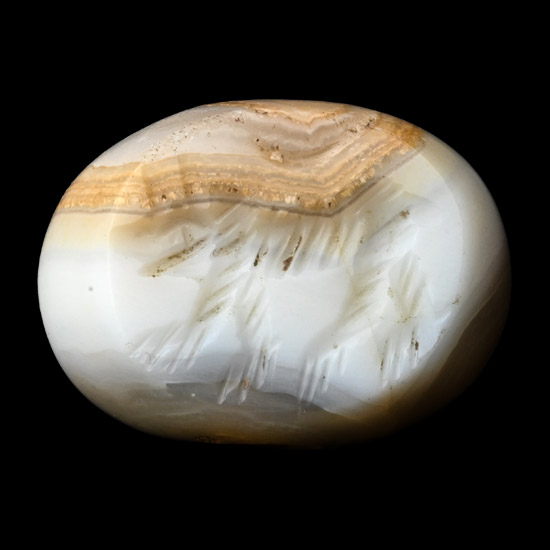
Sasanian Banded Agate Stamp Seal with Wolf
Circa 3rd-7th century A.D.Sold for (Inc. bp): £91
With possibly later frieze of an advancing wolf beneath a crescent moon 11.85 grams, 24.10 mm
From the private collection of a European gentleman (1942-2024), formed since the 1970s. -
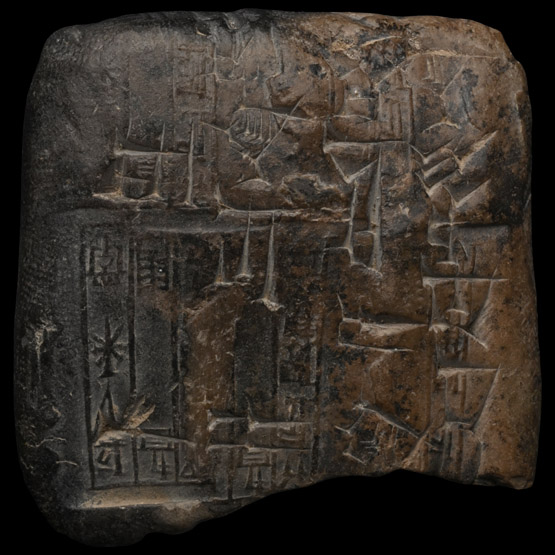
Mesopotamian Cuneiform Tablet with Cylinder Seal Impressions
2nd millennium B.C.Sold for (Inc. bp): £7,020
Pillow-shaped ceramic section with impressed design: obverse with rolled cuneiform impression from a cylinder seal and cuneiform text alongside; reverse with faintly impressed cylinder seal design and flanking cuneiform text. 31.8 grams, 41 mm
Acquired at a London antiques fair in the 1990s. From the private collection of a Devon, UK, lady.
