
Loading, please wait...
LOT 1717
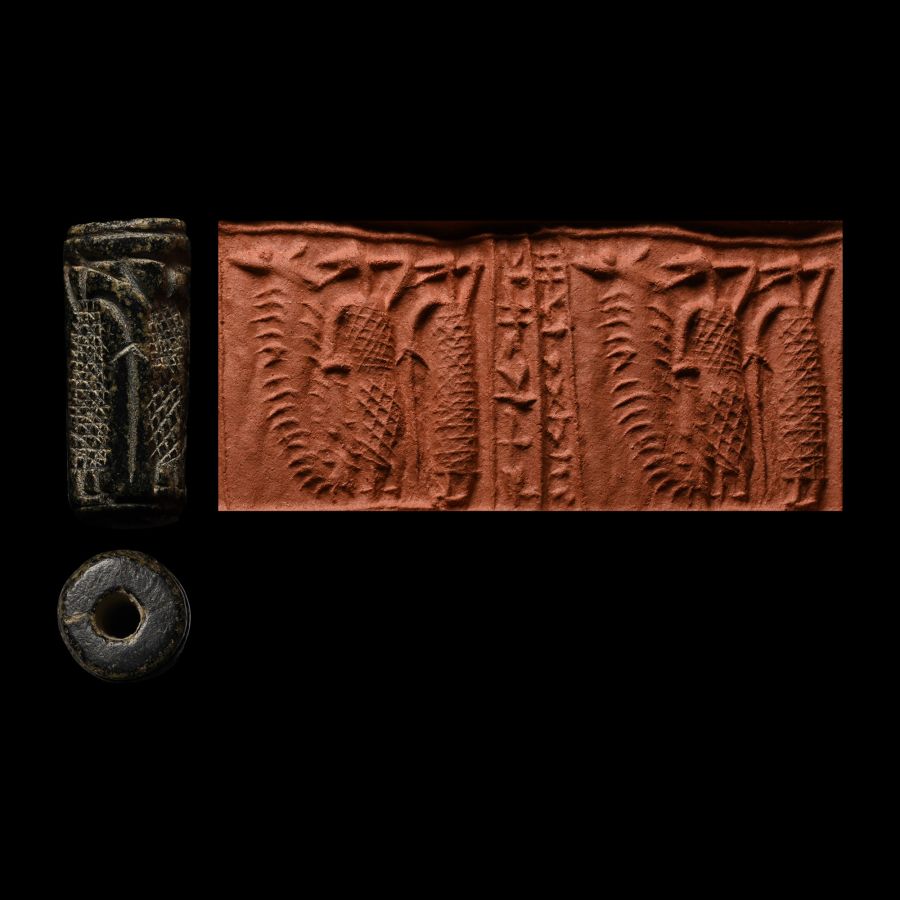
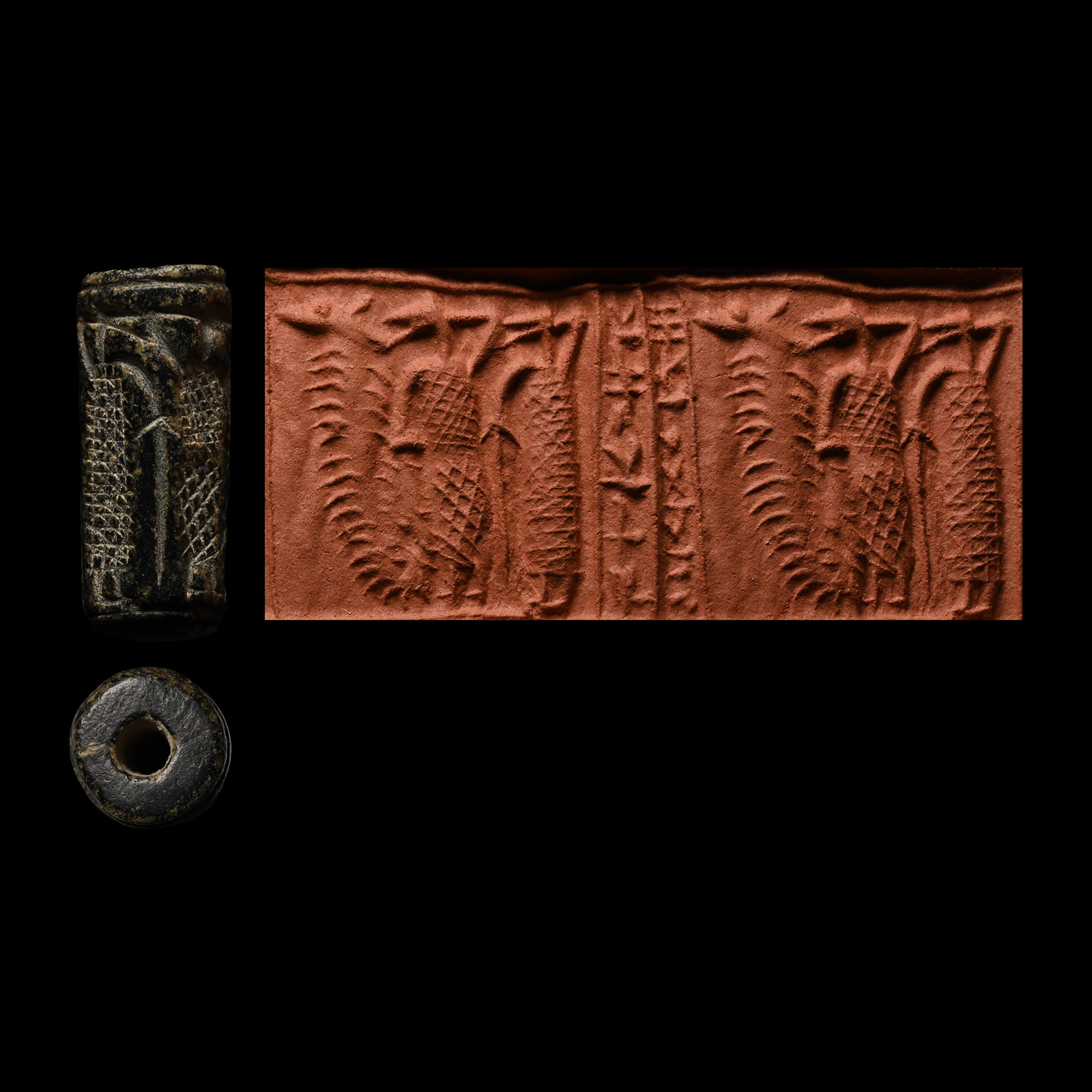
Mesopotamian Black Stone Cylinder Seal with Cuneiform Text
CIRCA 2000 B.C.
7/8 in. (4.22 grams, 22.94 mm).
With frieze depicting two standing figures with hatched bodies and two serpent-heads each, behind a rearing centipede-like creature with triangular head; two columns of cuneiform text; supplied with a museum-quality impression and old collector's record card. [No Reserve]
ProvenanceFrom the private collection of the late Mr W.
Magee, Hartlepool, County Durham, UK, 1960s-1990s, thence by descent.
Accompanied by a previous catalogue information card.
TimeLine Auctions follows a vetting process to ensure the authenticity and legality of all items, reinforcing our commitment to integrity and responsible trading. Each antiquity, antique, and coin lot undergoes thorough examination by a vetting committee of at least ten external specialists, professional trade association members, scientists, and archaeologists: Our Vetting Process
AUCTIONS:
TimeLine is a leading auction house specialising in antiquities, ancient art, collectables, natural history, coins, medals, and books. Our auctions offer museums, collectors, historians, and enthusiasts the opportunity to acquire unique and historically significant pieces.
LOT 1717
Mesopotamian Black Stone Cylinder Seal with Cuneiform Text
Sold for (Inc. bp): £624
-
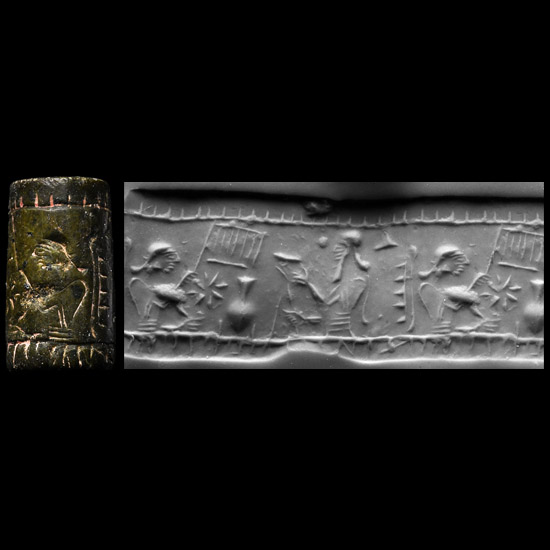
Western Asiatic Black Stone Cylinder Seal with Court Scene
2nd-1st millennium B.C.Sold for (Inc. bp): £338
Frieze depicting a court scene with seated figure in profile holding a dish towards a kneeling figure, with vase, gate and starburst between; supplied with a museum-quality impression. 7.34 grams, 23.74 mm
From the private collection of a European gentleman (1942-2024), formed since the 1970s. -
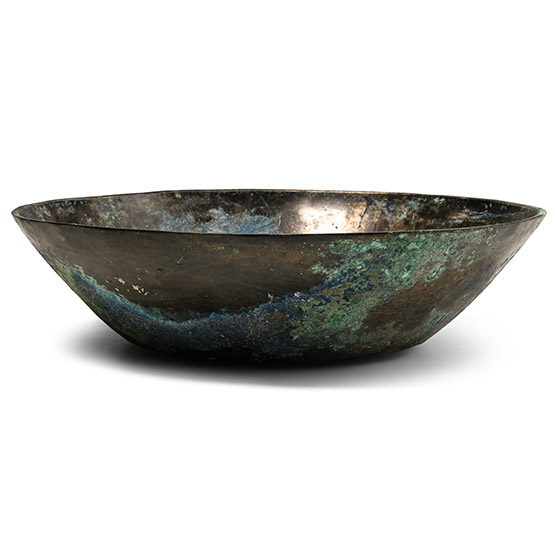
Sasanian Polished Bronze Bowl
3rd-7th century A.D.Sold for (Inc. bp): £91
Shallow body with gently sloping walls. 223 grams, 16.6 cm
Ex Abelita family collection, 1980s-2000s. -
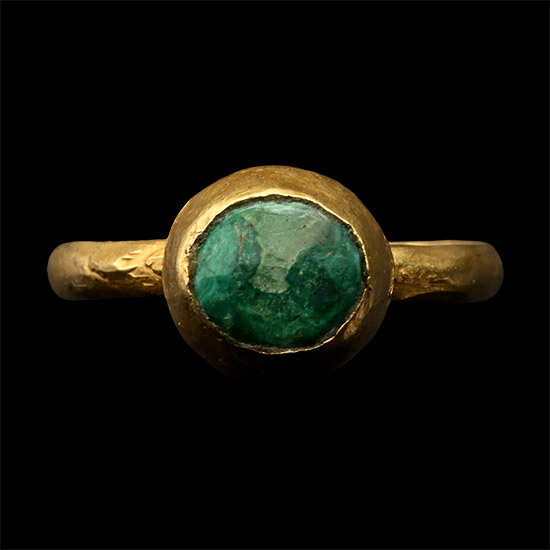
Western Asiatic Ring with Cabochon
Late 19th-20th century A.D.Sold for (Inc. bp): £124
Biconvex bezel with petal detailing to the lower body, inset facetted cabochon. 3.04 grams, 25.80 mm overall, 18.32 x 16.08mm internal diameter (approximate size British O, USA 7, Europe 14.98, Japan 14)
Acquired in the late 1980s-early 1990s. Private collection, London, UK.
