
Loading, please wait...

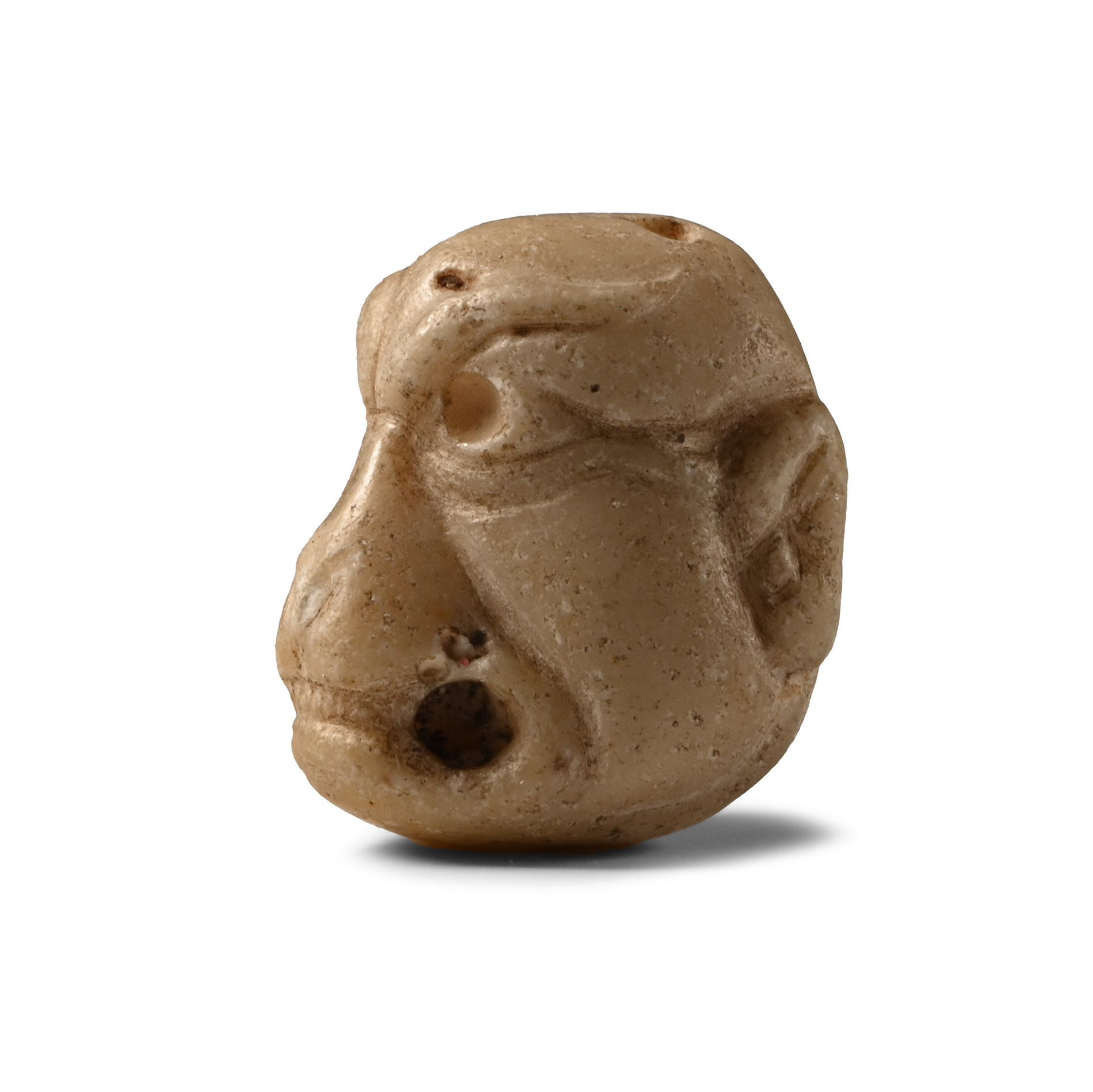
LOT 1306
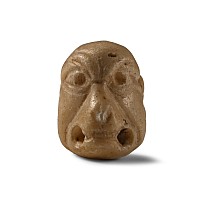
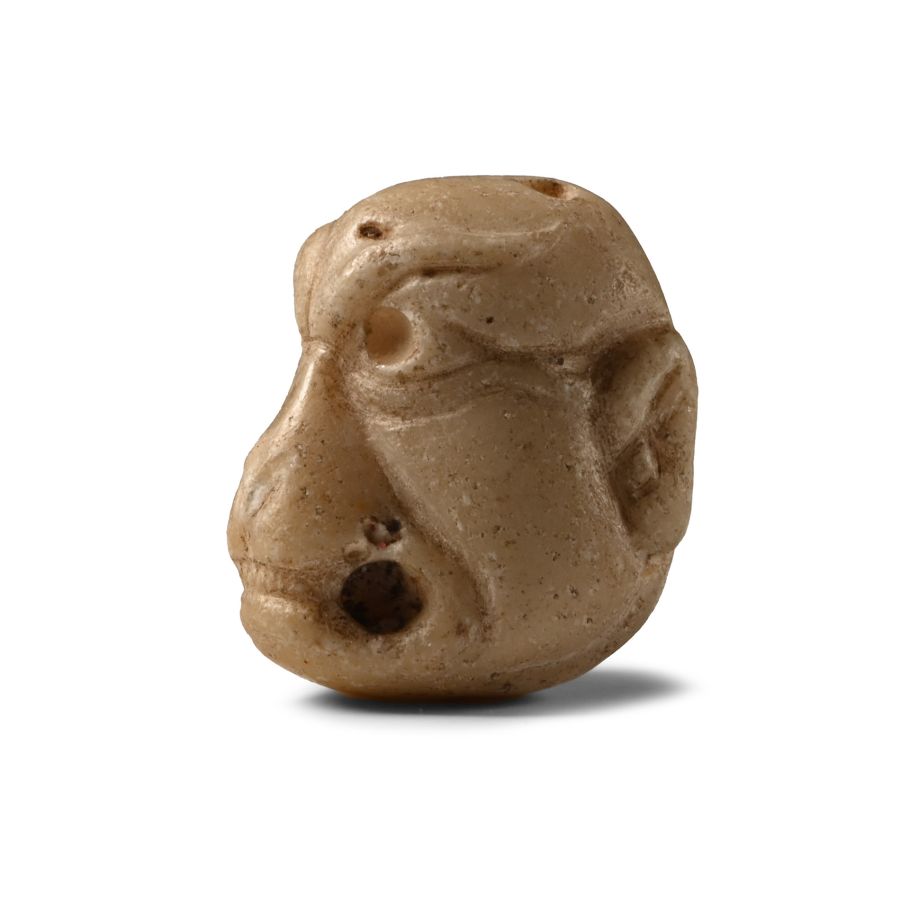
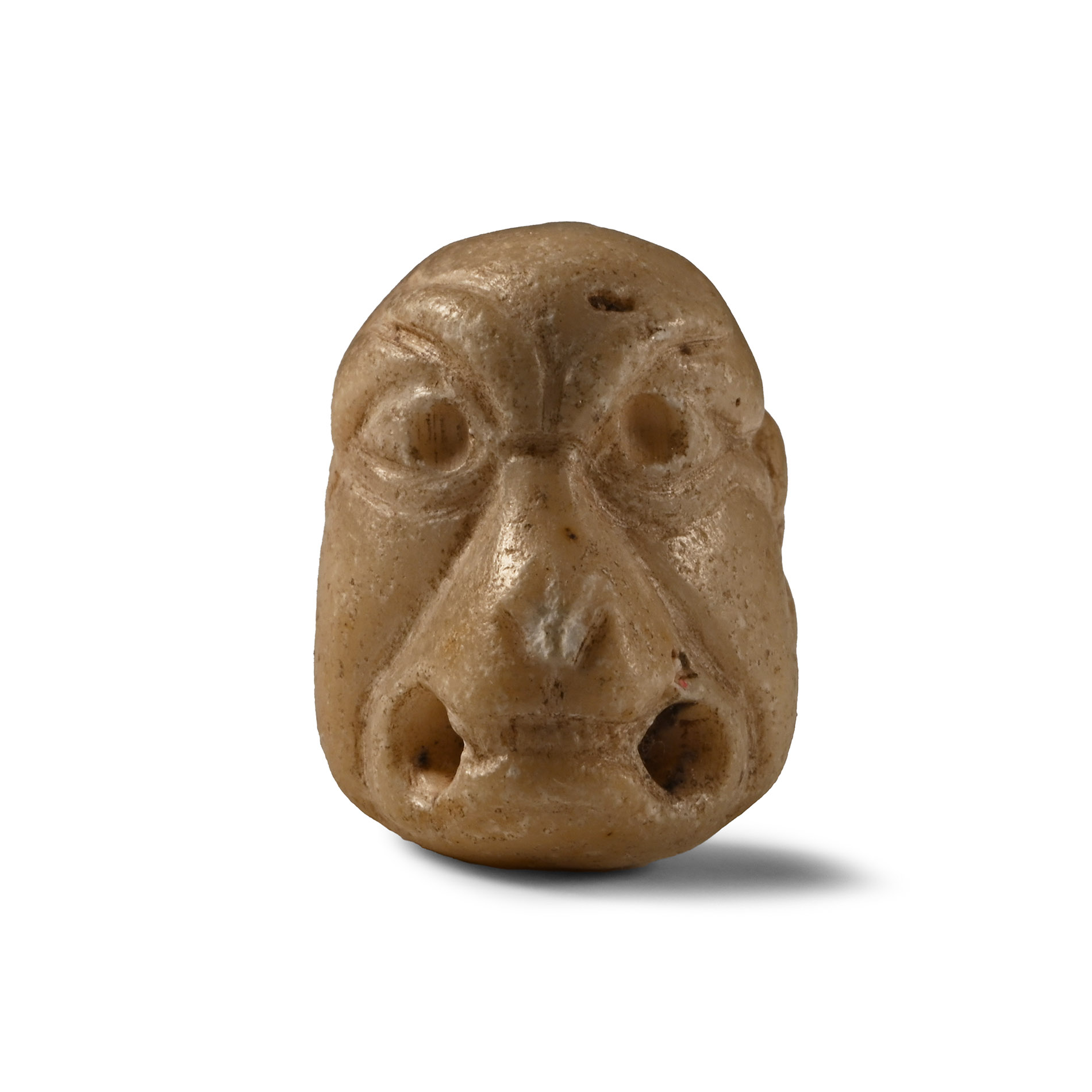
Mesopotamian Alabaster Grotesque Head Pendant
CIRCA 800-600 B.C.
3/4 in. (4.13 grams, 18 mm).
Modelled in the round with animal-like features and grimacing expression, drilled eyes and string eyebrows, possibly depicting Huwawa; perforated through the head and mouth.
ProvenanceEx property of the late Mr S.M., London, UK, 1970-1990s, thence by descent.
Accompanied by a previous typed cataloguing card.
TimeLine Auctions follows a vetting process to ensure the authenticity and legality of all items, reinforcing our commitment to integrity and responsible trading. Each antiquity, antique, and coin lot undergoes thorough examination by a vetting committee of at least ten external specialists, professional trade association members, scientists, and archaeologists: Our Vetting Process
AUCTIONS:
TimeLine is a leading auction house specialising in antiquities, ancient art, collectables, natural history, coins, medals, and books. Our auctions offer museums, collectors, historians, and enthusiasts the opportunity to acquire unique and historically significant pieces.
LOT 1306
Mesopotamian Alabaster Grotesque Head Pendant
Estimate £300 - 400€350 - 460 (for guidance only)$410 - 540 (for guidance only)
-
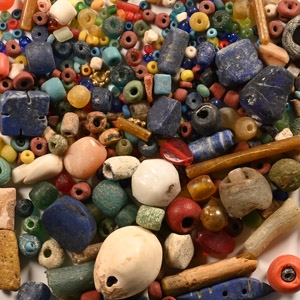
Mixed Ancient Necklace Bead Group
1st millennium B.C. and laterSold for (Inc. bp): £416
Comprising a quantity of beads in lapis lazuli, glass and faience, including some long tubular beads and a shell bead. 58 grams total, 1-30 mm
From a bead collection formed in the 1990s. -
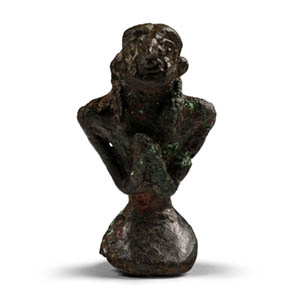
Mesopotamian Copper Male Figure
Circa 3rd millennium B.C.Estimate: £3,000 - 4,000 (+bp*)
Opening Bid: £1,500
Kneeling figure with plano-convex base, trapezoidal body with broad shoulders and hands clasped to the chest, exaggerated facial features and hair hanging in hanks to the shoulders and back. 39.5 grams total, 49 mm
Ex London, UK, gallery, 1971-early 2000s. London, UK, collection. This lot has been checked against the Interpol Database of stolen works of art and is accompanied by a search certificate number no.12410-225378. -
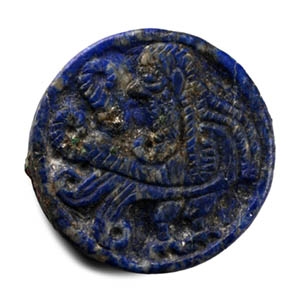
Bactrian Lapis Lazuli Pin Head with Figures
3rd millennium B.C.Sold for (Inc. bp): £3,120
Drum-shaped in profile with running guilloche to the rim, obverse with low-relief figure of a regardant bird with bearded head of a man; reverse with regardant figure of a crouching lion with similar bearded head. 46.5 grams, 40 mm
with Gallery Rosen Ancient Art, Tel Aviv, 1968. with a London, UK gallery, 1971-early 2000s. Accompanied by a copy of the original 1968 invoice. This lot has been checked against the Interpol Database of stolen works of art and is accompanied by a search certificate number no.12408-225343.
