
Loading, please wait...

LOT 0264
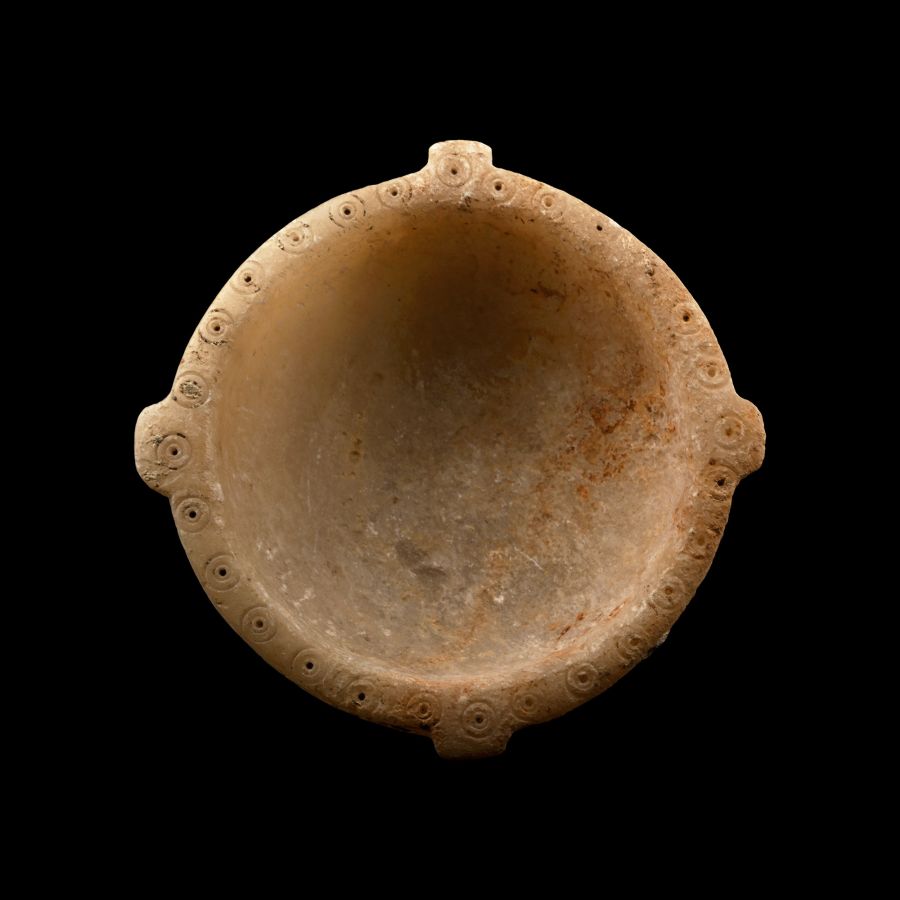
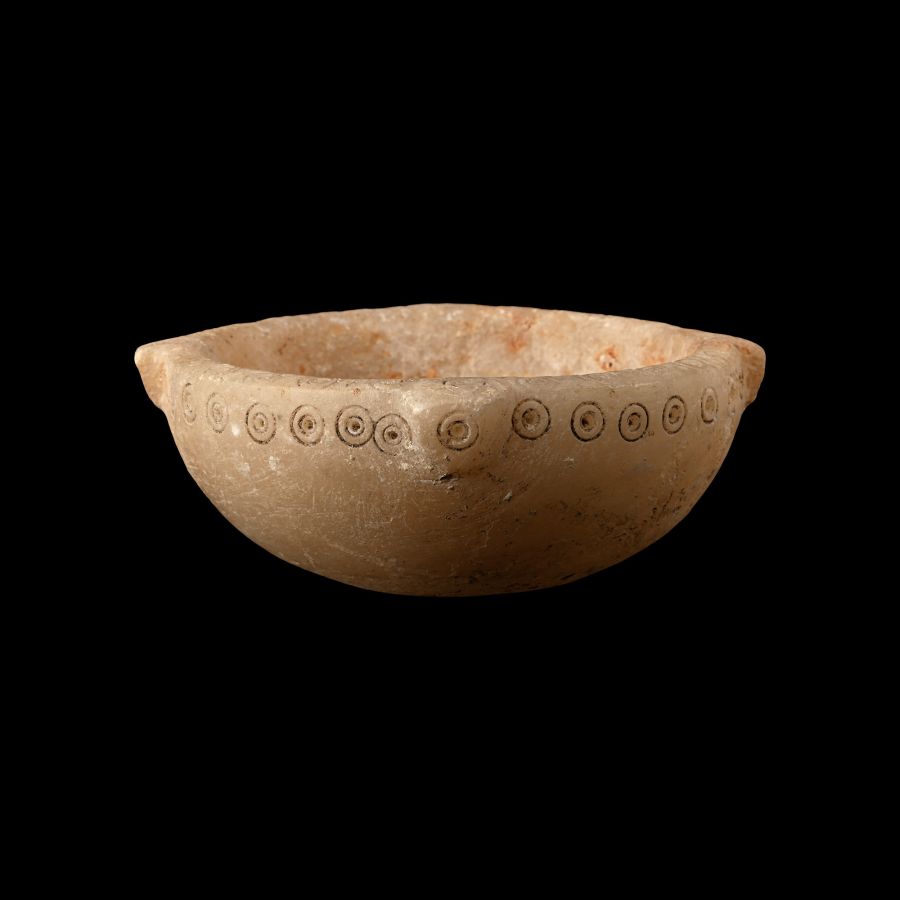
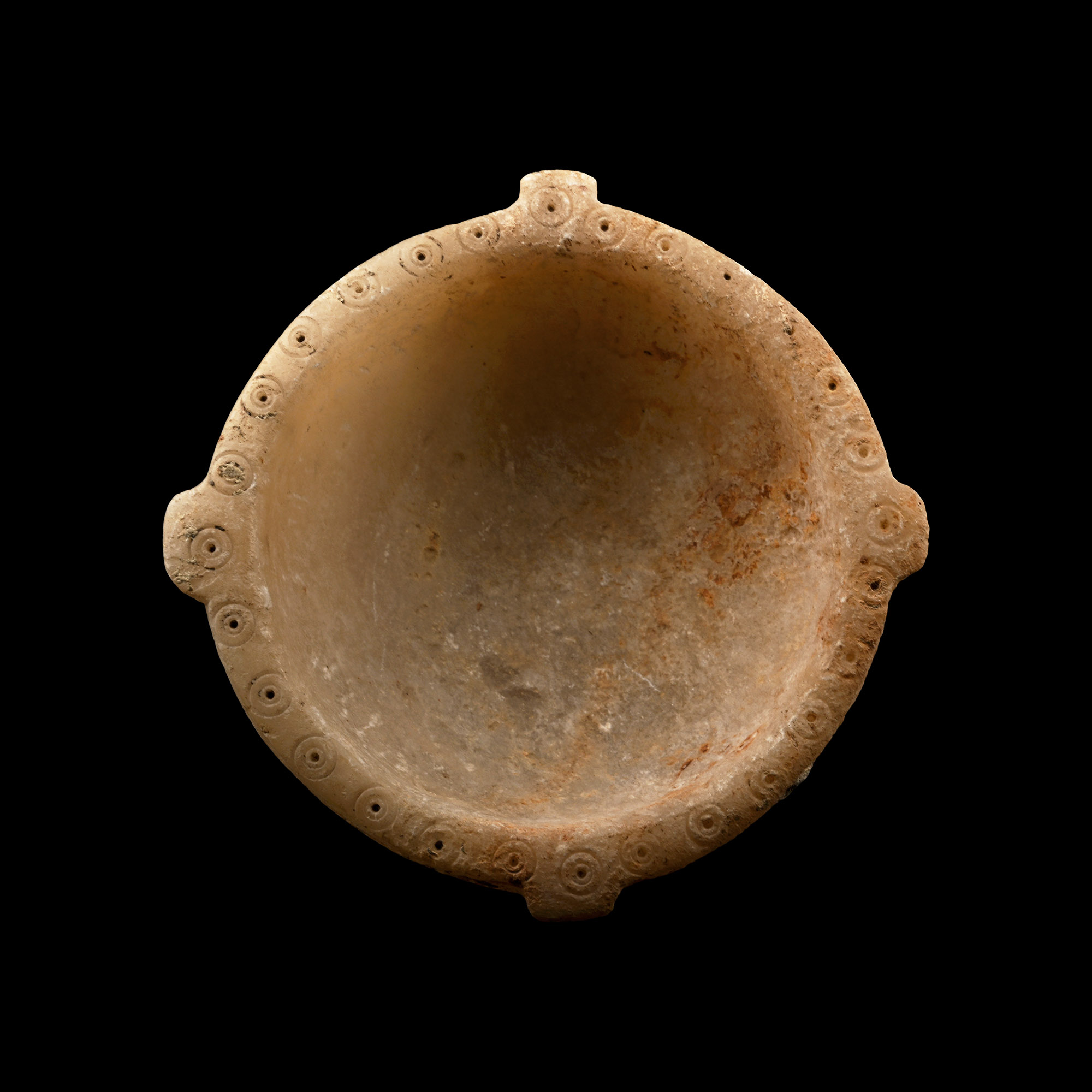
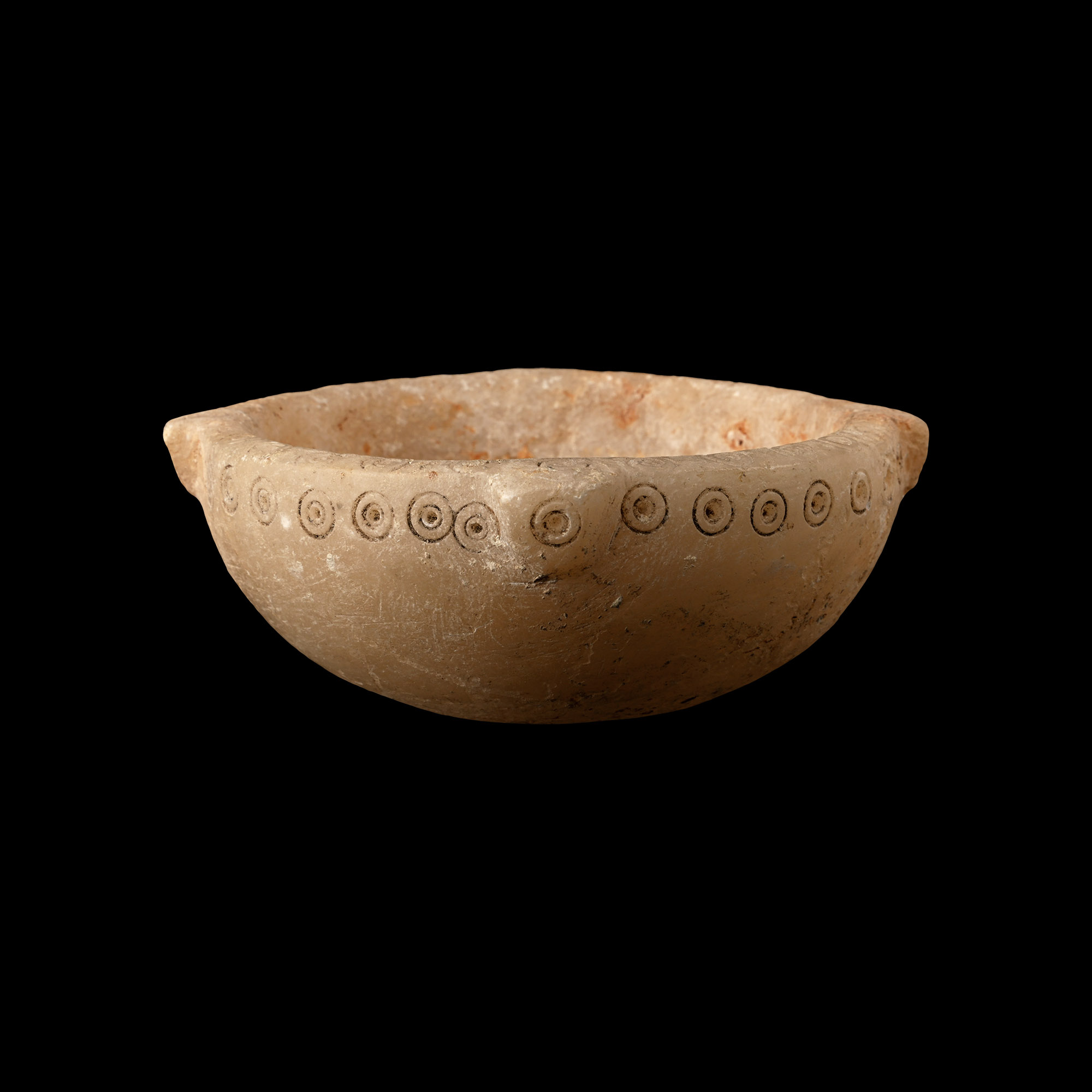
Mesopotamian Alabaster Bowl
1ST MILLENNIUM B.C.
5 1/4 in. (503 grams, 13.2 cm wide).
With flat rim and four projecting lugs; band of incised concentric rings to the rim and shoulder; curving sidewall to a narrow flat base.
ProvenancePrivate collection, USA and Switzerland, acquired in the late 1980s-early 1990s; by descent to the current owner.
FootnotesVessels of this typology were used mainly as mortars for crushing legumes, cereals, fruit, spices, the bare minimum needed for preparing daily food, but also for pharmaceutical products and for painting, for mixing colours and ointments.
CONDITIONTimeLine Auctions follows a vetting process to ensure the authenticity and legality of all items, reinforcing our commitment to integrity and responsible trading. Each antiquity, antique, and coin lot undergoes thorough examination by a vetting committee of at least ten external specialists, professional trade association members, scientists, and archaeologists: Our Vetting Process
AUCTIONS:
TimeLine is a leading auction house specialising in antiquities, ancient art, collectables, natural history, coins, medals, and books. Our auctions offer museums, collectors, historians, and enthusiasts the opportunity to acquire unique and historically significant pieces.
LOT 0264
Mesopotamian Alabaster Bowl
Estimate £800 - 1,000€930 - 1,160 (for guidance only)$1,080 - 1,350 (for guidance only)
Opening Bid
£444 (EUR 516; USD 600) ‡+BP*
-
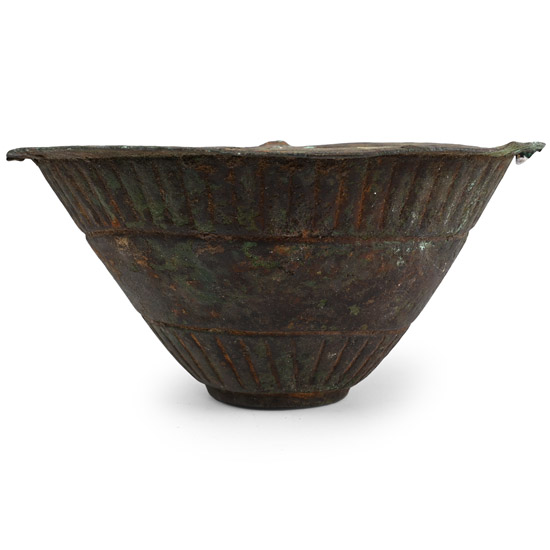
Luristan Bronze Decorated Conical Vessel
Bronze Age, 2nd-1st millennium B.C.Estimate: £120 - 170 (+bp*)
Opening Bid: £5
Conical in profile with three horizontal bands: vertical ribs above and slashes below. 616 grams, 17.5 cm wide
Acquired on the UK art market since the 1990s. From the property of a late Lincolnshire, UK, gentleman; thence by descent. -
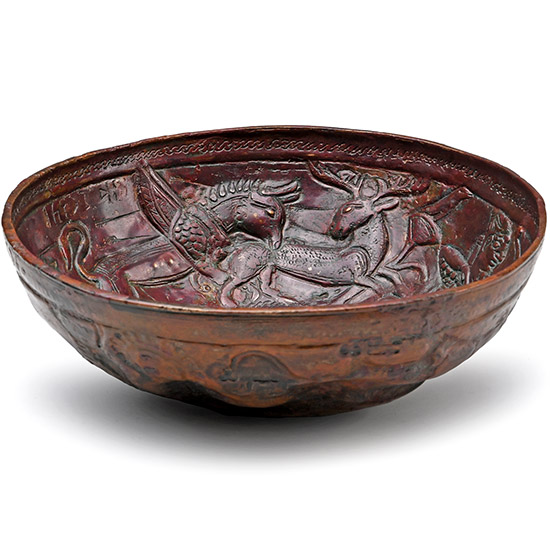
South Arabian Bronze Bowl Featuring a Hunting Scene and Inscription
Southwestern Arabia, Kingdom of Ma’in, circa 3rd century B.C.-2nd century A.D.Estimate: £5,500 - 7,500 (+bp*)
Opening Bid: £2,750
Broad and squat with impressed guilloche below the inner rim, repoussé frieze with fleeing ibex attacked by a gryphon and kneeling archer to the rear; central rosette; seven incised characters to inner face and four to outer face. 277 grams, 15.5 cm
Saleh family collection, Germany, formed prior to 1972. Private collection, UK. This lot has been checked against the Interpol Database of stolen works of art and is accompanied by search certificate no.12809-241324.
The presence of decorated bronze bowls during the later Pre-Islamic period, mainly in the territories of the modern Emirates, is well documented. Many decorated bowls and bowl fragments were discovered at Mleiha; one or more possible fragments were found at ed-Dur, and a single bowl comes from a Pre-Islamic period C tomb in Dibba. They are also similar to the so-called Phoenician - or, more correctly, Levantine - bowls produced in the 9th-early 7th century B.C. They combine local Levantine elements with imagery borrowed from Mesopotamia and Egypt, and local Arabian themes, such as camel and horse riding, often composed in radial zones. -
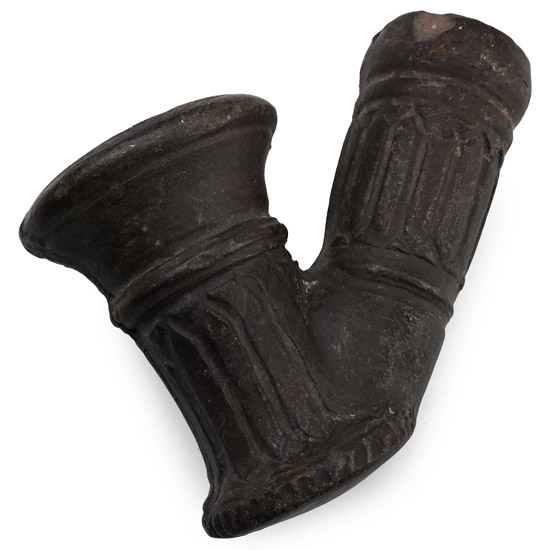
Ottoman Clay Smoking Pipe Bowl
Turkiye, circa 15th-16th century A.D. or laterEstimate: £40 - 60 (+bp*)
Opening Bid: £5
Comprising a domed base and columnar body with sarcading, flared neck and mouth; angled pipe to the rear with arcading and collars. 166 grmas, 10.6 cm
From a old Oxford, UK, antiquities collection. Acquired on the UK art market since the 1990s. From the property of a late Lincolnshire, UK, gentleman; thence by descent. Accompanied by a previous catalogue information slip.
