
Loading, please wait...


LOT 2332
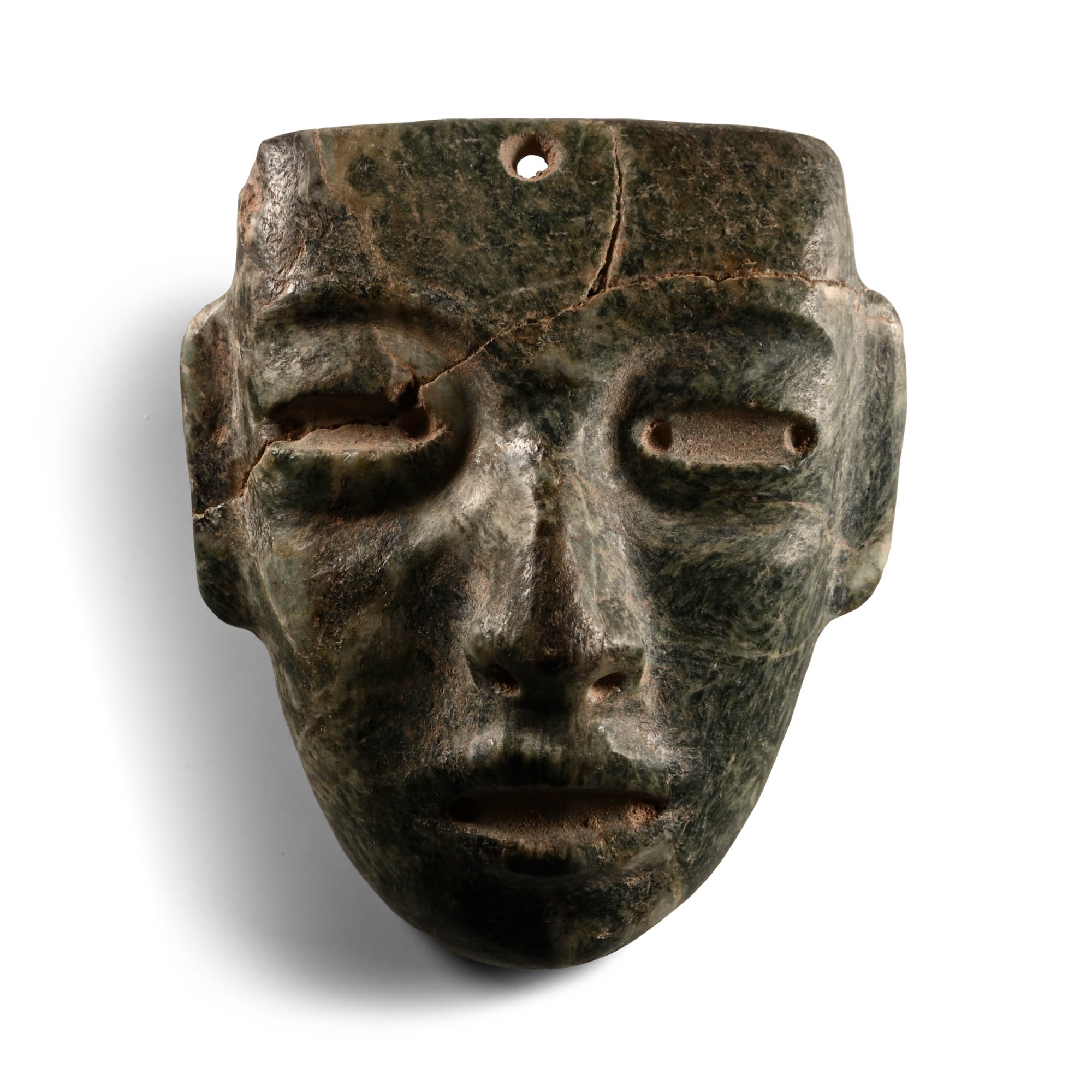
Mesoamerican Teotihuacan Jadeite Mask
CIRCA 200-600 A.D. OR LATER
2 3/4 in. (105 grams, 69 mm).
Miniature D-shaped mask with hole above the brow. [No Reserve]
ProvenanceFrom a family collection mostly formed in the 1940s-1950s, thence by descent.
LiteratureFor a range of masks from Teotihuacan see Berrin, K., Teotihuacan, Art from the City of the Gods, Thames and Hudson, 1993, pp.188-193.
FootnotesThis is a very classical mask from the early city of Teotihuacan. Such masks were crafted within the city state and surrounds and are considered to have been produced for ceremonial purposes. Larger examples are thought to have been attached to larger wooden structures. This example forms part of a smaller sub set of Teotihuacan masks and has been sensitively carved showing ancient surface wear.
CONDITIONTimeLine Auctions follows a vetting process to ensure the authenticity and legality of all items, reinforcing our commitment to integrity and responsible trading. Each antiquity, antique, and coin lot undergoes thorough examination by a vetting committee of at least ten external specialists, professional trade association members, scientists, and archaeologists: Our Vetting Process
AUCTIONS:
TimeLine is a leading auction house specialising in antiquities, ancient art, collectables, natural history, coins, medals, and books. Our auctions offer museums, collectors, historians, and enthusiasts the opportunity to acquire unique and historically significant pieces.
-

Pre-Columbian Mezcala Stone Anthropomorphic Figure
Circa 250 B.C.Sold for (Inc. bp): £195
Lentoid in section and carved in the round with grotesque head, arms crossed at the chest, transverse belt and stubby legs; mounted on a custom-made stand. 632 grams total, 25.5 cm high including stand
From a family collection mostly formed in the 1940s-1950s, thence by descent.
During the late pre classic period in Mexico, the region of Guerrero produced many abstract figures in stone. This example with arms crossed and facial features displayed shows some elements of the Chontal culture who lived in the same region. -

Pre-Columbian Chupicuaro Life-Size Foot-Shaped Red Ware Vessel
3rd century B.C.-3rd century A.D.Sold for (Inc. bp): £520
With flat base and squat tubular neck, slightly flared rim to the mouth; body formed as a human right foot with nail detailing to the toes, sandal with multilinear straps and panel to the heel. 813 grams, 21.5 cm
From a family collection mostly formed in the 1940s-1950s, thence by descent. -

Pre-Columbian Stone Valdivia Idol
Circa 2500 B.C. or laterSold for (Inc. bp): £1,040
Tongue-shaped in plan with low-relief carved detailing, segmented body and face; repaired. 77 0 grams, 21.4 cm
From a collection acquired on the UK art market from various auction houses and collections mostly before 2000. From an important Cambridgeshire estate; thence by descent.
These abstract idols represent some of the earliest art forms in Ecuador.
