
Loading, please wait...
LOT 1796
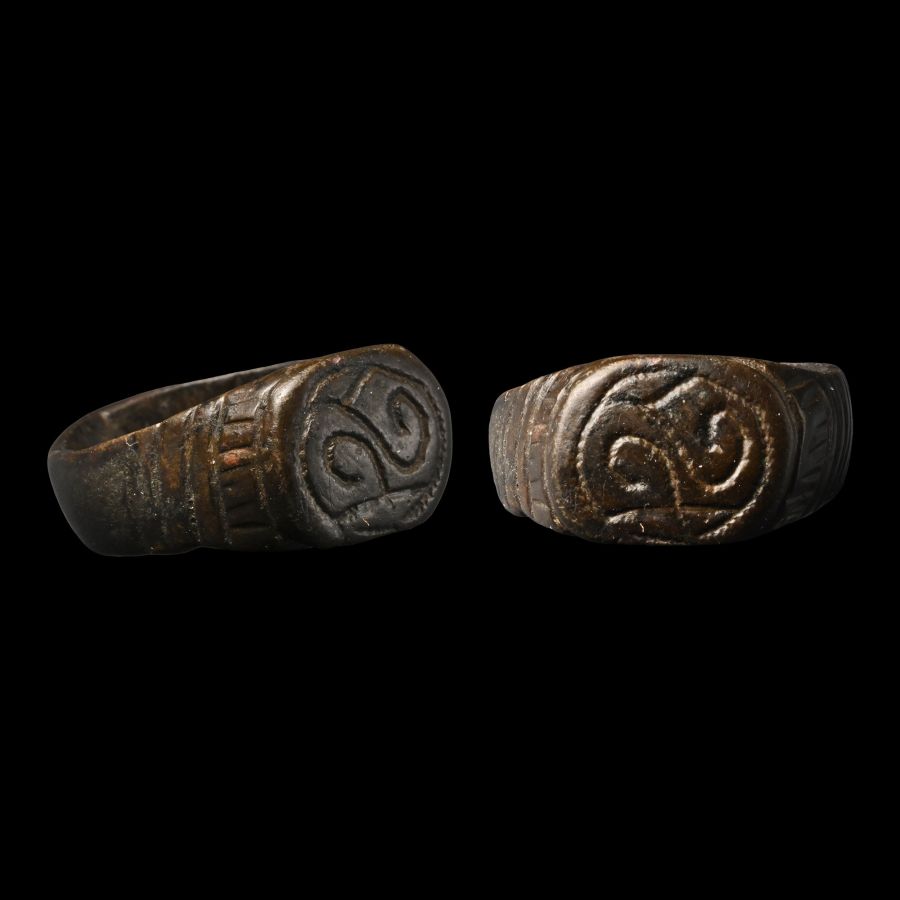
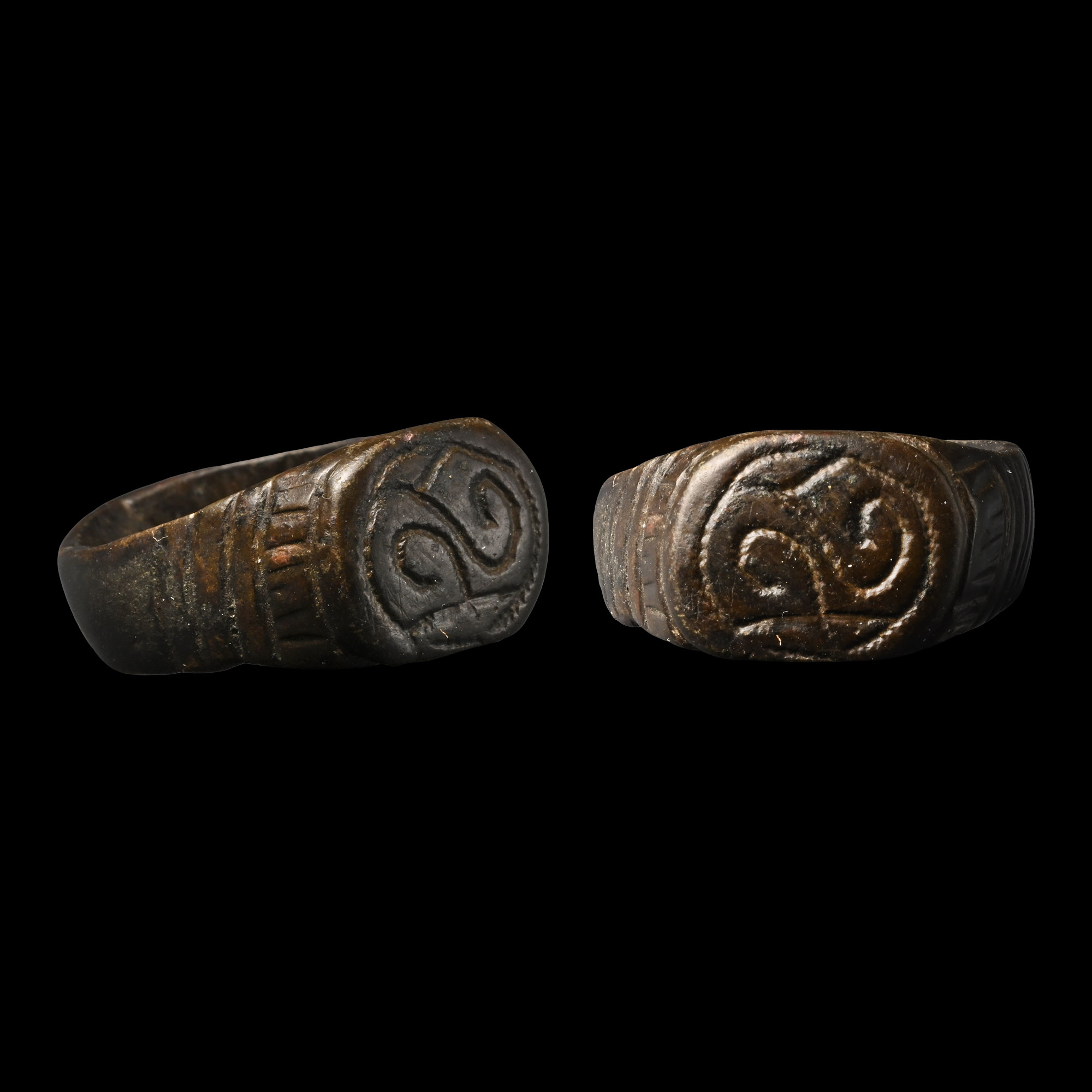
Merovingian Ring with Scrolls
CIRCA 640-680 A.D.
1 in. (10.53 grams, 26.37 mm overall, 19.40 mm internal diameter (approximate size British S 1/2, USA 9 1/4, Europe 20.63, Japan 19)).
Comprising a wide hoop with linear decoration on the shoulders, an oval bezel with incuse scrolls. [No Reserve]
ProvenanceAcquired on the UK and EU art market before 2000.
From the private collection of a Surrey, UK, gentleman.
Cf. Hadjadj, R., Bagues Merovingiennes - Gaul du Nord, Paris, 2007, item 104, for type.
FootnotesThe image on the bezel is reminiscent of the spiral motifs connected to Celto-Germanic mythology. They were associated with life force, energy, the seed of life, and cycles of existence.’
CONDITIONTimeLine Auctions follows a vetting process to ensure the authenticity and legality of all items, reinforcing our commitment to integrity and responsible trading. Each antiquity, antique, and coin lot undergoes thorough examination by a vetting committee of at least ten external specialists, professional trade association members, scientists, and archaeologists: Our Vetting Process
AUCTIONS:
TimeLine is a leading auction house specialising in antiquities, ancient art, collectables, natural history, coins, medals, and books. Our auctions offer museums, collectors, historians, and enthusiasts the opportunity to acquire unique and historically significant pieces.
-
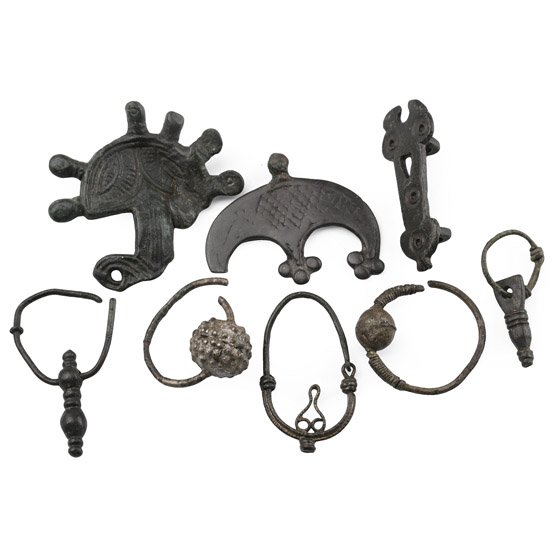
Migration Period Bronze Fragment Group
6th-10th century A.D.Sold for (Inc. bp): £39
Including the lobed headplate and bow from a brooch, pelta-shaped pendant, phallic belt stiffener and other items. 38.83 grams total, 30-43 mm
Ex German art market, 2000s. Acquired from an EU collector living in London. From the collection of a Surrey, UK, gentleman. -
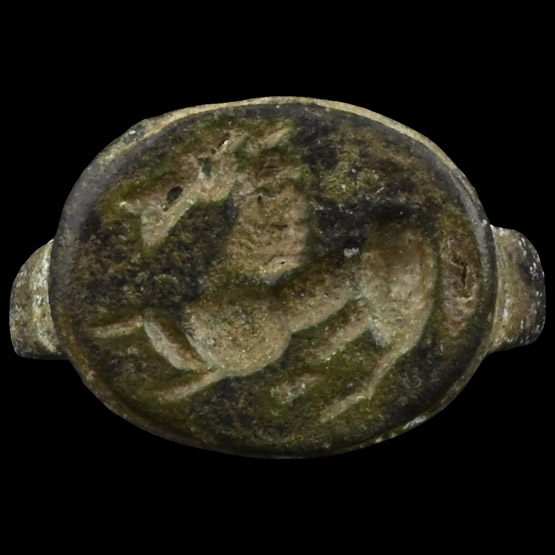
Merovingian Ring with Horse Galloping
Circa 6th century A.D.Sold for (Inc. bp): £59
Comprising a slender hoop and an oval bezel with an incuse image of a stylised horse. 3.53 grams, 18.72 mm overall, 16.18 mm internal diameter (approximate size British K, USA 5 1/4, Europe 10.58, Japan 10)
Acquired on the UK and EU art market before 2000. From the private collection of a Surrey, UK, gentleman.
The ring belongs to the Type 4b of Hadjadj classification, i.e. rings with a sinuous profile and thick head. The image on the bezel is reminiscent of horse motifs linked to the Romano-Celtic mythology, although the horse was a known pattern in the Germanic legends as well. -
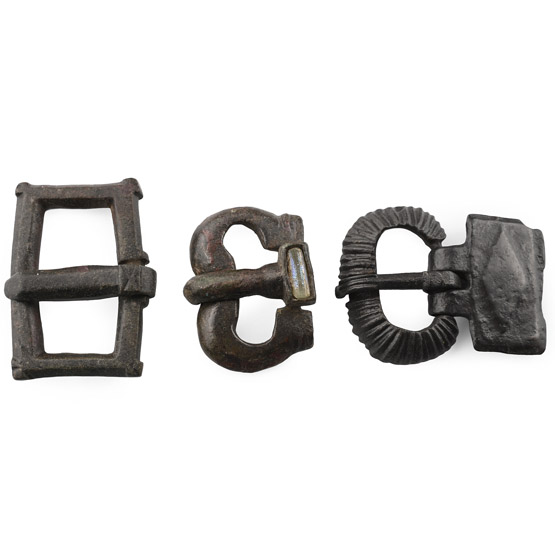
Migration Period Buckle Collection
6th-8th century A.D.Sold for (Inc. bp): £39
Comprising: kidney-shaped loop with inset crystal panel to the tongue; rectangular loop with spurs to the corners, chamfered edges to the tongue; domed loop with radiating ridges, buckle plate with raised lozenge motif. 78 grams total, 39-46 mm
Ex German art market, 2000s. Acquired from an EU collector living in London. From the collection of a Surrey, UK, gentleman.
