
Loading, please wait...
LOT 0280
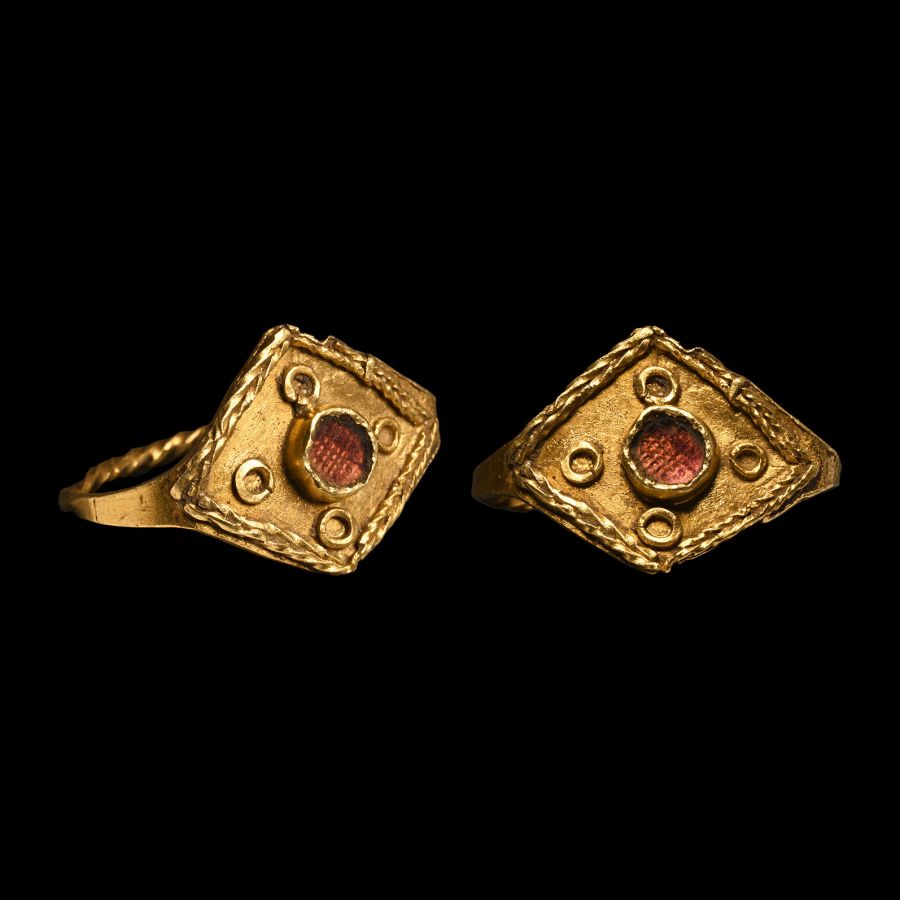
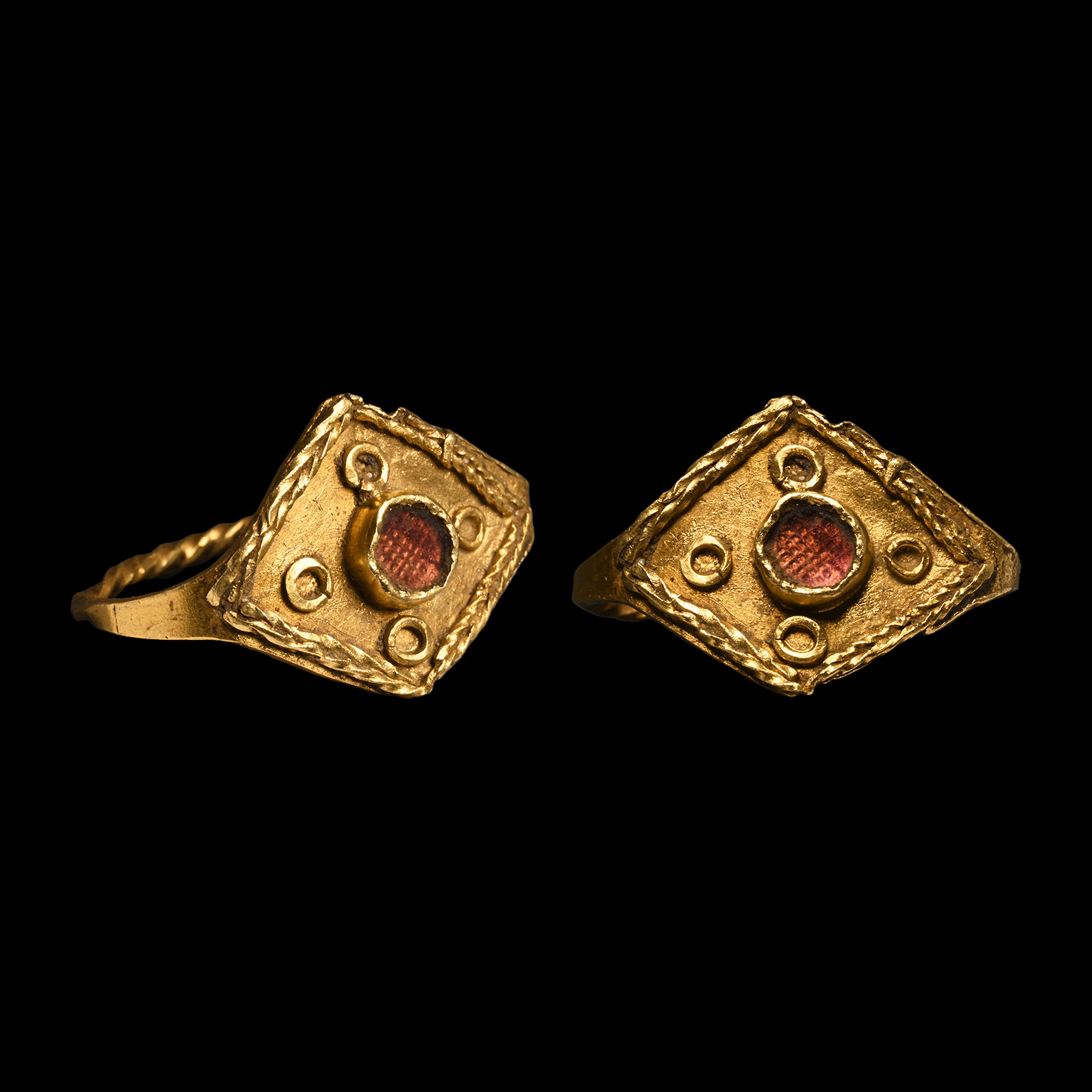
Merovingian Gold Ring with Garnet in Lozenge Bezel
6TH-7TH CENTURY A.D.
7/8 in. (3.16 grams, 22.79 mm overall, 20.52 mm internal diameter (approximate size British K, USA 5 1/4, Europe 9.95, Japan 9)).
A gold finger ring comprising a lozengiform bezel and twisted hoop; applied filigree bilinear frame to the bezel enclosing four applied filigree hoops and central cell with inset garnet cloison over a waffle-pattern gold-foil reflector.
ProvenanceAcquired 1960s-1990s.
Late Alison Barker collection, a retired London barrister.
This lot has been checked against the Interpol Database of stolen works of art and is accompanied by search certificate no.11651-199135.
Cf. Hadjadj, R., Bagues Merovingiennes - Gaul du Nord, Paris, 2007, item 144, for type; see also Adams, N., Rethinking the Sutton Hoo Shoulder-Clasps and Armour, in Entwistle, C. & Adams, N., Intelligible Beauty, Recent Research into Byzantine Jewellery, London, 2010, for discussion of the cloisonné technique.
CONDITIONTimeLine Auctions follows a vetting process to ensure the authenticity and legality of all items, reinforcing our commitment to integrity and responsible trading. Each antiquity, antique, and coin lot undergoes thorough examination by a vetting committee of at least ten external specialists, professional trade association members, scientists, and archaeologists: Our Vetting Process
AUCTIONS:
TimeLine is a leading auction house specialising in antiquities, ancient art, collectables, natural history, coins, medals, and books. Our auctions offer museums, collectors, historians, and enthusiasts the opportunity to acquire unique and historically significant pieces.
-
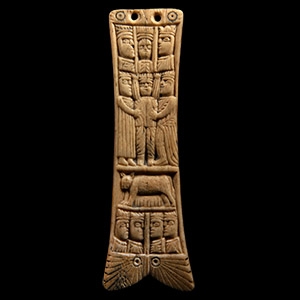
Post Roman Gallic Figural Amuletic Bone Carving
5th-7th century A.D. or laterEstimate: £1,200 - 1,700 (+bp*)
Opening Bid: £600
A fishtail-shaped bone amulet or strap end displaying vertically arranged stylised figural panels: at the top, a central facing bust flanked by two further busts; a standing central figure with arms held skywards, a robed figure standing to each side holding his torso, one in a floor-length female garment and the other with one leg advancing showing trousers; an animal facing left below; panel with central vertical divide below, each populated with two busts, one pair facing left, the other facing right; ring-and-dot motifs with radiating lines below, possibly stylised sun motifs; two perforations to top edge for suspension; natural shrinkage crack, mostly evident to the reverse. 23.4 grams, 12 cm
Fine condition, shallow crack to reverse.
Previously in the Alison Barker collection, a retired London barrister. From a Cambridge collection. Property of a North London gentleman.
The standing animal may represent the lupa or she-wolf which nurtured Romulus and Remus in the mythical story of the founding of Rome. The Emperor Julian, later known as 'the Apostate', was responsible for turning his back on Christianity and promoting a return to traditional Roman values, which included veneration of 'Roma' and the founding legends. -
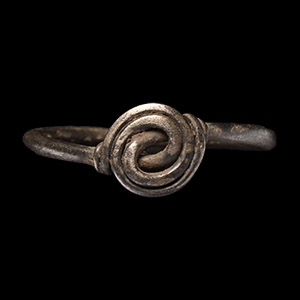
Merovingian Silver Ring with Twisted Bezel
Circa 6th-7th century A.D.Sold for (Inc. bp): £117
A silver finger ring formed as a single rod tapering at both ends, formed into a flat coil and wound around the shank. 2.50 grams, 24.79 mm overall, 19.84 mm internal diameter (approximate size British T 1/2, USA 9 3/4, Europe 21.89, Japan 21)
Acquired in the late 1990s-2000. Property of an East London gentleman. -
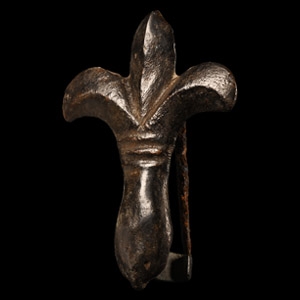
Merovingian Cicada Brooch
5th-6th century A.D.Sold for (Inc. bp): £143
A stylised cicada brooch with minimalistic detailing to the upper face; pin lug, pin and catchplate to reverse. 10 grams, 42 mm
Acquired before 2000. From the collection of a European gentleman living in the UK.
