
Loading, please wait...
LOT 0290
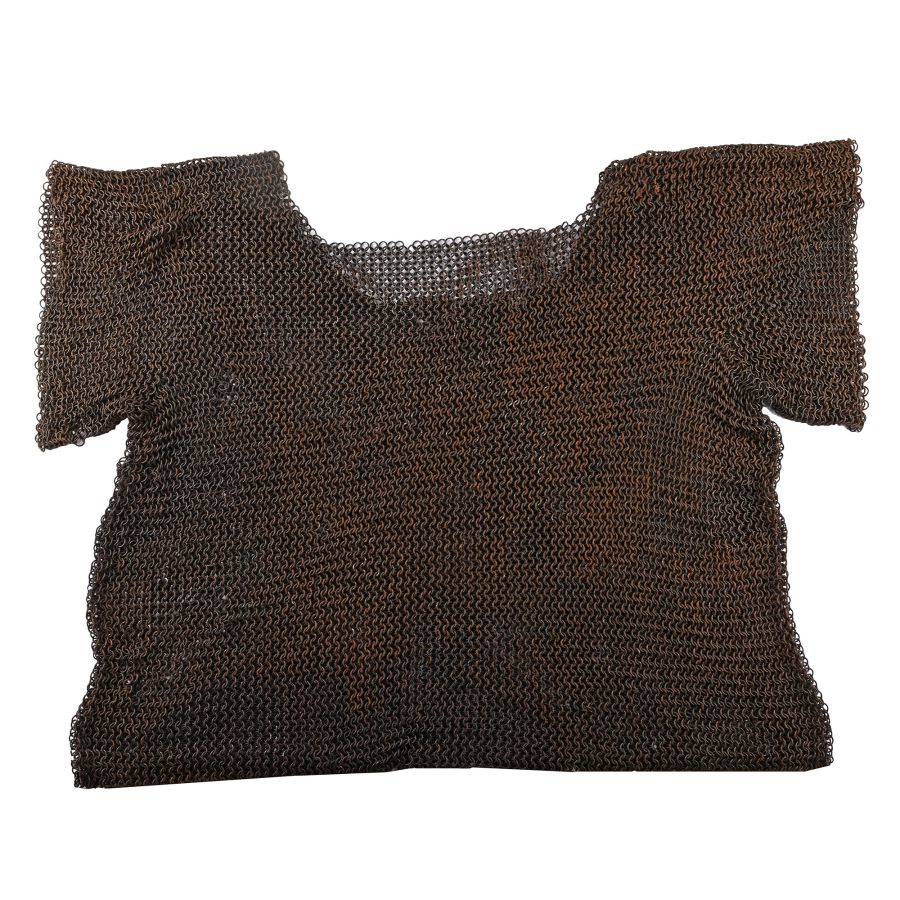
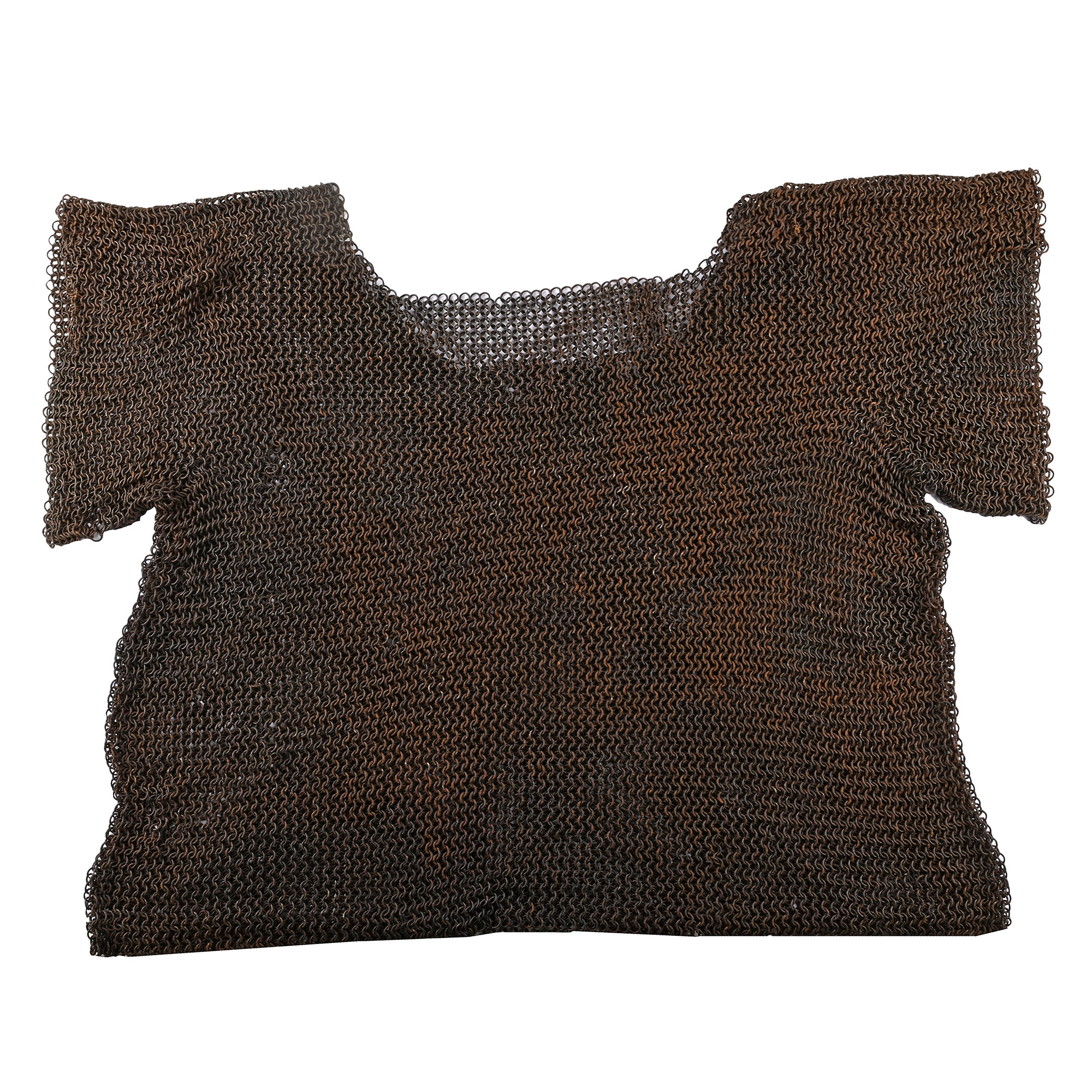
Medieval Warrior's Iron Chain Mail Armour Shirt
CIRCA 15TH CENTURY A.D.
30 1/4 x 22 in. (9.93 kg, 87 x 56 cm).
A butted short-sleeved chainmail shirt made of thick oval rings assembled in the usual system of one-to-four; in an excellent state of preservation, with over 95% of the rings intact, very few broken or corroded, with no later additions.
ProvenanceAcquired on the German art market before 2000.
Private collection, South Germany.
Accompanied by an academic report by Dr Raffaele D'Amato.
This lot has been checked against the Interpol Database of stolen works of art and is accompanied by search certificate no.13066-249665.
Cf. a similar mail shirt from Germany with butted rings from Nuremberg, 15th century, in the Metropoltan Museum of Art, New York, no.25.188.9; Gilliot, Weapons and Armours, Bayeux, 2008, pp.17-20, for similar coats of mail from Germany; Wood, E., Edge, D., Williams, A., ‘A note on the construction and metallurgy of mail armour exhibited in the Wallace Collection’ in Acta Militaria Medievalia, Tom IX, Kraków-Sanok, 2013, pp.203-228; Wijnhoven, M.A., Ringed battle shirts from the iron age, Roman Period and Early Middle Ages, Amsterdam, 2022.
FootnotesIn the German-manufactured ring mail armours, in the 15th century A.D., the rings protecting the breast were very thick, whereas the sleeved mail armours were thinner. Master armourers from Nuremberg were famous for this production across Europe.
CONDITIONTimeLine Auctions follows a vetting process to ensure the authenticity and legality of all items, reinforcing our commitment to integrity and responsible trading. Each antiquity, antique, and coin lot undergoes thorough examination by a vetting committee of at least ten external specialists, professional trade association members, scientists, and archaeologists: Our Vetting Process
AUCTIONS:
TimeLine is a leading auction house specialising in antiquities, ancient art, collectables, natural history, coins, medals, and books. Our auctions offer museums, collectors, historians, and enthusiasts the opportunity to acquire unique and historically significant pieces.
LOT 0290
Medieval Warrior's Iron Chain Mail Armour Shirt
Estimate £3,000 - 4,000€3,480 - 4,640 (for guidance only)$4,050 - 5,400 (for guidance only)
Opening Bid
£750 (EUR 870; USD 1,013) +BP*
-
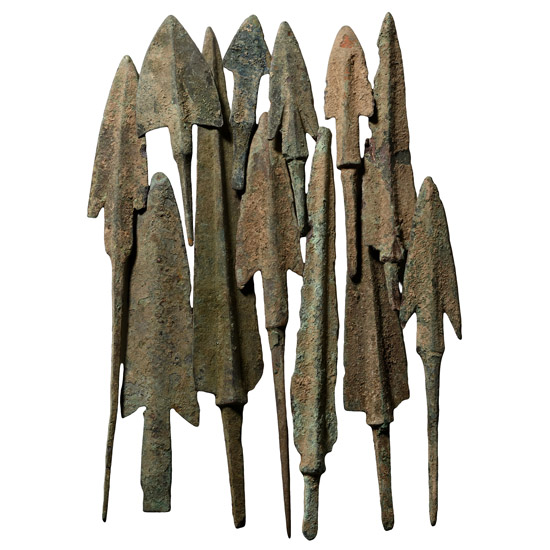
Western Asiatic Bronze Arrowhead Collection
2nd-1st millennium B.C.Estimate: £100 - 140 (+bp*)
Opening Bid: £50
Including triangular, leaf-shaped, barbed and other types. 215 grams total, 5.7-15.6 cm
Ex Abelita collection, 1980-2010. -

Western Asiatic Polished Stone Macehead
3rd-2nd millennium B.C.Estimate: £80 - 100 (+bp*)
Opening Bid: £5
With slightly carinated equator to the globular body and tubular shaft. 377 grams, 91 mm
From the collection of North West London, UK, gentleman, early 2000s. -
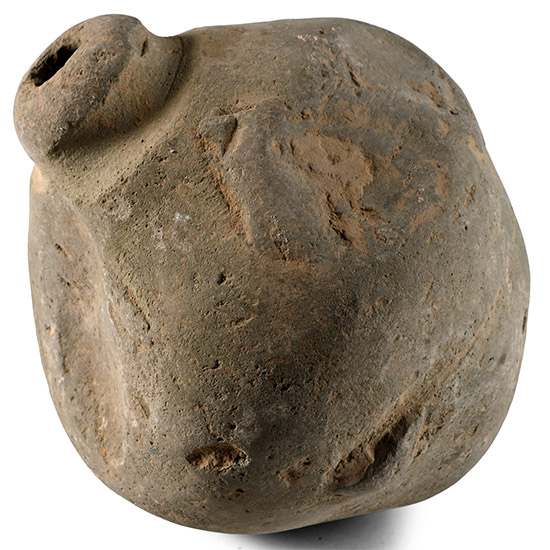
Byzantine 'Greek Fire' Ceramic Fire Bomb or Hand Grenade
9th-11th century A.D.Estimate: £70 - 90 (+bp*)
Opening Bid: £5
Bulbous body with rounded base and domed filler hole; intended to be filled with explosive liquid and a wick, and used as a hand grenade. 590 grams, 10.3 cm
Ex important collection of weaponry, London, UK, 1980-1990s. Accompanied by an academic paper by military specialist Dr Raffaele D'Amato, dated 15 July 2019 and titled 'Eastern Roman Empire - Greek Fire Bomb or Hand Grenade (μεσαίον kακάβιον) 9th-11th century AD'.
Apart from the use of siphons or manual flame-throwers called cheirosiphona, special corps of Roman soldiers employed terracotta grenades, in the form of small jars, abundantly evidenced in archaeological excavations. They were called μεσαία kακαβιά or κυτροκακάβια, where the former had a bulbous shape and the latter a more cylindrical form.
