
Loading, please wait...
LOT 0303
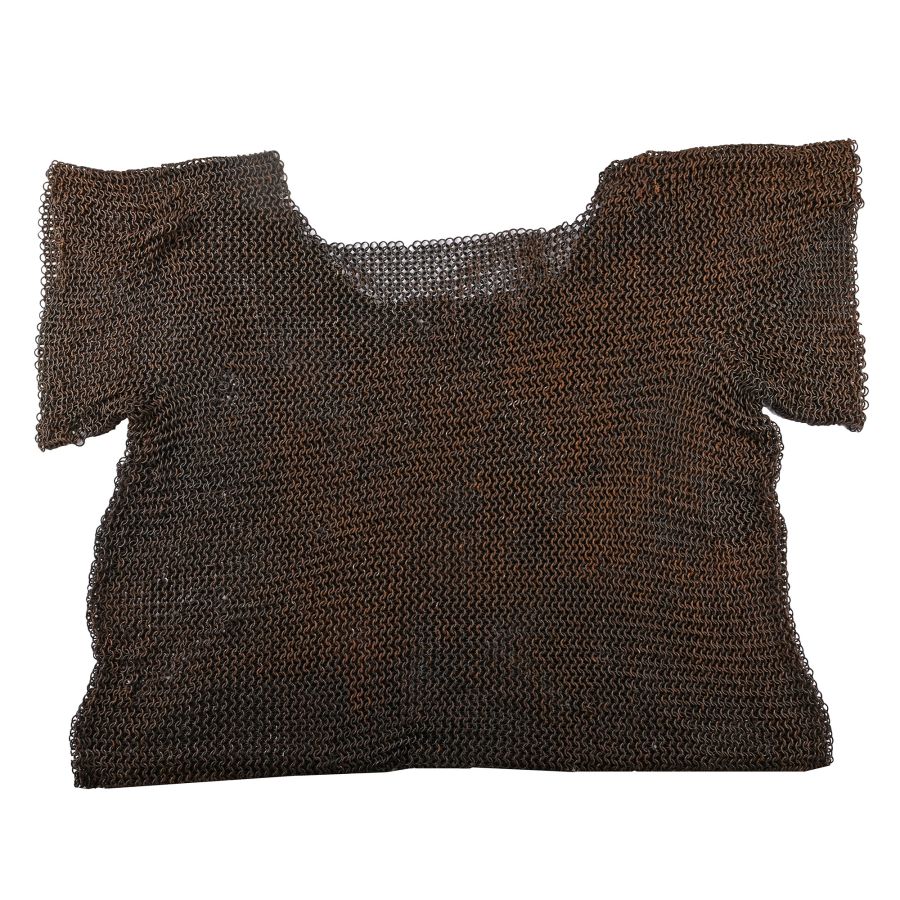
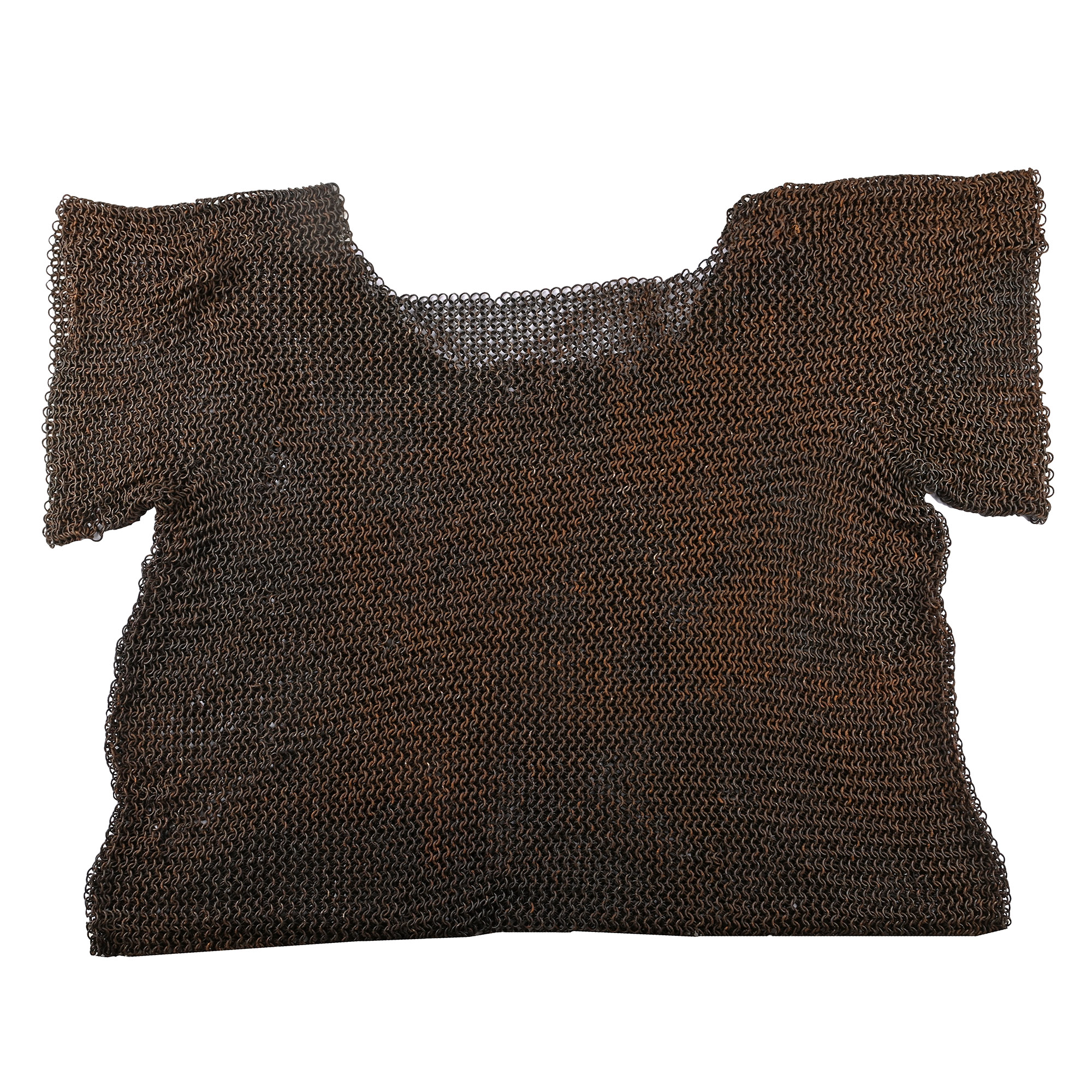
Medieval Warrior's Iron Chain Mail Armour Shirt
CIRCA 15TH CENTURY A.D.
30 1/4 x 22 in. (9.93 kg, 87 x 56 cm).
A butted short-sleeved chainmail shirt made of thick oval rings assembled in the usual system of one-to-four; in an excellent state of preservation, with over 95% of the rings intact, very few broken or corroded, with no later additions.
ProvenanceAcquired on the German art market before 2000.
Private collection, South Germany.
Accompanied by an academic report by Dr Raffaele D'Amato.
This lot has been checked against the Interpol Database of stolen works of art and is accompanied by search certificate no.13066-249665.
Cf. a similar mail shirt from Germany with butted rings from Nuremberg, 15th century, in the Metropoltan Museum of Art, New York, no.25.188.9; Gilliot, Weapons and Armours, Bayeux, 2008, pp.17-20, for similar coats of mail from Germany; Wood, E., Edge, D., Williams, A., ‘A note on the construction and metallurgy of mail armour exhibited in the Wallace Collection’ in Acta Militaria Medievalia, Tom IX, Kraków-Sanok, 2013, pp.203-228; Wijnhoven, M.A., Ringed battle shirts from the iron age, Roman Period and Early Middle Ages, Amsterdam, 2022.
FootnotesIn the German-manufactured ring mail armours, in the 15th century A.D., the rings protecting the breast were very thick, whereas the sleeved mail armours were thinner. Master armourers from Nuremberg were famous for this production across Europe.
CONDITIONTimeLine Auctions follows a vetting process to ensure the authenticity and legality of all items, reinforcing our commitment to integrity and responsible trading. Each antiquity, antique, and coin lot undergoes thorough examination by a vetting committee of at least ten external specialists, professional trade association members, scientists, and archaeologists: Our Vetting Process
AUCTIONS:
TimeLine is a leading auction house specialising in antiquities, ancient art, collectables, natural history, coins, medals, and books. Our auctions offer museums, collectors, historians, and enthusiasts the opportunity to acquire unique and historically significant pieces.
-
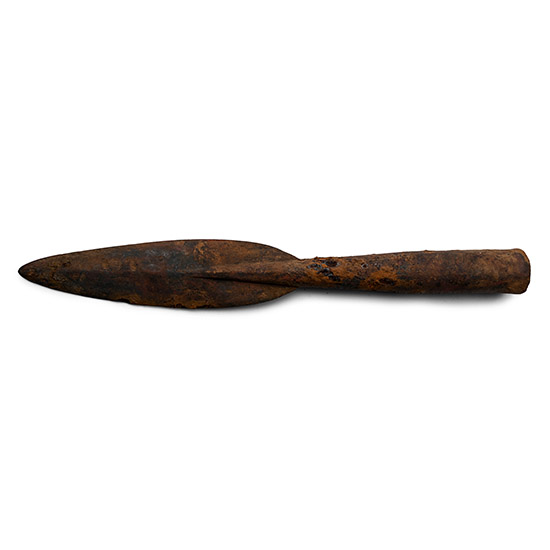
Large Greek Socketted Iron Spearhead
Sarissa, circa 3rd-2nd century B.C.Sold for (Inc. bp): £247
Comprising a leaf-shaped lentoid-section blade and long tubular socket. 826 grams, 38.5 cm
Ex Hermann Historica, 7 October 2009, no.207 (Part). Private collection, Germany. Kept in the UK from 2016. -
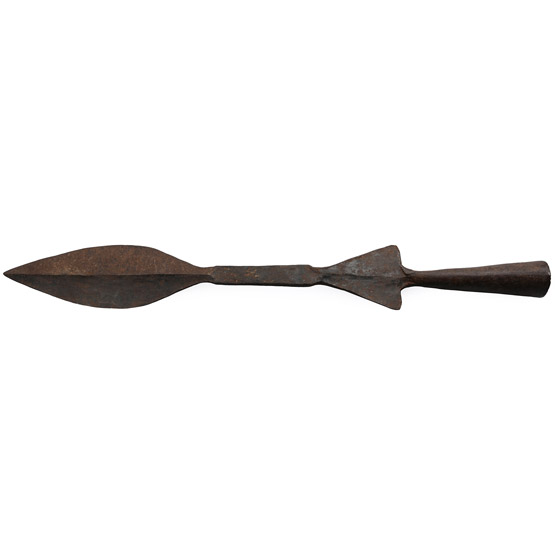
African Iron Socketted Spearhead
Late 20th century A.D.Sold for (Inc. bp): £26
Comprising a lentoid-section lanceolate head on a long flat-setion neck and triangular shoulder developing to a shallow conical socket. 200 grams, 36.3 cm
Property of a Berkshire, UK, gentleman collector. -
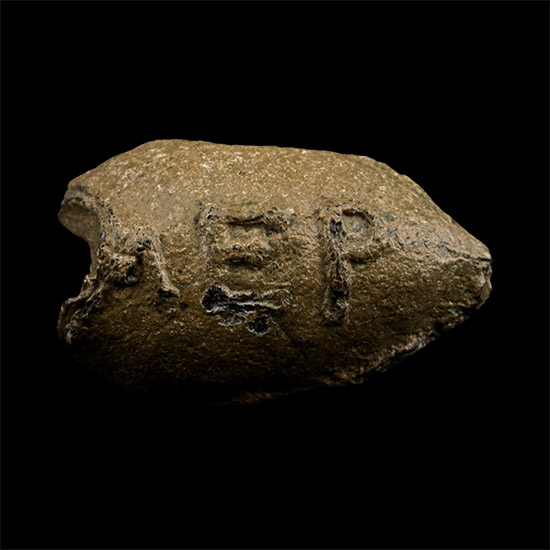
Greek Macedonian Lead Impacted Slingshot
4th-3rd century B.C.Sold for (Inc. bp): £52
Lentoid type with one end deformed on impact; raised legend '[.]MEP' to one face and 'NA[..]' to the other. 26.6 grams, 25 mm
Ex German art market, 2000s. Acquired from an EU collector living in London. From the collection of a Surrey, UK, gentleman.
