Loading, please wait...

Medieval to Post Medieval Bronze and Other Artefact Group Medieval to Post Medieval Bronze and Other Artefact Group Medieval to Post Medieval Bronze and Other Artefact Group
Use mousewheel to zoom in and out, click to enlarge
Details

LOT 1890

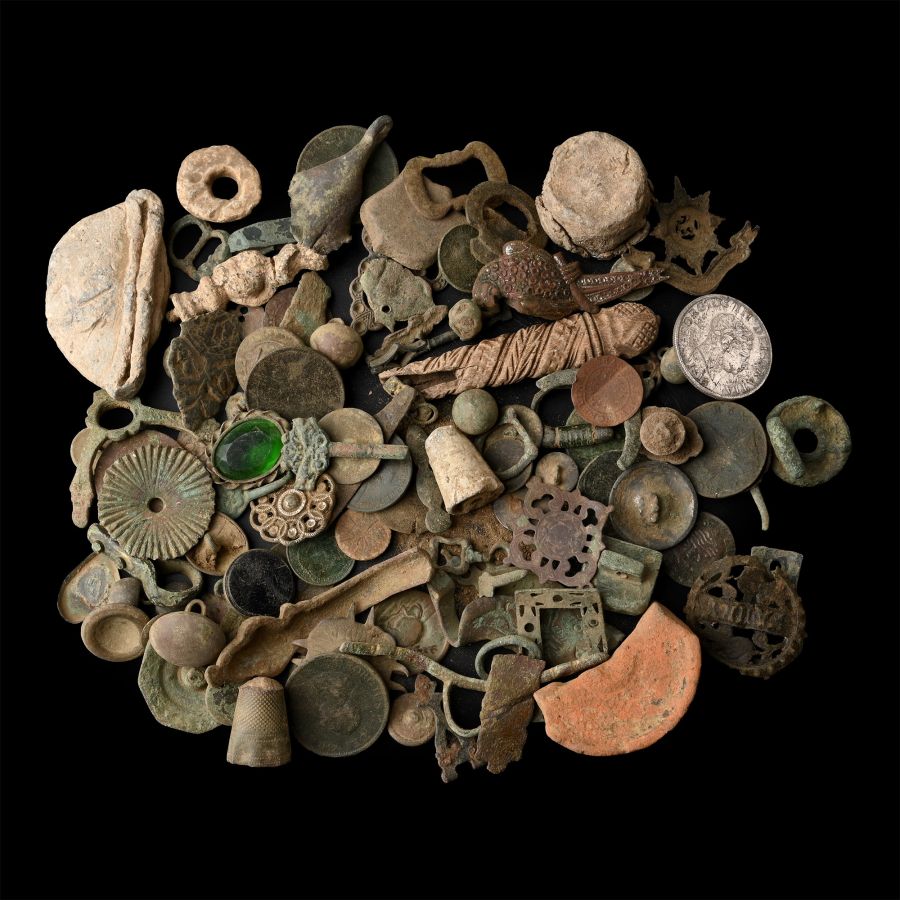
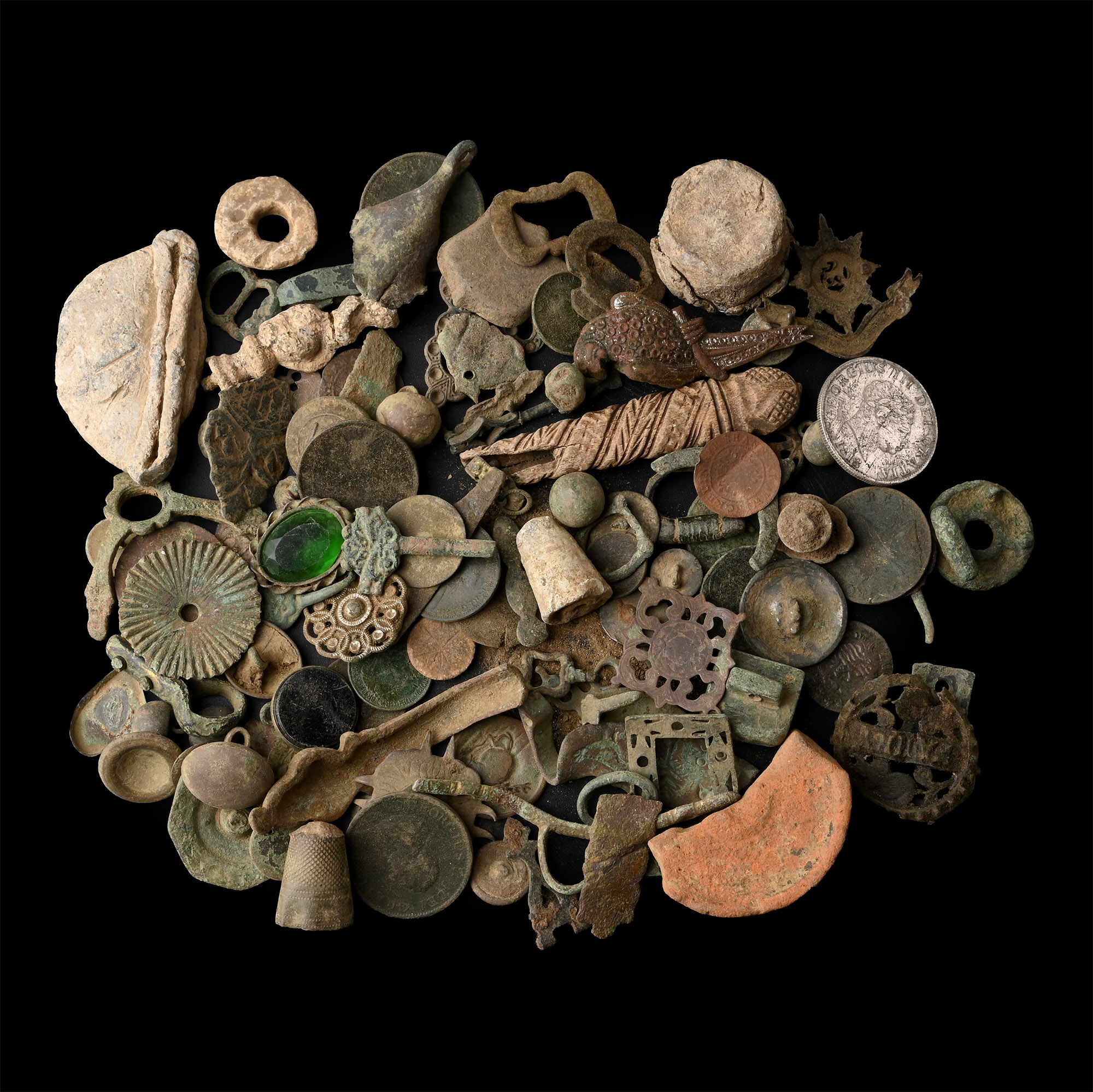
Medieval to Post Medieval Bronze and Other Artefact Group

12TH-20TH CENTURY A.D.

3/8 - 3 1/4 in. (755 grams total, 11-83 mm).

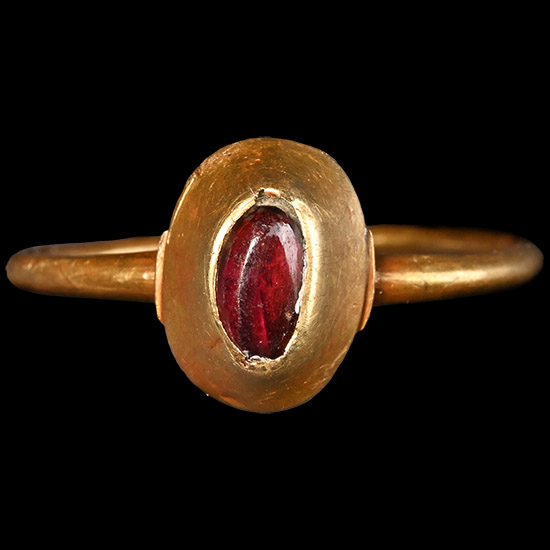
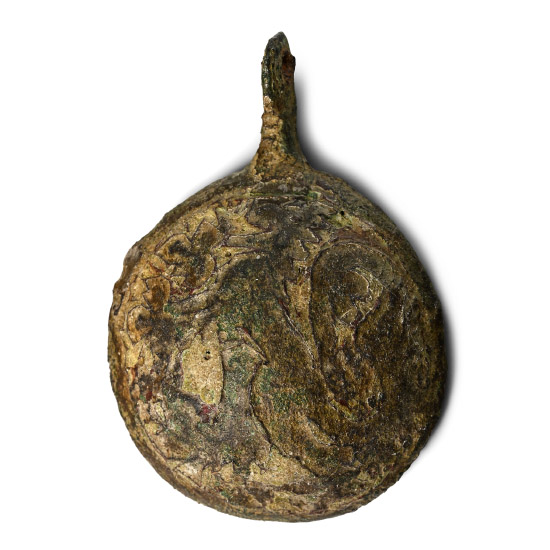
Large group of mixed artefacts, including clothes fasteners, mounts, brooches, buckles, coins, and others. [No Reserve]

Provenance

Found Suffolk, UK.
N.B. This lot is for UK buyers only.

CONDITION
VETTING:

TimeLine Auctions follows a vetting process to ensure the authenticity and legality of all items, reinforcing our commitment to integrity and responsible trading. Each antiquity, antique, and coin lot undergoes thorough examination by a vetting committee of at least ten external specialists, professional trade association members, scientists, and archaeologists: Our Vetting Process


AUCTIONS:

TimeLine is a leading auction house specialising in antiquities, ancient art, collectables, natural history, coins, medals, and books. Our auctions offer museums, collectors, historians, and enthusiasts the opportunity to acquire unique and historically significant pieces.

LOT 1890

Medieval to Post Medieval Bronze and Other Artefact Group

Estimate £30 - 40€35 - 46 (for guidance only)$41 - 54 (for guidance only)

Current bid: £5 +BP*
(1 Bid, Reserve met)

Sign in to Bid

Please enter a e-mail
Please enter a password
Or Create Account here.
Please confirm to accept TC and Privacy policy

(1 Bid, Reserve met)   |   Current bid: £5
RELATED LOTS
  • Large Medieval Carved Limestone of St Martin on Horseback with Cloak and Beggar
    Large Medieval Carved Limestone of St Martin on Horseback with Cloak and Beggar
    Flemish, 15th century A.D.

    Estimate: £20,000 - 30,000 (+bp*)

    Bids: 1   |   Current Bid: £10,000

    Carved in high relief, limestone scene depicting Saint Martin of Tours on horseback with his sword raised to cut off a portion of his military cloak to share it with a beggar; the saint wearing articulated armour buckled at his forearms and on his lower leg, with a billowing cloak draped across his shoulders; the horse shown in a contrapposto stance with one foreleg raised, with ornamental caparison and harness pendants; the beggar depicted with emaciated form wearing only underclothes, hands pressed together in supplication; to the reverse, traces of original fixing to a wall or architectural setting; restored. 108 kg, 78.5 cm high


    Ex Richard Chester Master, Cirencester, UK. Kate Thurlow & Robin Thompson Collection, 21 October 1998. This lot has been checked against the Interpol Database of stolen works of art and is accompanied by search certificate number no.13384-259005.

    The subject derives from the episode recorded by Sulpicius Severus in his Vita Sancti Martini (c. 397 A.D.), in which the young Roman soldier Martin, stationed at Amiens, divided his cloak to share it with a freezing beggar; that same night, he dreamt that Christ appeared to him wearing the half of the garment which he had given away. Martin subsequently converted to Christianity and eventually became Bishop of Tours, where he was venerated as one of the most important saints of early medieval Western Europe; his feast day is celebrated on 11th November. The present relief belongs to a tradition of Flemish devotional sculpture that flourished in the 15th century, when the prosperous towns of the Low Countries — Bruges, Ghent, Brussels, and Mechelen — became pre-eminent centres of religious carving exported across Northern Europe. Comparable examples to this piece are held in the collections of the Musée de Cluny, Paris, and the Rijksmuseum, Amsterdam.

    Lot Details

  • Medieval Gilt Bronze Statue of the Act of Almsgiving
    Medieval Gilt Bronze Statue of the Act of Almsgiving
    England, 12th century A.D.

    Estimate: £2,000 - 3,000 (+bp*)

    Opening Bid: £1,000

    Featuring a standing figure extending a purse to a kneeling supplicant, an allegory of almsgiving, preserving substantial traces of its original gilding, this rare Romanesque figural group likely formed part of a larger liturgical object such as a portable altar, reliquary, or candlestick; accompanied by a custom-made display stand. 26 grams, 43 mm (284 grams total, 68 mm including stand)


    By repute to have originated from Romney Marsh, Kent. From the collection of Paul Moore. This lot has been checked against the Interpol Database of stolen works of art and is accompanied by search certificate number no.13324-257971.

    The work finds close parallels in the Romanesque metalwork of England. Its figural treatment and iconographic resonance invite comparison with the celebrated Gloucester Candlestick (c.1107– 1113, Victoria & Albert Museum, inv. M.268-1921), where densely modelled figures act out moral and allegorical themes within a functional ecclesiastical object; with the Romanesque candlestick fragment from the Robert von Hirsch Collection (Sotheby’s, London, 22 June 1978, Lot 210); and with the broader corpus of English and German candlesticks and crosiers discussed by Peter Lasko in Ars Sacra, 800–1200 (1972), which demonstrate the intimate relationship between liturgical function and densely figurative decoration. Cf. also Victoria and Albert Museum, London: The Gloucester Candlestick, c.1107–1113 (inv. M.268-1921).

    Lot Details

  • Medieval and Later Buckle Collection
    Medieval and Later Buckle Collection
    Circa 15th-20th century A.D.

    Estimate: £10 - 20 (+bp*)

    Bids: 1   |   Current Bid: £5

    Including D-shaped, twin-loop, square and other types. 688 grams total, 17-84 mm


    Found Suffolk, UK. (UK buyers only, not for export)

    Lot Details