
Loading, please wait...
LOT 1328
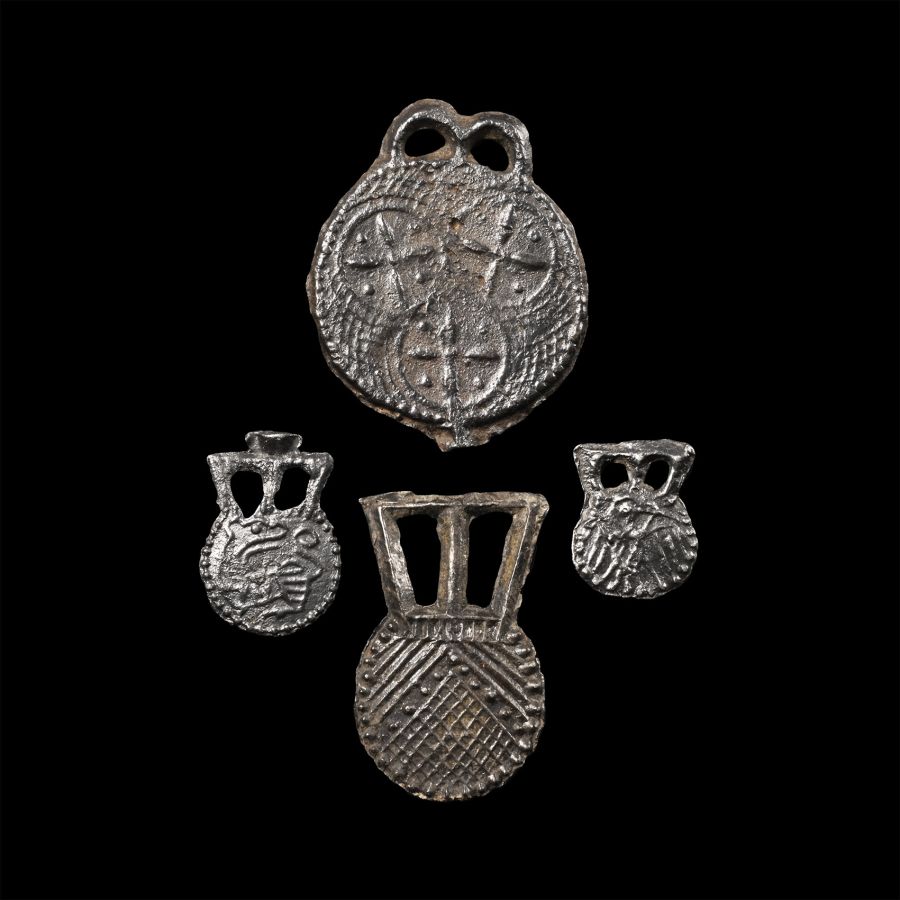
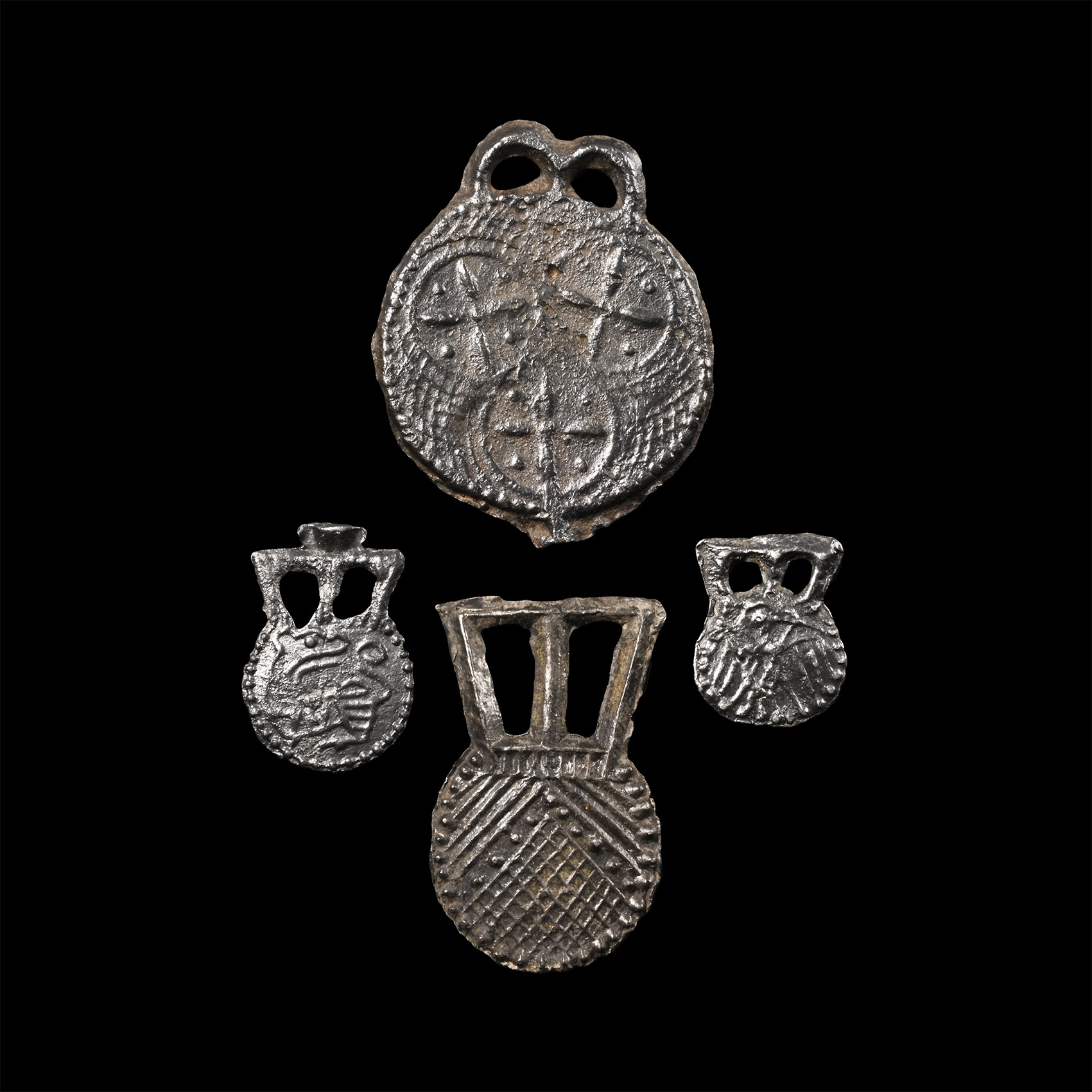
Medieval 'Thames' Pewter Spangle Group
CIRCA 13TH-14TH CENTURY A.D.
3/8 - 7/8 in. (2.57 grams total, 10-22 mm).
Mixed group including a discoid tag with three roundels, a discoid tag with hatched design and openwork attachment lug and other types. [4, No Reserve]
ProvenanceFound Billingsgate spoil from the Thames foreshore, London, UK, circa 1984.
Property of an Essex collector.
TimeLine Auctions follows a vetting process to ensure the authenticity and legality of all items, reinforcing our commitment to integrity and responsible trading. Each antiquity, antique, and coin lot undergoes thorough examination by a vetting committee of at least ten external specialists, professional trade association members, scientists, and archaeologists: Our Vetting Process
AUCTIONS:
TimeLine is a leading auction house specialising in antiquities, ancient art, collectables, natural history, coins, medals, and books. Our auctions offer museums, collectors, historians, and enthusiasts the opportunity to acquire unique and historically significant pieces.
-

Medieval 'Thames' Bifacial Pewter Wine Tavern Token
Circa 14th-15th century A.D.Sold for (Inc. bp): £72
Recto with running stag and arrow piercing the neck; verso with heater shield, hatched chevrons design. 0.72 grams, 16 mm
Found Billingsgate spoil from the Thames foreshore, London, UK, circa 1984. Property of an Essex collector. -
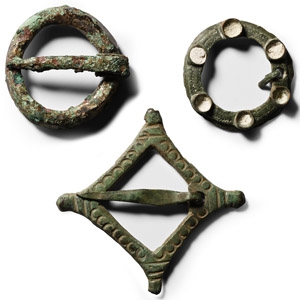
Medieval Bronze Ring Brooch Group
Circa 14th-16th century A.D.Sold for (Inc. bp): £26
Comprising: a plain ring brooch; one with six turrets; and one lozenge-shaped decorated with stamped annulets to the frame. 12 grams total, 23-38 mm
Found Cambridgeshire, UK. -
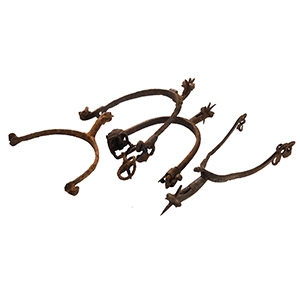
Medieval Iron Rowel Spur Collection
Circa 13th-16th century A.D.Sold for (Inc. bp): £143
Comprising examples of various types, including some retaining the rowel, buckle and other fitting elements. 249 grams total, 11.5-15 cm
Acquired 1990s-early 2000s. East Anglian private collection.
The early rowel spurs had short necks and small four-six or seven point star rowels, while four rowels were uncommon. After c.1350 the multipoint rowel became voguish though the former shapes continued.
