
Loading, please wait...
LOT 1192
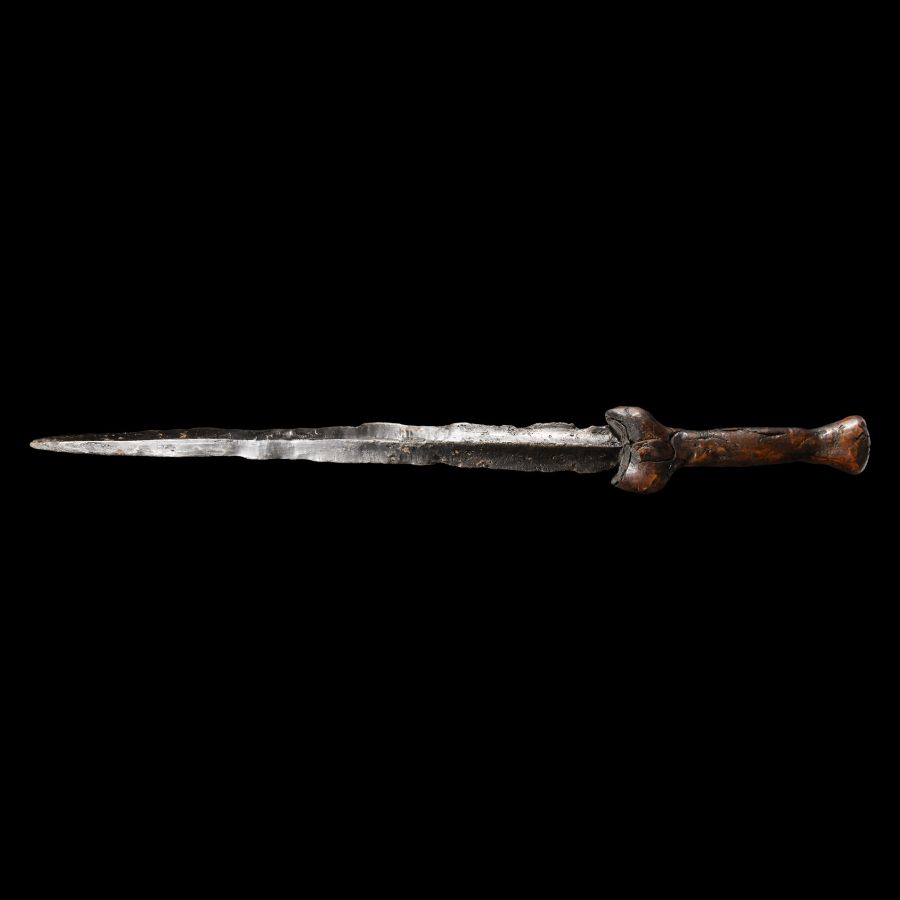
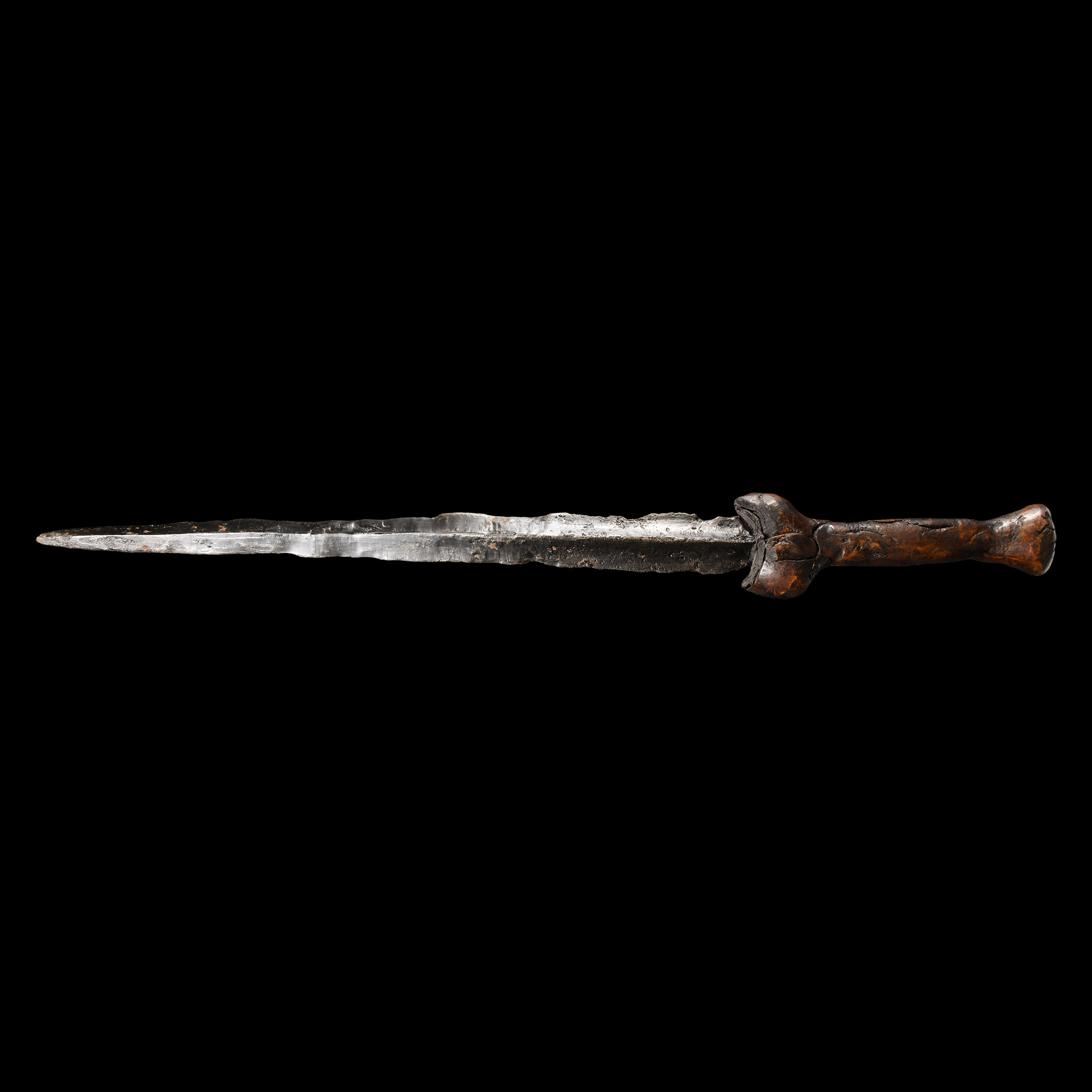
Medieval 'Thames' Iron Kidney Dagger
14TH-15TH CENTURY A.D.
14 5/8 in. (195 grams, 37.2 cm).
The blade with a lozenge-shaped cross-section; restored handle with bulbous cross-guard, waisted grip and flared pommel. [No Reserve]
ProvenanceFound on the Thames foreshore at Vintry, Southwark, London, UK.
CONDITIONTimeLine Auctions follows a vetting process to ensure the authenticity and legality of all items, reinforcing our commitment to integrity and responsible trading. Each antiquity, antique, and coin lot undergoes thorough examination by a vetting committee of at least ten external specialists, professional trade association members, scientists, and archaeologists: Our Vetting Process
AUCTIONS:
TimeLine is a leading auction house specialising in antiquities, ancient art, collectables, natural history, coins, medals, and books. Our auctions offer museums, collectors, historians, and enthusiasts the opportunity to acquire unique and historically significant pieces.
-
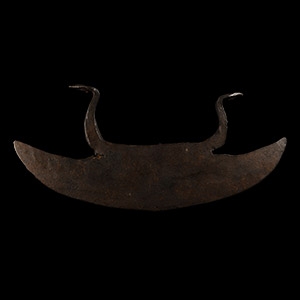
Medieval Iron Blade
Circa 14th-16th century A.D.Sold for (Inc. bp): £78
A slender crescentic axehead with attachment arms, single rivet hole to each terminal. 418 grams, 26 cm
Ex property of B.C., previously in a 1970s collection. Property of a Ruislip, UK, gentleman, by inheritance. Accompanied by a copy of a previous dealer's certificate of authenticity. -
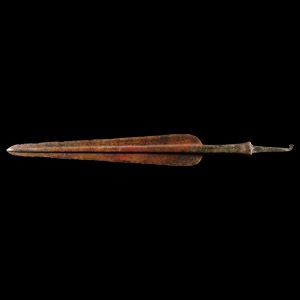
Massive West Persian Bronze Spearhead
Circa 12th-10th century B.C.Estimate: £250 - 350 (+bp*)
Opening Bid: £139
With heavily ridged and tapered blade, short collared shaft and tapered bent tang with round stud terminal. 674 grams, 52.5 cm
Acquired 1980-2015. Ex Abelita family collection.
The weapon belongs to the type 1 of the Khorasani spearhead classification, mainly from Marlik or Amlash areas. Similar pieces have been dated by Stutzinger to 1200-1100 B.C., but the period of use is attested at least until the 1000 B.C. -
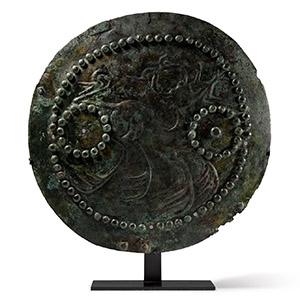
Etrusco-Italic Breastplate with Mythical Animal
5th century B.C.Sold for (Inc. bp): £4,680
Displaying a repoussé horned animal advancing right, two roundels composed of bulbous rivets flanking the animal and encircling the central design; accompanied by a custom-made display stand. 626 grams total, 28.5 cm high including stand
Collection of Jacques and Henriette Schumann, formed between 1950 and 1970. The Schumanns inherited part of their collection from Henriette’s parents, Alice and Fernand Halphen, andjacques’ maternal grandfather, Albert Lehmann. Collection of Jacques and Henriette Schumann, Christie's, Paris, 30th September 2003, lot 85. Accompanied by a copy of a French cultural passport no.107322. This lot has been checked against the Interpol Database of stolen works of art and is accompanied by search certificate number no.11877-207824.
This type of armour, composed from a bronze breast and back plate with hinged shoulder straps, all the parts backed with iron, was used by Etruscans, Hernici, Aequi and Volsci, the feared enemies of early Rome. In particular our item has many parallels with the disc-cuirass (cardiophylax) found in the Necropolis of Alfadena.
