
Loading, please wait...
LOT 1352
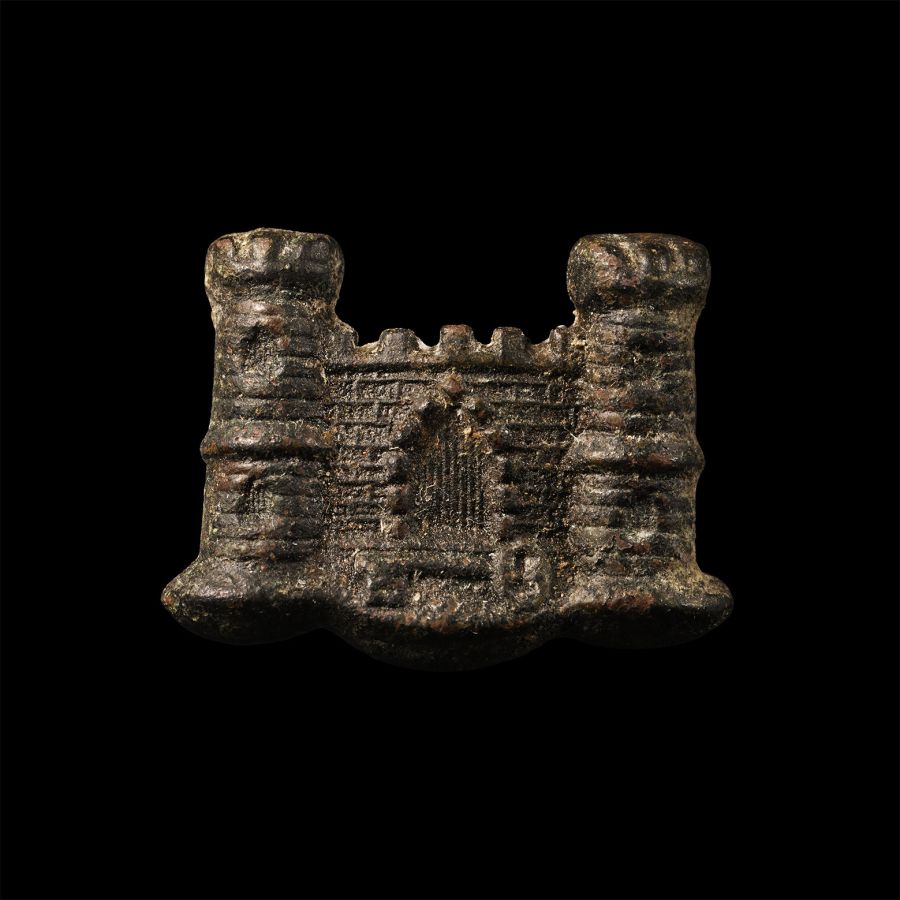
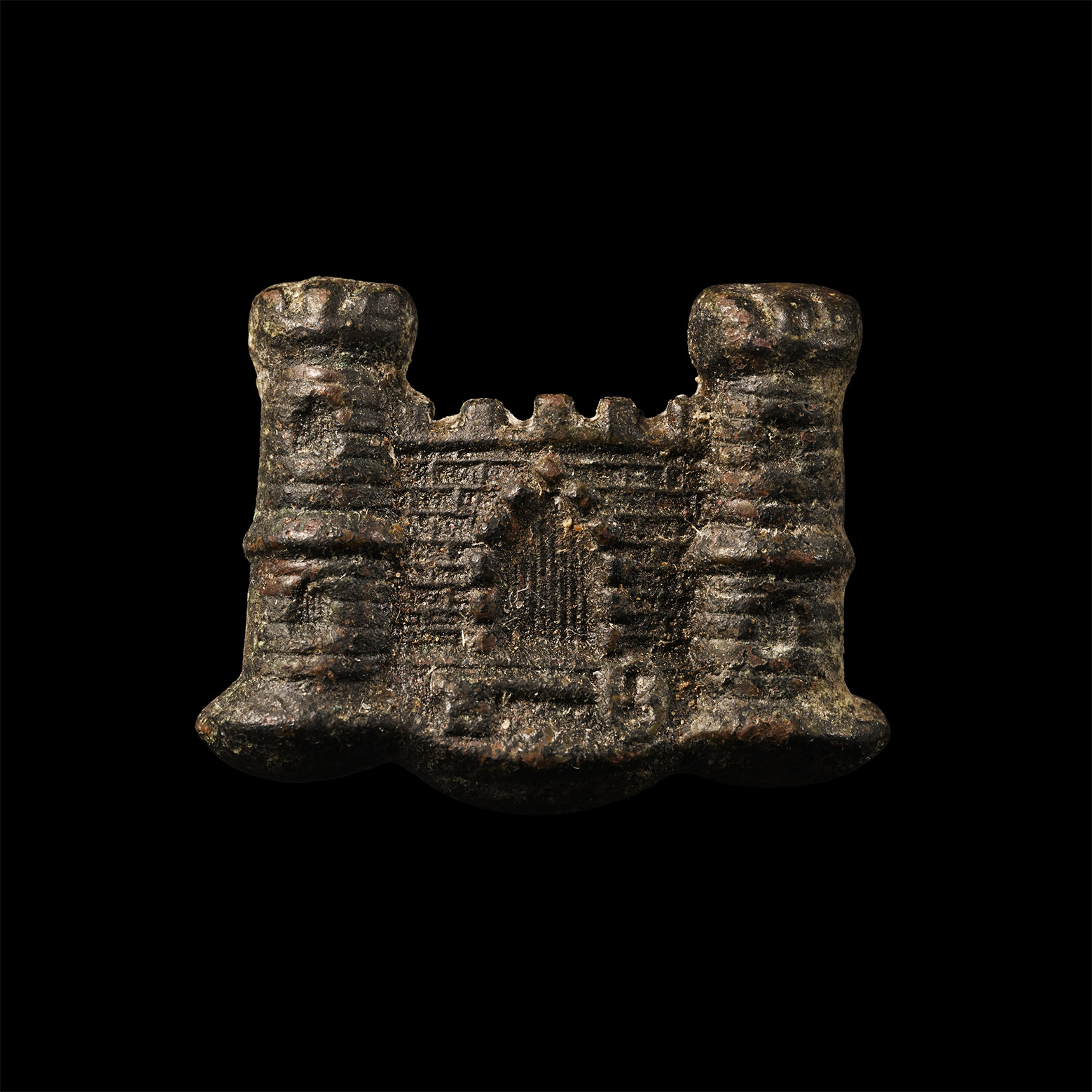
Medieval 'Thames' Castle Secular Badge with Key Below Draw Bridge
14TH-16TH CENTURY A.D.
1 in. (3.6 grams, 25 mm).
A copper-alloy secular badge in the form of a turreted castle, with drawbridge below crenelated gateway, detailing to the windows and stonework; two attachment loops to the reverse. [No Reserve]
ProvenanceFound on the Thames foreshore, London, UK.
Acquired 1960s-1990s.
From the late Alison Barker collection, a retired London barrister.
TimeLine Auctions follows a vetting process to ensure the authenticity and legality of all items, reinforcing our commitment to integrity and responsible trading. Each antiquity, antique, and coin lot undergoes thorough examination by a vetting committee of at least ten external specialists, professional trade association members, scientists, and archaeologists: Our Vetting Process
AUCTIONS:
TimeLine is a leading auction house specialising in antiquities, ancient art, collectables, natural history, coins, medals, and books. Our auctions offer museums, collectors, historians, and enthusiasts the opportunity to acquire unique and historically significant pieces.
LOT 1352
Medieval 'Thames' Castle Secular Badge with Key Below Draw Bridge
Sold for (Inc. bp): £78
-
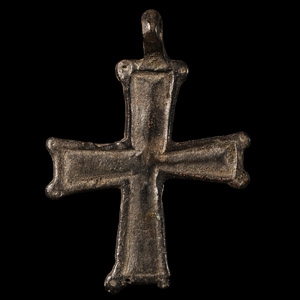
Medieval Cross Pendant
Circa 14th-16th century A.D.Sold for (Inc. bp): £78
A cruciform pendant with small lug to both corners of each arm; integral suspension loop. 7.58 grams, 47.5 mm
Acquired in the 1990s. UK private collection. Property of a Sussex, UK, teacher. -
.jpg)
Medieval Gilt Pendant with Saint
12th-13th century A.D.Sold for (Inc. bp): £98
A hollow-formed gilt-bronze triangular sleeve with open edge and attachment loops, repoussé image of a nimbate facing saint with a cross in one hand. 7.12 grams, 39 mm
Fine condition.
Acquired from Dick Meyer in 2005. Ex central London gallery. -
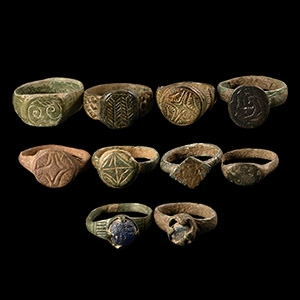
Medieval and Other Ring Collection
15th century A.D. and laterSold for (Inc. bp): £156
A mixed group of rings including examples set with glass cabochons, bezels engraved with geometric or cruciform designs, together with other types. 46.5 grams total, 19-29 mm
Acquired in the late 1990s-2000. Property of an East London gentleman.
