
Loading, please wait...
LOT 1378
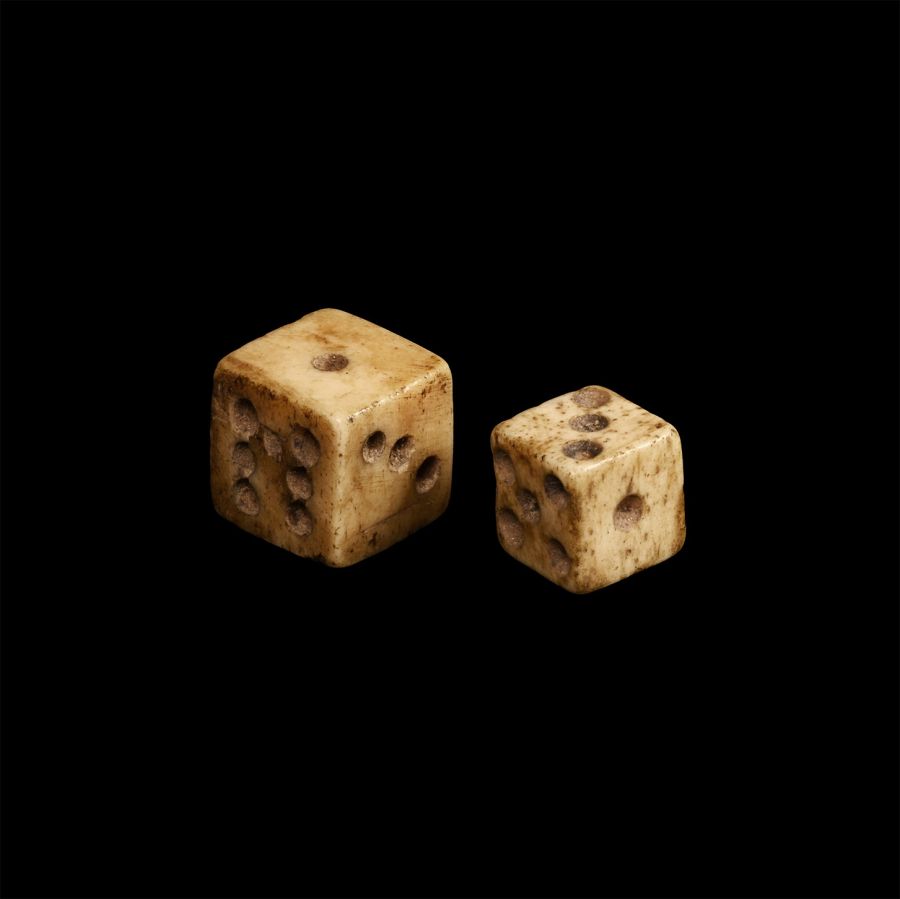
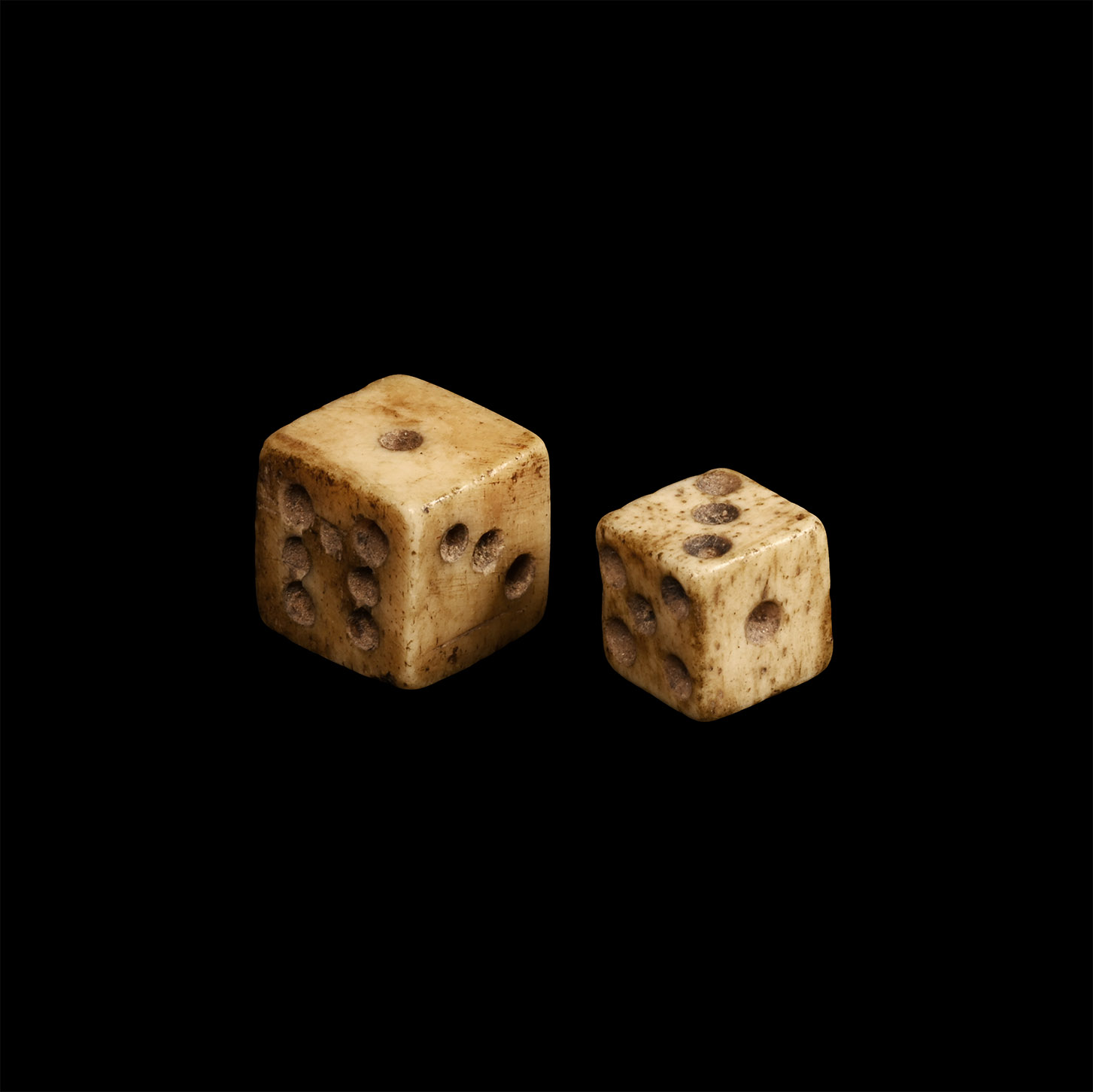
Medieval 'Thames' Bone Dice Pair
14TH-16TH CENTURY A.D.
3/8 in. (3.28 grams total, 8-10 mm).
A pair of differently sized bone dice with recessed dot numbering, configured: 1:4; 2:6; 3:5 and 1:6; 2:5; 3:4. [2, No Reserve]
ProvenanceFound on the Thames foreshore, London, UK.
Acquired 1960s-1990s.
From the late Alison Barker collection, a retired London barrister.
TimeLine Auctions follows a vetting process to ensure the authenticity and legality of all items, reinforcing our commitment to integrity and responsible trading. Each antiquity, antique, and coin lot undergoes thorough examination by a vetting committee of at least ten external specialists, professional trade association members, scientists, and archaeologists: Our Vetting Process
AUCTIONS:
TimeLine is a leading auction house specialising in antiquities, ancient art, collectables, natural history, coins, medals, and books. Our auctions offer museums, collectors, historians, and enthusiasts the opportunity to acquire unique and historically significant pieces.
-
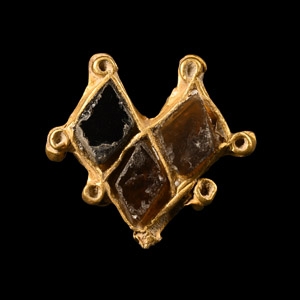
Medieval Gold and Garnet Necklace Element
14th-16th century A.D.Sold for (Inc. bp): £156
A necklace element comprising a gold frame with seven cylindrical loops to accept threads; three lozengiform cells each with an inset garnet cloison. 1.48 grams, 14 mm
Acquired 1970-2010. Collection of a late Japanese gentleman. -
.jpg)
Medieval Decorated Bone Artefact
14th-15th century A.D.Sold for (Inc. bp): £26
A bone item, likely the hilt of a knife, composed of a slightly tapering cuboid body with a thin piece of bone sandwiched between the two halves, one face ornamented with ring-and-dot motifs along the length of the body, crosses formed at regular intervals, one face with diagonal hatching, one face with columns composed of ring-and-dot motifs, one face with vertical hatching. 19.77 grams, 70 mm
Fine condition.
Acquired 1960s-1990s. Private collection of the late Alison Barker, a retired London barrister.
The careful repairs in antiquity suggest that this item was greatly treasured by its owner. -
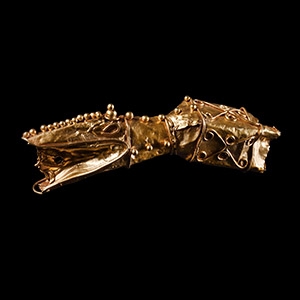
Medieval Gold Beast-Headed Bracelet Terminal
12th-13th century A.D.Sold for (Inc. bp): £286
A sheet-gold zoomorphic bracelet terminal in the form of a stylised beast head, composed of a rectangular-section body and crocodilian jaws; filigree volutes and granules decorating the body and forming the eyes and a scale-like ridge along the snout, and forming the outline of the creature's mouth; pierced through the mouth. 7.07 grams, 53 mm
Acquired in the 1980s. Private collection of a Hemel Hempstead, UK, gentleman. Property of a Harrow, UK gentleman.
