
Loading, please wait...
LOT 1390
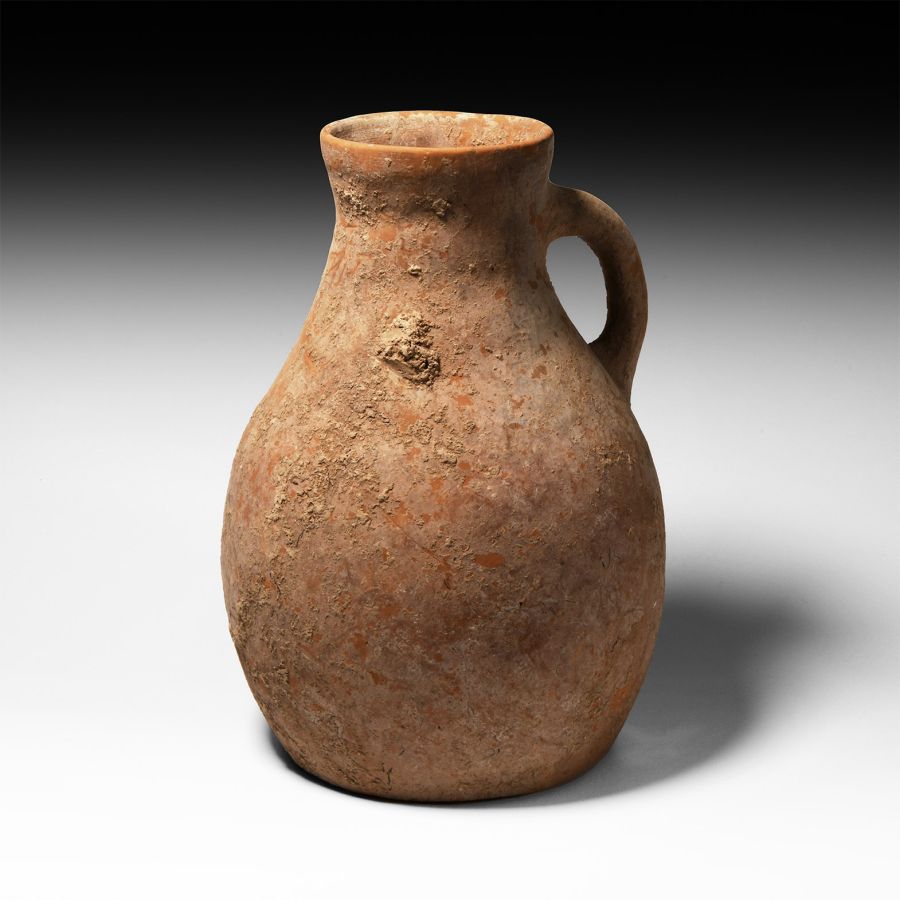
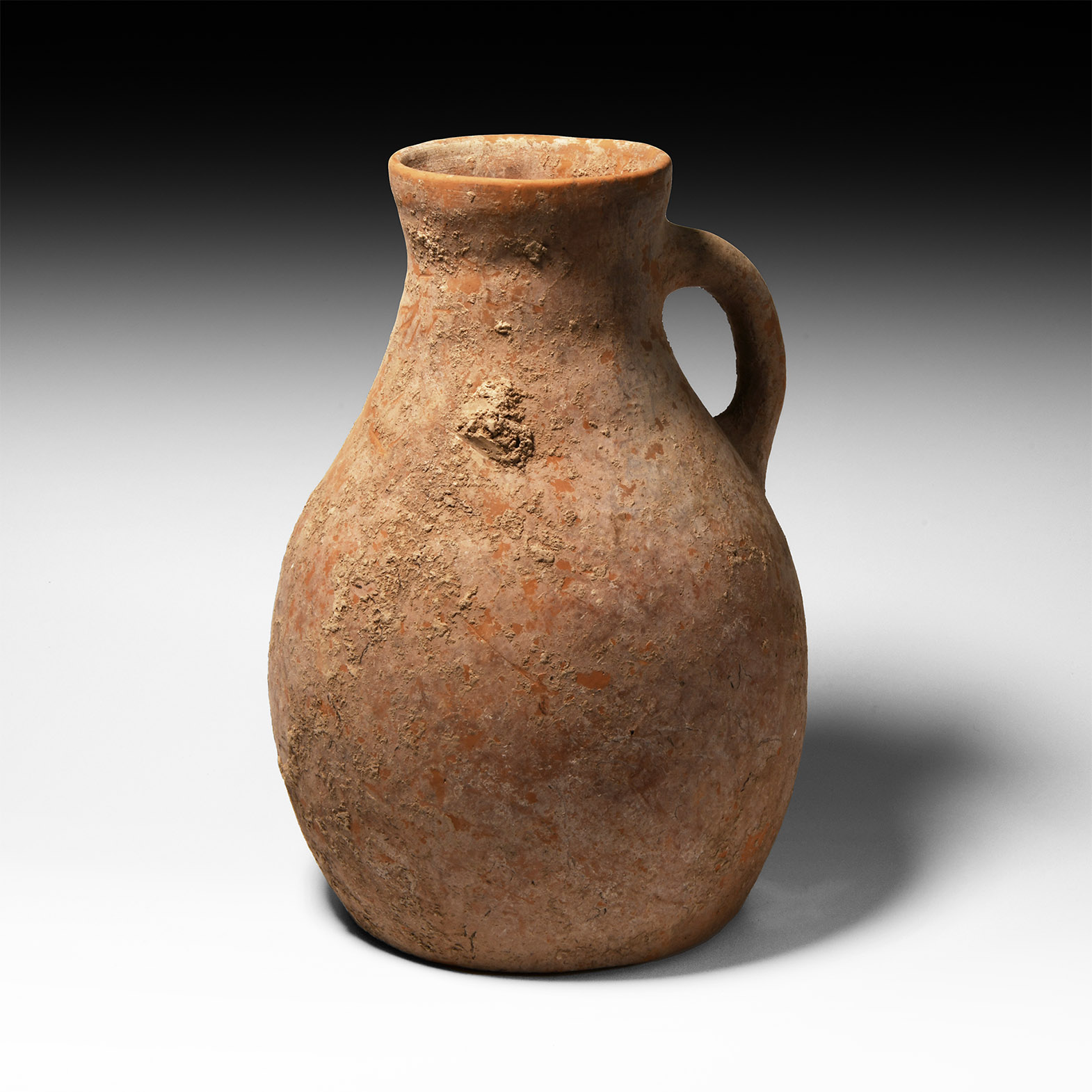
Medieval Terracotta Pitcher
6TH-9TH CENTURY A.D.
10 5/8 in. (1.7 kg, 27 cm high).
A piriform ceramic pitcher with integral round-section handle.
ProvenanceAcquired 1980-2015.
Ex Abelita family collection.
TimeLine Auctions follows a vetting process to ensure the authenticity and legality of all items, reinforcing our commitment to integrity and responsible trading. Each antiquity, antique, and coin lot undergoes thorough examination by a vetting committee of at least ten external specialists, professional trade association members, scientists, and archaeologists: Our Vetting Process
AUCTIONS:
TimeLine is a leading auction house specialising in antiquities, ancient art, collectables, natural history, coins, medals, and books. Our auctions offer museums, collectors, historians, and enthusiasts the opportunity to acquire unique and historically significant pieces.
LOT 1390
Medieval Terracotta Pitcher
Estimate £100 - 140€120 - 160 (for guidance only)$140 - 190 (for guidance only)
-
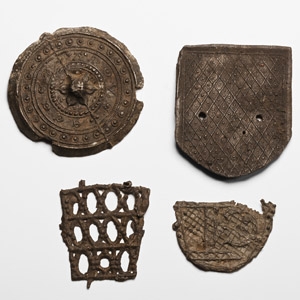
Large Medieval 'Thames' Pilgrim's Badge Collection
Circa 14th-15th century A.D.Sold for (Inc. bp): £46
A mixed group of lead pilgrim badges of different types: a wedge-shaped fragment displaying an openwork oval design; a semi-circular fragment bearing the letters 'CT' on a cross-hatched field; a pointed arch-shaped fragment decorated with lozenges, each populated with a single pellet, two piercings; a discoid example with raised central flower head, enclosed by concentric roundels decorated with geometric forms including pellets, ring-and-dot motifs and hatched lines, together with incomplete legend. 20.3 grams total, 29-39 mm
Found on the Thames foreshore, London, UK. Acquired on the UK antiques market between 1974-1985. Albert Ward collection, Essex, UK. -
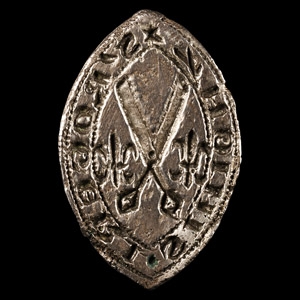
English Medieval Silver Vesica-Shaped Seal Matrix for Tailor Roger Simion
Circa 1290-1340 A.D. or laterSold for (Inc. bp): £819
A silver vesica-shaped seal matrix with strap and pierced lug to the reverse; incuse motif of a pair of shears between two small fleurs-de-lys; Lombardic script legend within borders '* S' ROGER · SIMION' (seal of Roger Simion). 14.4 grams, 33 mm
The Matrix Collection, formed by David Morris since the late 1980s. Matrix Collection catalogue no.0310. Many of the seals within the collection were published in a book titled 'The Matrix Collection', by David Morris in 2012. Accompanied by a copy of the illustrated collection notes.
The shears in the design may indicate that Roger was a tailor. -
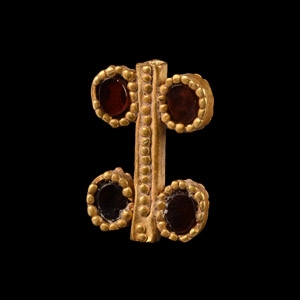
Medieval Gold Garnet Set Pendant
12th-15th century A.D.Sold for (Inc. bp): £117
A bifacial gold pendant of tubular form, four oval cells to the terminals with polished garnet inserts, granules to the body and cells. 1.15 grams, 14 mm
Acquired 1980-2015. Ex Abelita family collection.
