
Loading, please wait...
LOT 2111
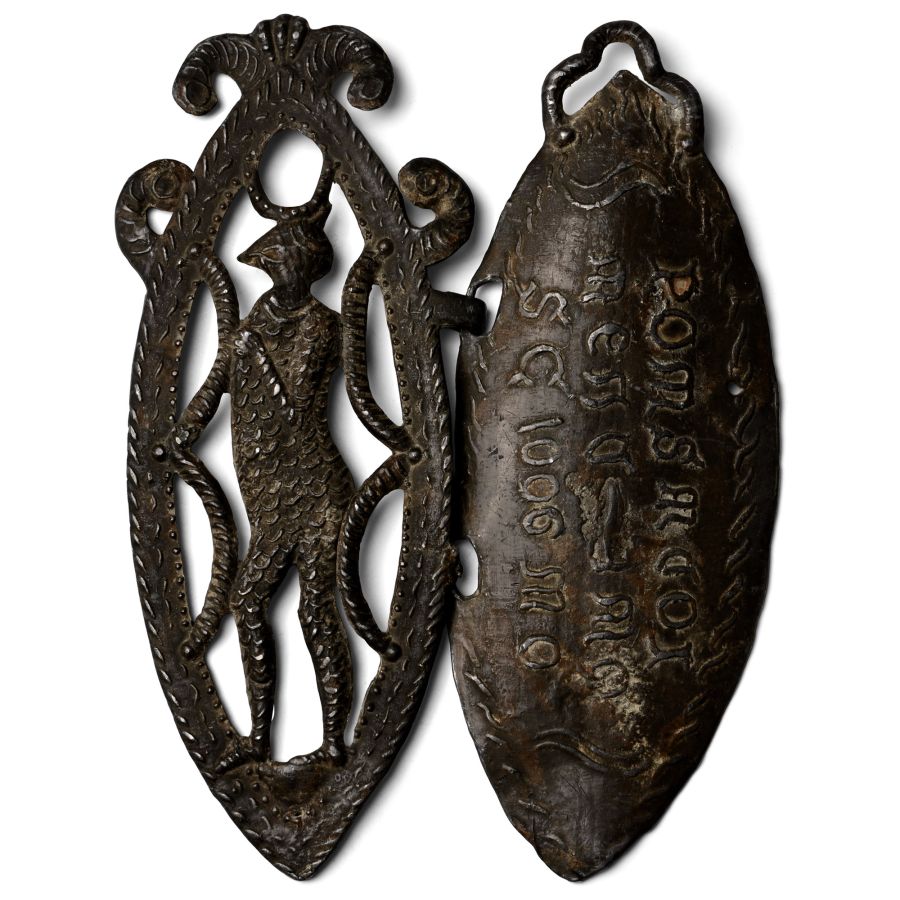
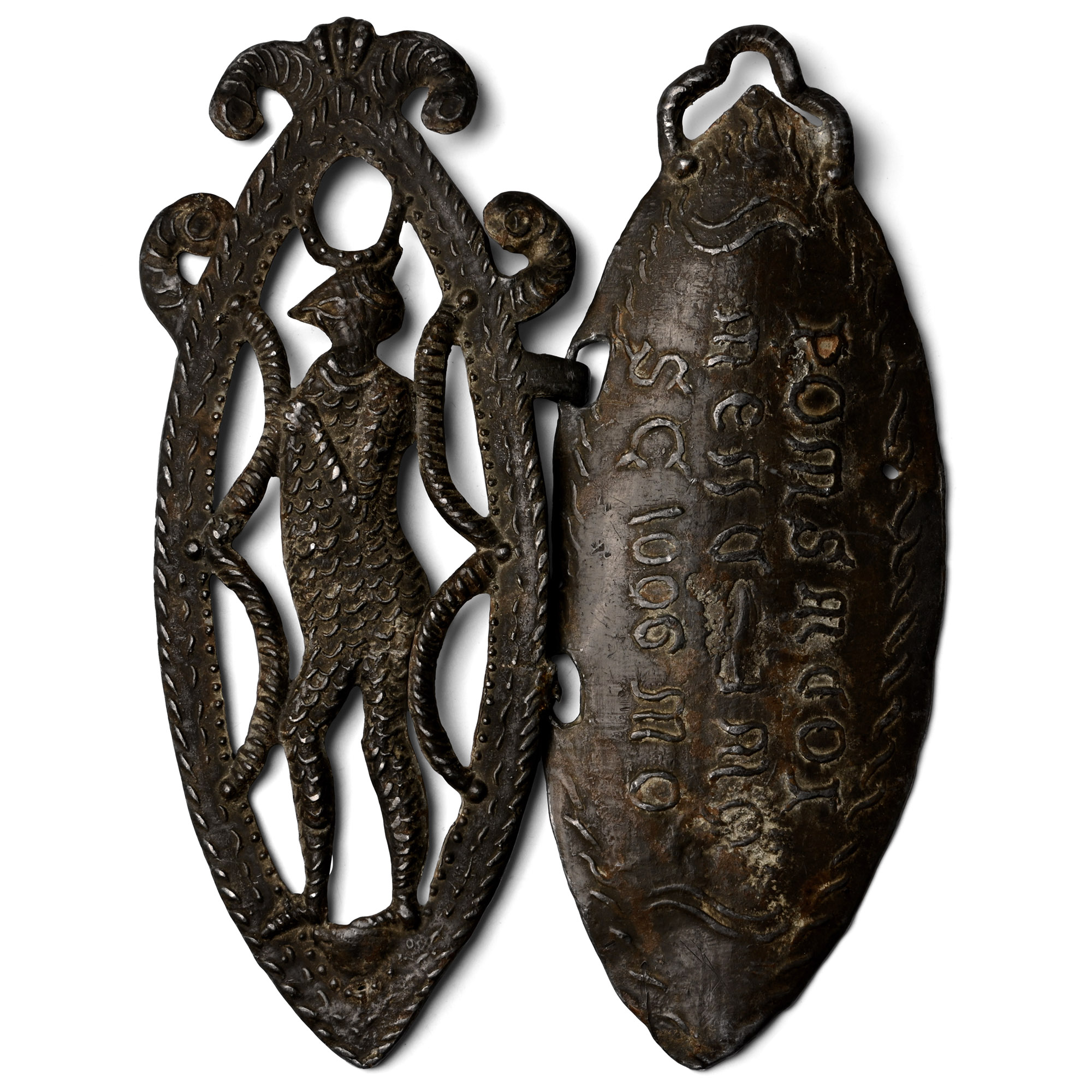
Medieval Style 'Billy and Charley' Lead Alloy Shadwell Type Shrine Forgery
19TH CENTURY A.D.
6 3/8 in. (241 grams total, 16 cm).
Vesica-shaped diptych with standing nimbate Mary and child; openwork panel with mail-clad knight wearing a plumed helmet; believed to be by William Smith and Charles Eaton, 'dated' 1006 A.D. [No Reserve]
ProvenanceReceived from the curator of Leeds Museum by descent, circa mid 1980s.
Ex property of a Yorkshire lady.
From the private collection of a Cheshire, UK, gentleman.
This lot is accompanied by an illustrated lot declaration signed by the Head of the Antiquities Department, Dr Raffaele D'Amato.
See Mitchiner, M., Medieval Pilgrim & Secular Badges, London, 1986, p.278-9; cf. similar examples in: The British Museum, Museum of London, Bristol City Museum and Art Gallery, Department of British Archaeology, Cuming Museum, Southwark.
Footnotes"Billy and Charlies", also known as the Shadwell forgeries, refer to a very extensive series of fake antiquities made in Victorian London by William Smith (Billy) and Charles Eaton (Charley). They were mudlarks who searched the Thames for items of value. William Edwards, a London antique dealer, made Billy's acquaintance around 1845, and he met Charley some years later. He paid them for items of interest that they found. Billy and Charley earned money from this until 1857, when they decided to counterfeit antiquities. They cast objects from lead or pewter, cutting dies into plaster of Paris moulds with nails and knives, and bathing the finished items in acid to simulate aging. Their commonest products were medallions, but others included daggers, statuettes, ampullae and even small shrines; as they were both illiterate the inscriptions on many of the objects are nonsense. They sold their forgeries to very prominent collectors of the time who thought they were genuine. Eventually, due to the large volume of objects that were appearing on the market, they were arrested and tried at court though they could not be found guilty of any crime at the time. They were released and carried on producing fakes but their style of manufacture had become well known and they eventually disappeared from history.
CONDITIONTimeLine Auctions follows a vetting process to ensure the authenticity and legality of all items, reinforcing our commitment to integrity and responsible trading. Each antiquity, antique, and coin lot undergoes thorough examination by a vetting committee of at least ten external specialists, professional trade association members, scientists, and archaeologists: Our Vetting Process
AUCTIONS:
TimeLine is a leading auction house specialising in antiquities, ancient art, collectables, natural history, coins, medals, and books. Our auctions offer museums, collectors, historians, and enthusiasts the opportunity to acquire unique and historically significant pieces.
LOT 2111
Medieval Style 'Billy and Charley' Lead Alloy Shadwell Type Shrine Forgery
Sold for (Inc. bp): £260
-
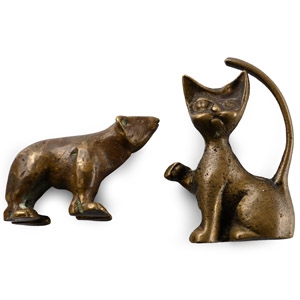
Brass Cat and Bear Statuettes
19th-early 20th century A.D.Sold for (Inc. bp): £7
Comprising of a seated guardant cat with a raised leg and curved tail, a polar bear with head turned up. 280 grams total, 52-70 mm
Ex property of a London collector; acquired 1960s. Property of a North London, UK, lady. This lot is accompanied by an illustrated lot declaration signed by the Head of the Antiquities Department, Dr Raffaele D'Amato. -
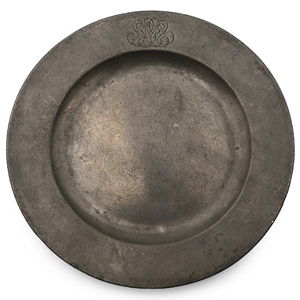
Georgian Pewter Plate with Monogram and Maker's Marks
London, 18th century A.D.Sold for (Inc. bp): £13
A shallow plate with wide everted rim and engraved stylised monogram; three maker's marks to the underside: 'Thomas' with dove holding an olive branch between two towers, crowned X with Tudor rose, T Caster R London with standing figure in a structure. 568 grams, 25 cm wide
From the private family collection of Ersula Barter-Hemmerich, the longest serving member of staff working at the United Nations, her private collection formed in the 1950s and 1960s; thence by descent to her grandson. This lot is accompanied by an illustrated lot declaration signed by the Head of the Antiquities Department, Dr Raffaele D'Amato. -
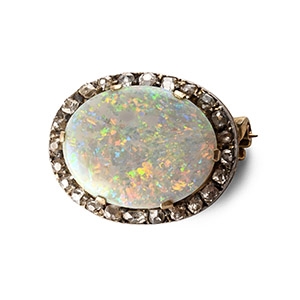
Gold Brooch with Large Opal and Diamonds
20th century A.D.Sold for (Inc. bp): £494
An oval opal cabochon displaying mainly orange and green colours in a pinfire pattern, set in a nine carat gold brooch set with variously cut diamonds. 4.98 grams, 24 mm
Ex London, UK, gentleman's collection, 1980-1990s. This lot is accompanied by an illustrated lot declaration signed by the Head of the Antiquities Department, Dr Raffaele D'Amato.
