
Loading, please wait...
LOT 2231
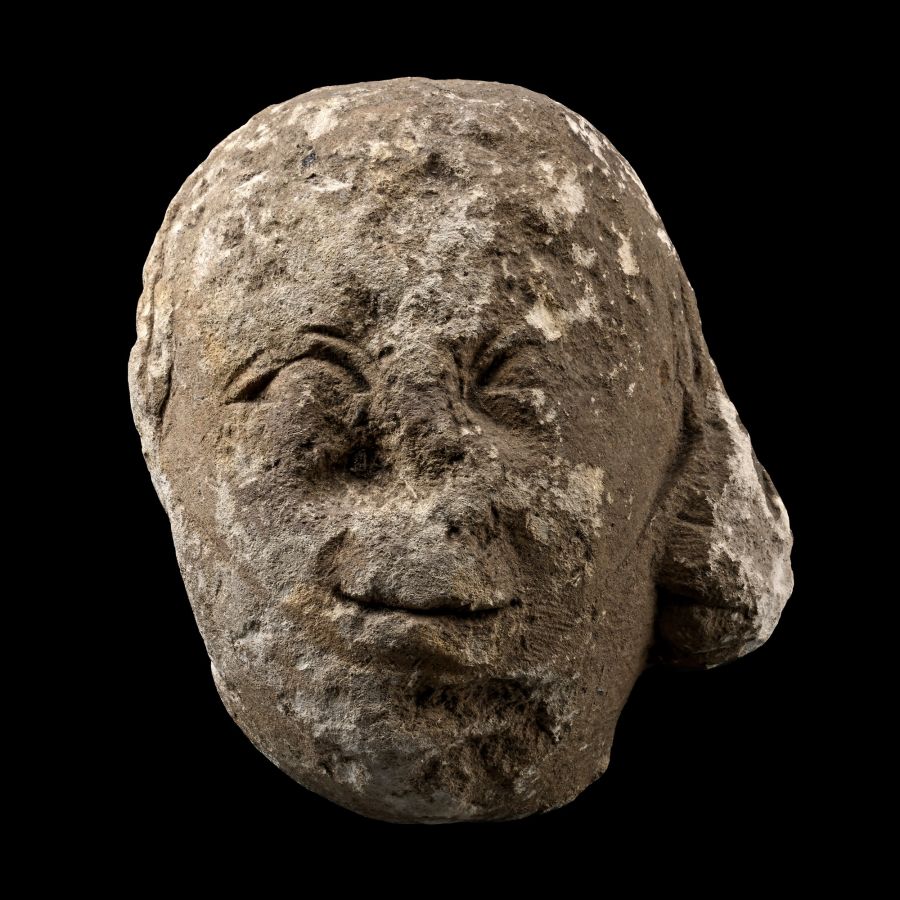
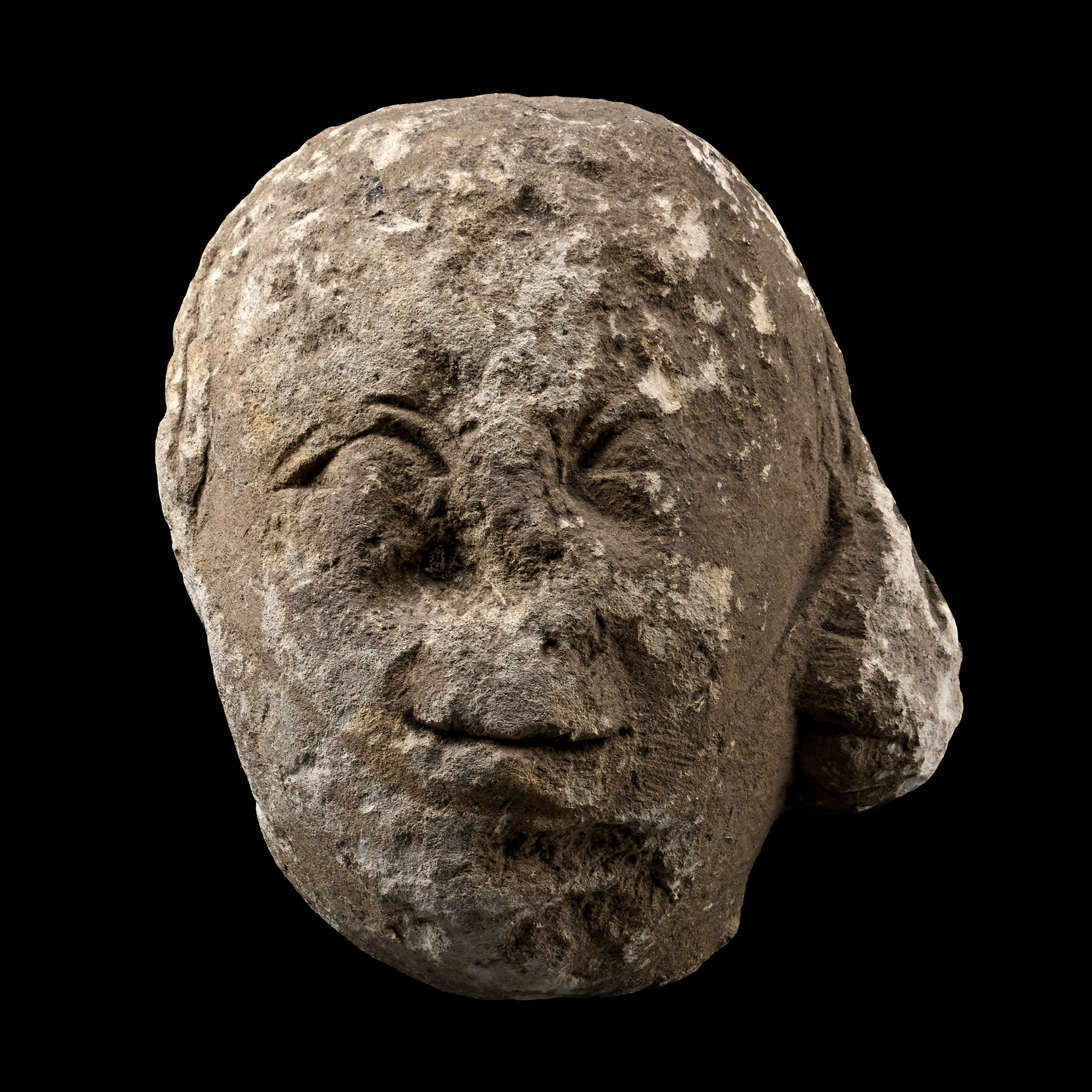
Medieval Stone Fragment of a Lady Wearing a Barbette
FRANCE, 13TH CENTURY A.D.
5 1/4 in. (940 grams, 13.4 cm).
Modelled in the round as a female face with almond-shaped eyes, wearing a barbette, remains of a double-braid hairstyle. [No Reserve]
ProvenanceEx Altounian-Rousset.
LiteratureCf. Milwaukee Art Museum, item M1958.67.
CONDITIONTimeLine Auctions follows a vetting process to ensure the authenticity and legality of all items, reinforcing our commitment to integrity and responsible trading. Each antiquity, antique, and coin lot undergoes thorough examination by a vetting committee of at least ten external specialists, professional trade association members, scientists, and archaeologists: Our Vetting Process
AUCTIONS:
TimeLine is a leading auction house specialising in antiquities, ancient art, collectables, natural history, coins, medals, and books. Our auctions offer museums, collectors, historians, and enthusiasts the opportunity to acquire unique and historically significant pieces.
LOT 2231
Medieval Stone Fragment of a Lady Wearing a Barbette
Estimate £500 - 700€580 - 810 (for guidance only)$680 - 950 (for guidance only)
Opening Bid
£5 (EUR 6; USD 7) +BP*
-
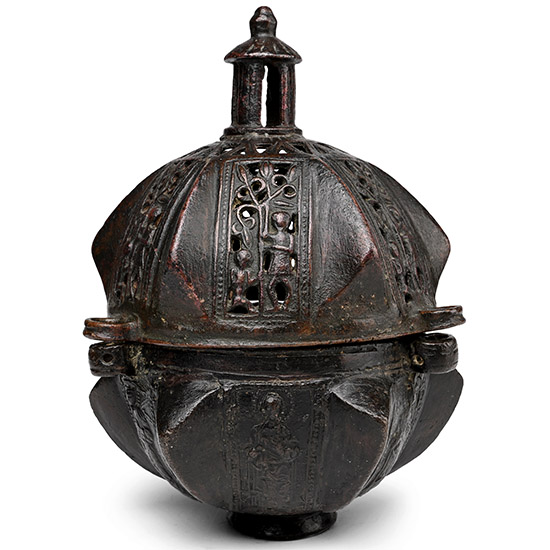
Medieval Bronze Incense Burner
Germany, circa 1200 A.D.Estimate: £2,000 - 3,000 (+bp*)
Bids: 2 | Current Bid: £10
Hollow-formed two-part casting; base cup-shaped with basal ring and six radiating flanges with nimbate figures between, three rings to the rim; cover of similar shape with rings and flanges, openwork interstitial panels each with a tall standing figure beside a shorter one with vegetation, at the apex a slotted tube and knop finial. 686 grams total, 15.3 cm high
Collection of Melissa Minervino Gabardi (1943-2021), Milan. This lot has been checked against the Interpol Database of stolen works of art and is accompanied by search certificate no.13510-262838.
Since early Christian times, the burning of incense during church services has symbolised prayers rising to heaven, which was particularly visible in the Eastern Liturgy. The censer's architectural form is enriched by the animal and human figures that adorn its surface. -
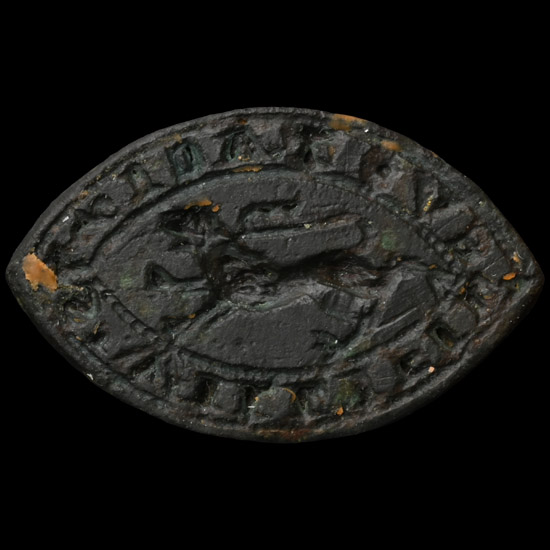
Medieval Bronze Vesica-Shaped Seal Matrix of William
Circa 13th-14th century A.D.Estimate: £150 - 200 (+bp*)
Opening Bid: £75
With central motif of a lion courant, border with legend '* S' VVILL[...]VS[.]ACI'; supplied with an impression. 7.28 grams, 29 mm
Acquired on the UK art market in the 1980s. From an East Anglian private collection. -
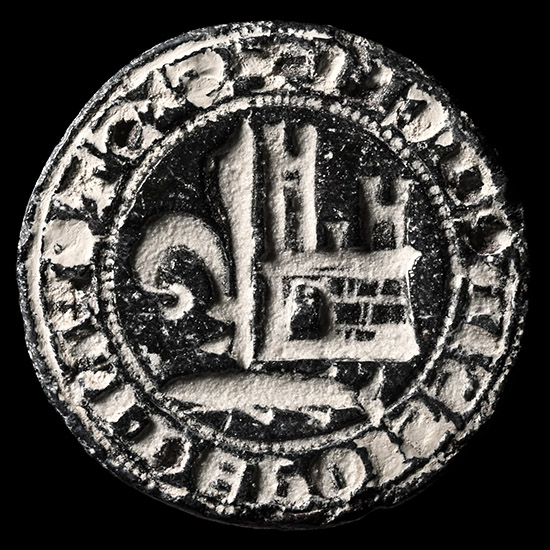
Medieval Bronze Seal Matrix of Stephen of Poissy, Cleric
1300-1500 A.D.Estimate: £300 - 400 (+bp*)
Opening Bid: £150
An extremely fine seal matrix with a hexagonally facetted handle with a hexagonal and a sub-circular lug, probably to accommodate a chain or cord to allow the seal to be carried about the neck or secured about the person; the base of the matrix handle widening to accommodate the circular die engraved with a bricked castle next to which is half a fleur-de-lis, beneath the image of a fish; the central device surrounded by a circular beaded border separating it from an inscription reading '+S'STEPhE DE POISSIACO. CL'I' for 'Seal of Stephen of Poissy, cleric'; accompanied by a museum-quality impression. 8.83 grams, 19 mm
Found whilst searching with a metal detector in Folkestone and Hythe, Kent, UK. Property of a Kent gentleman, a specialist medieval collector. Accompanied by a copy of the British Museum's Portable Antiquities Scheme (PAS) report no.KENT-9E270E.
The central device's motif supports the attribution of this matrix to someone hailing from the modern French town of Possy in the Île-de-France region of France, as the fish and fleur-de-lis are still used as the arms of the town to this day. Additionally, other medieval seals featuring a castle dimidiated with the fleur-de-lys are known with connections to the town, for example, those published by Douët (1865) No. 5050. The owner of this seal shares his name with the famed Stephen or Etienne de Poissy, who'd eventually become Archbishop of Paris and cardinal priest of Sant'Eusebio in Rome. The famed Stephen is particularly well known in English history as he oversaw the signing of the Treaty of Brittany in 1360. It is unlikely that this is the seal of that particular Stephen of Poissy, however, as those with high ecclesiastical postings tended to have large, ornate precious metal seal matrices. This matrix is also of a form probably placing it a generation earlier.
