
Loading, please wait...
LOT 1709
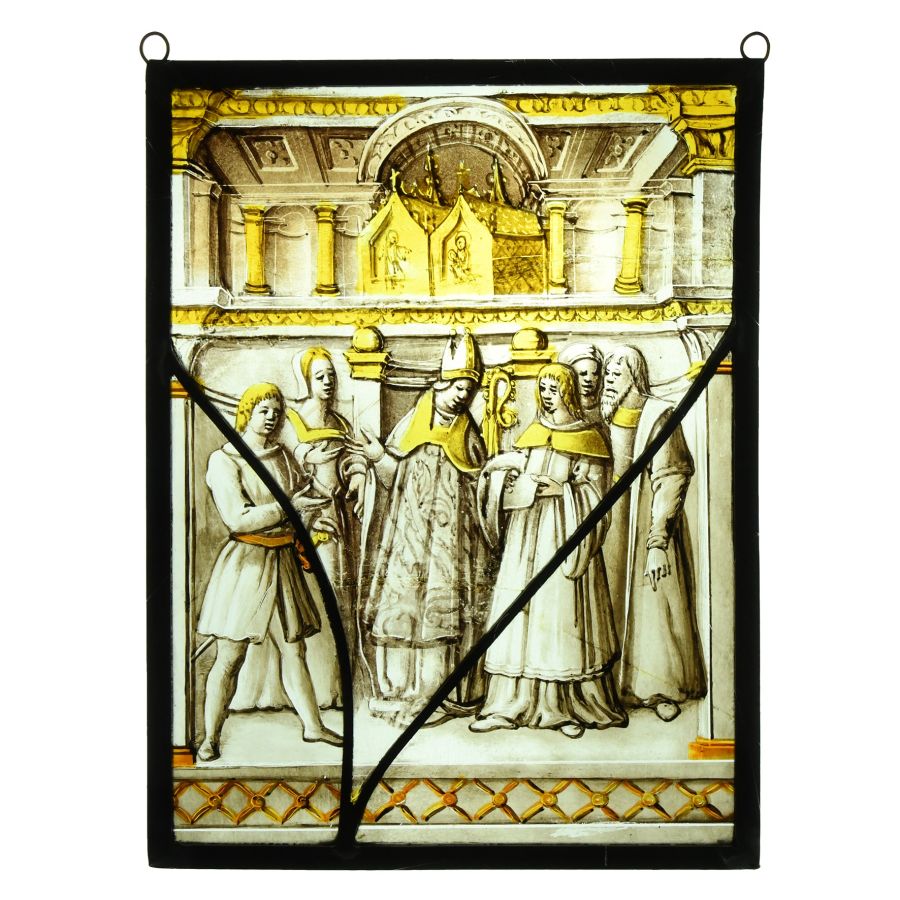
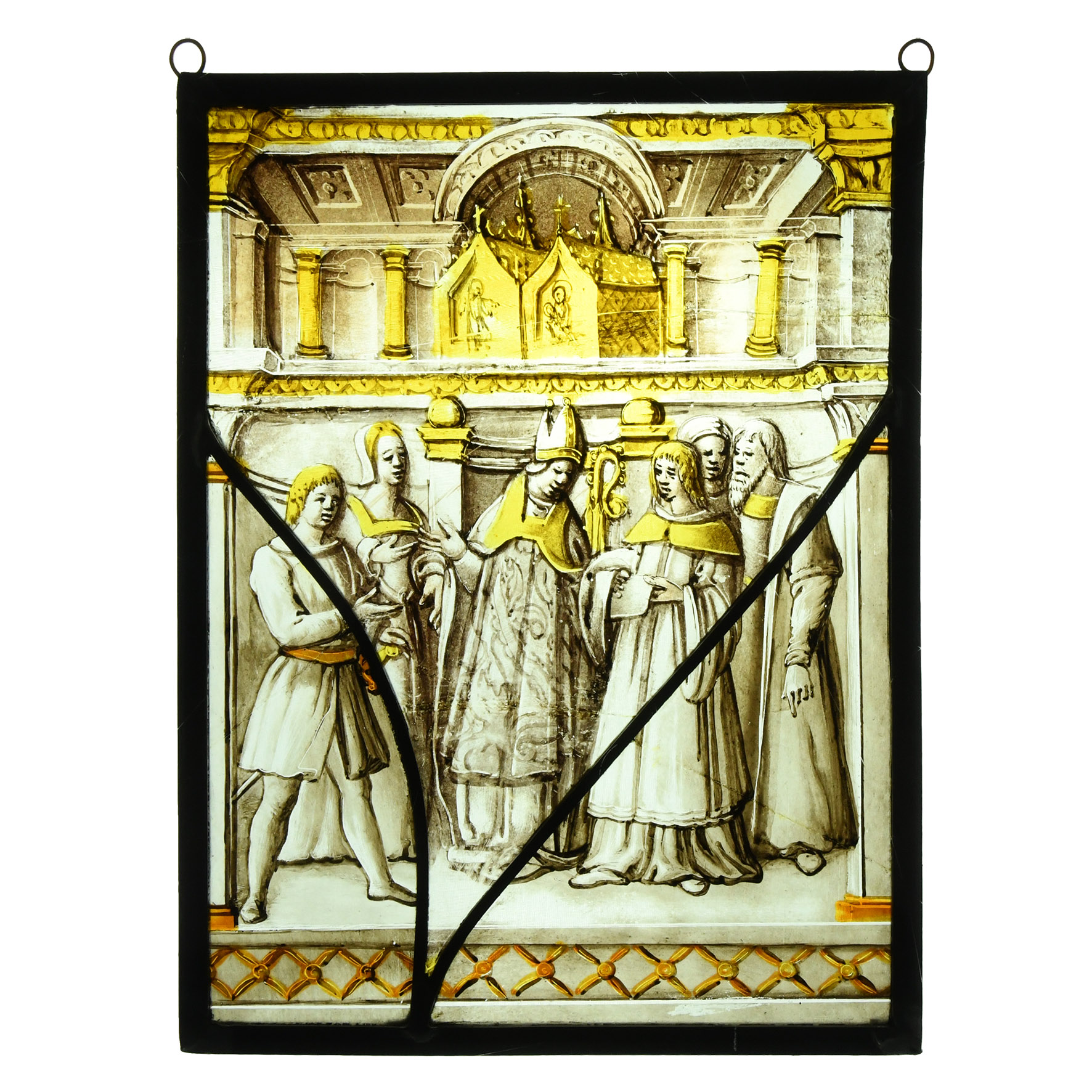
Medieval Stained Glass Panel with Bishop Hearing Disputes Beneath Gold Reliquary Caskets
NORTHERN FRANCE, CIRCA 1525 A.D.
10 1/4 x 7 5/8 in. (436 grams, 26 x 19.5 cm).
Rectangular, with lead came frame and later suspension loop to each corner; painted scene depicting a bishop wearing his mitre and chasuble and holding his crozier standing among a group of disputants in a gallery with reliquary caskets above. [No Reserve]
ProvenanceThese panels come from a Parisian flat in the 7th arrondissement, very close to the Rodin Museum.
The family owning the panels lived in the flat for several generations.
Ex central London gallery.
TimeLine Auctions follows a vetting process to ensure the authenticity and legality of all items, reinforcing our commitment to integrity and responsible trading. Each antiquity, antique, and coin lot undergoes thorough examination by a vetting committee of at least ten external specialists, professional trade association members, scientists, and archaeologists: Our Vetting Process
AUCTIONS:
TimeLine is a leading auction house specialising in antiquities, ancient art, collectables, natural history, coins, medals, and books. Our auctions offer museums, collectors, historians, and enthusiasts the opportunity to acquire unique and historically significant pieces.
LOT 1709
Medieval Stained Glass Panel with Bishop Hearing Disputes Beneath Gold Reliquary Caskets
Sold for (Inc. bp): £598
-
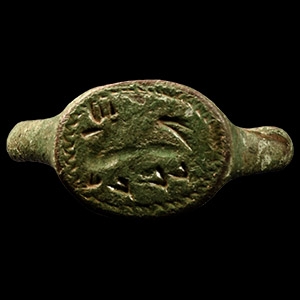
Norman Period Bronze Ring with Dragon Walking Right
Circa 11th-12th century A.D.Sold for (Inc. bp): £65
The slender, convex hoop supporting an oval-shaped bezel, engraved with a dragon trotting left within a zigzag border. 2.81 grams, 22.82 mm overall, 19.16 mm internal diameter (approximate size British S 1/2, USA 9 1/4, Europe 20.63, Japan 19)
Private collection formed since the 1940s. UK art market. Property of an Essex gentleman. -
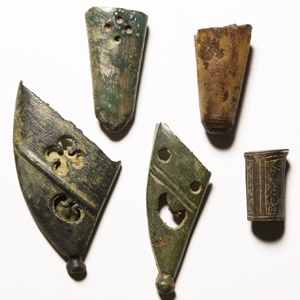
Medieval Scabbard Chape and Pommel Group
14th-15th century A.D.Sold for (Inc. bp): £39
Comprising a variety of chape styles, including examples with decorative piercing; a decoratively incised pommel with X-motif to cap and two figural panels to the side walls, separated by a chevron column. 39.6 grams total, 21-50 mm
Acquired on the UK market, 1990s. Property of a retired academic. -
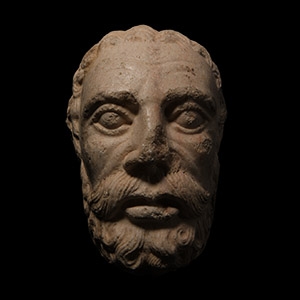
Medieval Romanesque Marble Head of a Saint
Late 12th-13th century A.D.Estimate: £5,000 - 7,000 (‡+bp*)
Opening Bid: £2,222
Carved naturalistically in the round as a mature male figure with short wavy hair, full beard and moustache, his brow furrowed and mouth held slightly ajar; repaired. 3.8 kg, 18 cm
Acquired in Europe before 1996. Accompanied by an academic report by Dr Raffaele D’Amato. This lot has been checked against the Interpol Database of stolen works of art and is accompanied by search certificate no.11809-206816.
The head was carved as an image of a saint, Apostle or a prophet. The accomplished and sophisticated style of carving on this head can be compared to some of the most celebrated Romanesque buildings of Southern France. The carving of the head resembles the representations of heads and faces of 12th century French Romanesque art, for example those of Saint Trophime in Arles. This imposing head once served as an important architectural part of a lavishly decorated church, possibly in western France. Its form and the size suggest that the head was not only decorative but that it would have been structurally important – perhaps part of a row of statues of apostles and prophet like those depicted on the Saint Trophime façade.
