
Loading, please wait...
LOT 1714
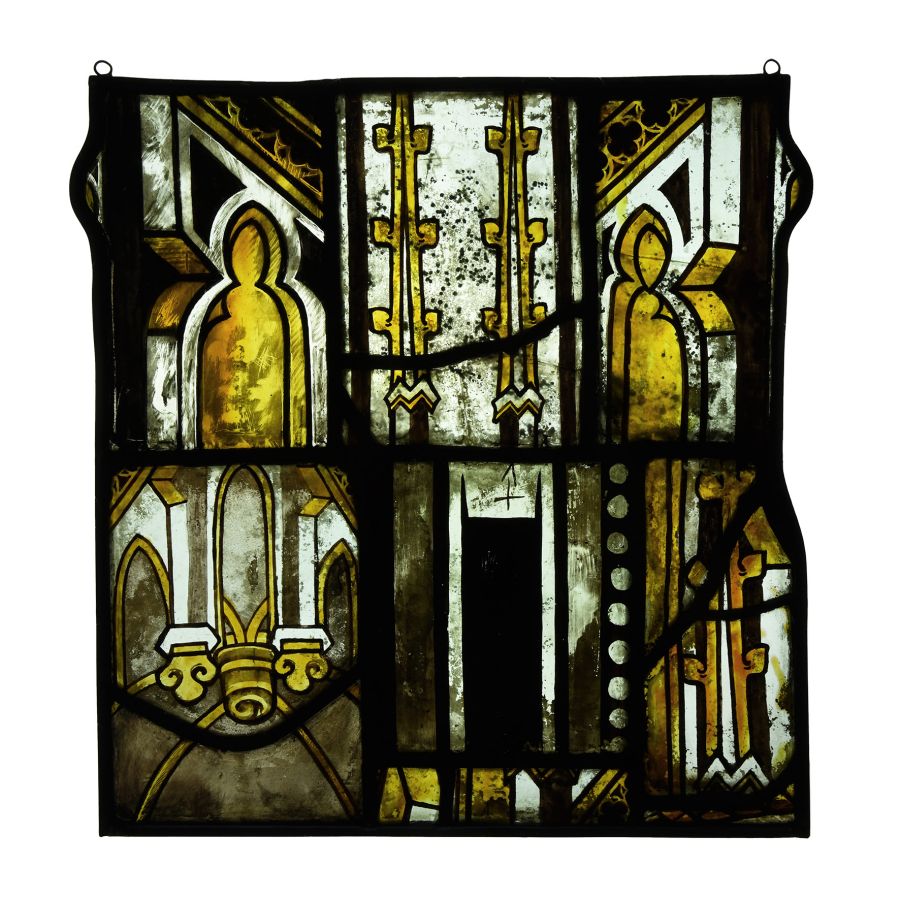
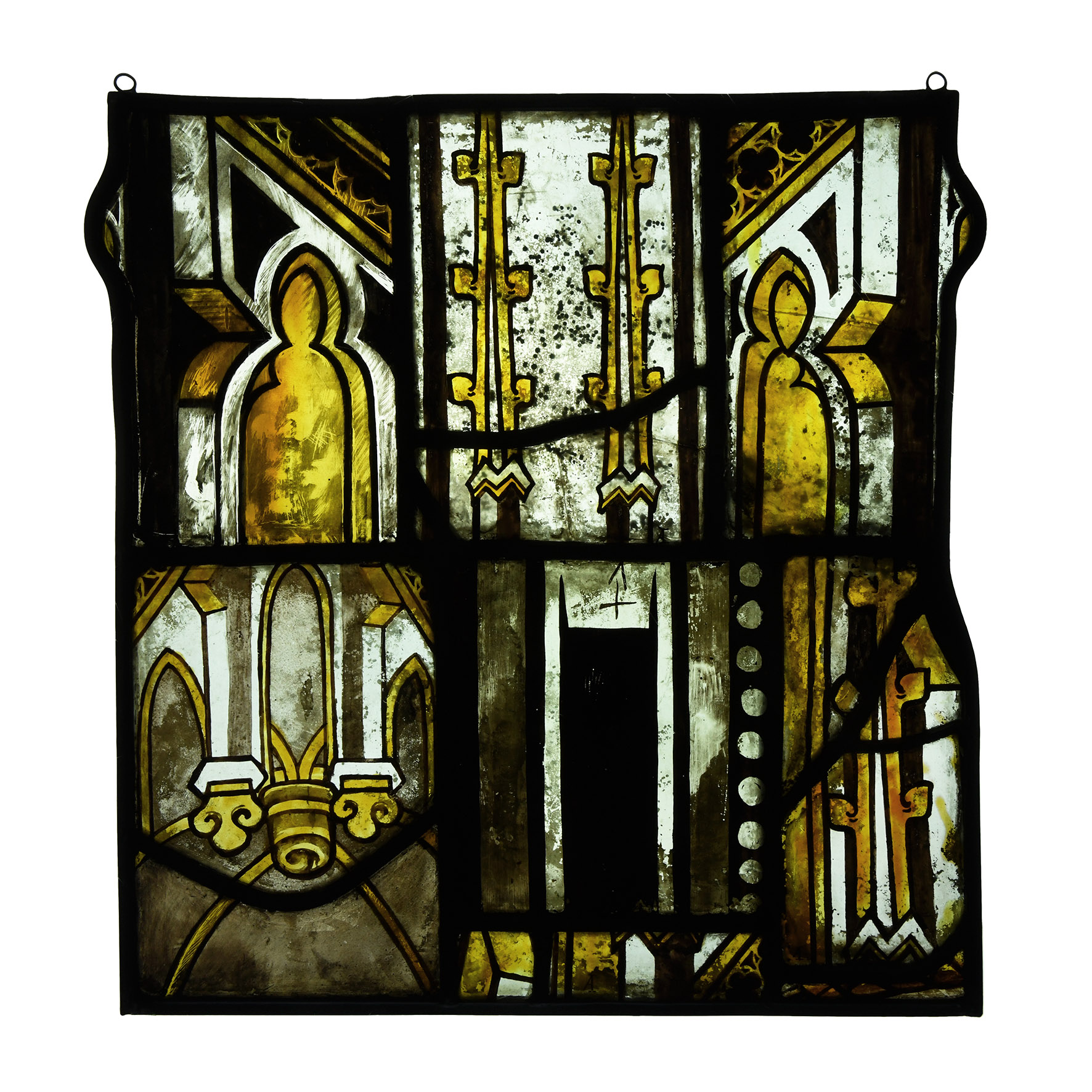
Medieval Stained Glass Composite Architectural Panel
FRANCE, LATE 15TH CENTURY A.D.
14 1/2 x 38 in. (1.4 kg, 37 x 35 cm).
Composed from six rectangular glass panels with painted geometric and architectural imagery, later suspension loops to the upper corners. [No Reserve]
ProvenanceUK trade, 2018.
Ex central London gallery.
TimeLine Auctions follows a vetting process to ensure the authenticity and legality of all items, reinforcing our commitment to integrity and responsible trading. Each antiquity, antique, and coin lot undergoes thorough examination by a vetting committee of at least ten external specialists, professional trade association members, scientists, and archaeologists: Our Vetting Process
AUCTIONS:
TimeLine is a leading auction house specialising in antiquities, ancient art, collectables, natural history, coins, medals, and books. Our auctions offer museums, collectors, historians, and enthusiasts the opportunity to acquire unique and historically significant pieces.
-
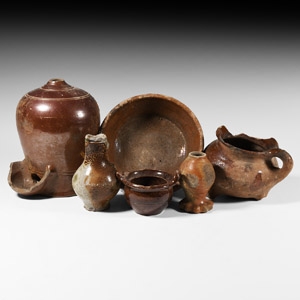
Medieval Ceramic Group
15th century A.D. and laterSold for (Inc. bp): £20
Including a jar with scalloped foot, a piriform juglet, footed pot with handle, small jar with remaining handle, likely bird water feeder and a stamped tripod dish; most glazed; most chipped or cracked. 3.3 kg total, 10-18 cm
Acquired 1990s-early 2000s. East Anglian private collection.
The salt-glazed stoneware jugs, like some of the specimens here presented, had a distinctive pitted ‘orange-skin’ surface. These tall jugs often have grooves around their bodies to support them during the high-temperature firing which was necessary to achieve the hard fabric. First imported into Britain in the early 14th century stone wares became common in the 16th and 17th centuries. Most came from production centres in the Rhineland, notably Cologne, Frechen, Langerwehe, Raeren and Westerwald. -
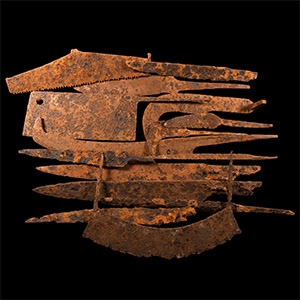
Medieval Iron Knife Blade Group
14th-16th century A.D.Sold for (Inc. bp): £33
Comprising hunting, butcher's domestic and other blade types, including examples with serrated blades and sickles. 3.1 kg total, 18-42 cm
Acquired 1990s-early 2000s. East Anglian private collection.
Aside from the actual cut marks that are observed on animal bones following archaeological excavation, the butchery implements found from the medieval period are of considerable importance. The cut marks seem to indicate a more refined style of butchery with less use of the cleaver for disarticulation and a greater reliance on knives. The defining characteristic of the butchery knives is that they were sharp-edged and likely to have been made in much the same way as the cleavers, i.e. with a steel edge to maintain sharpness. -
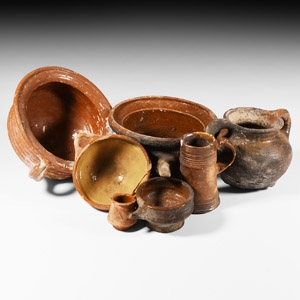
Medieval Ceramic Group
15th century A.D. and laterSold for (Inc. bp): £117
Composed primarily of glazed pots, bowls and tankard, including examples retaining their handles and complete examples. 4.35 kg total, 5.5-28.5 cm
Acquired 1990s-early 2000s. East Anglian private collection.
The majority of ceramics here presented are kitchen wares. Usually cooking pots are the most numerous forms in the majority of medieval contexts. They are mostly related to domestic functions, cooking pots being used to boil food or fry it. They come in different sizes and have globular bodies, everted rims and one or two handles.
