
Loading, please wait...
LOT 1079
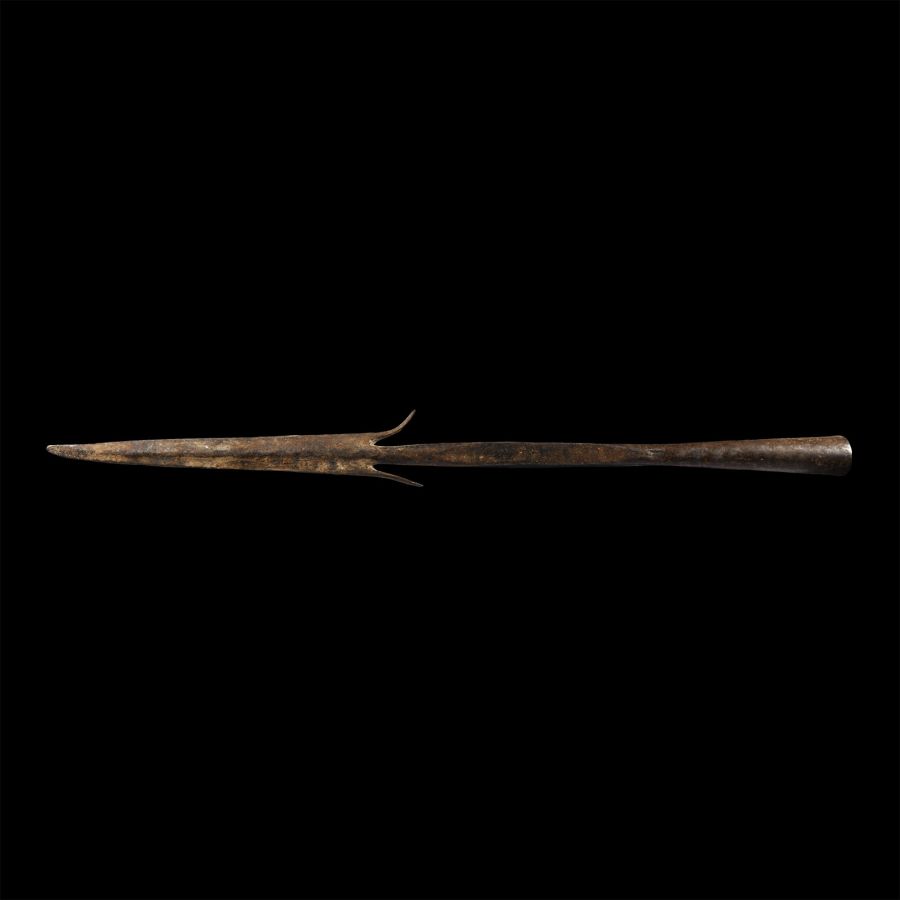
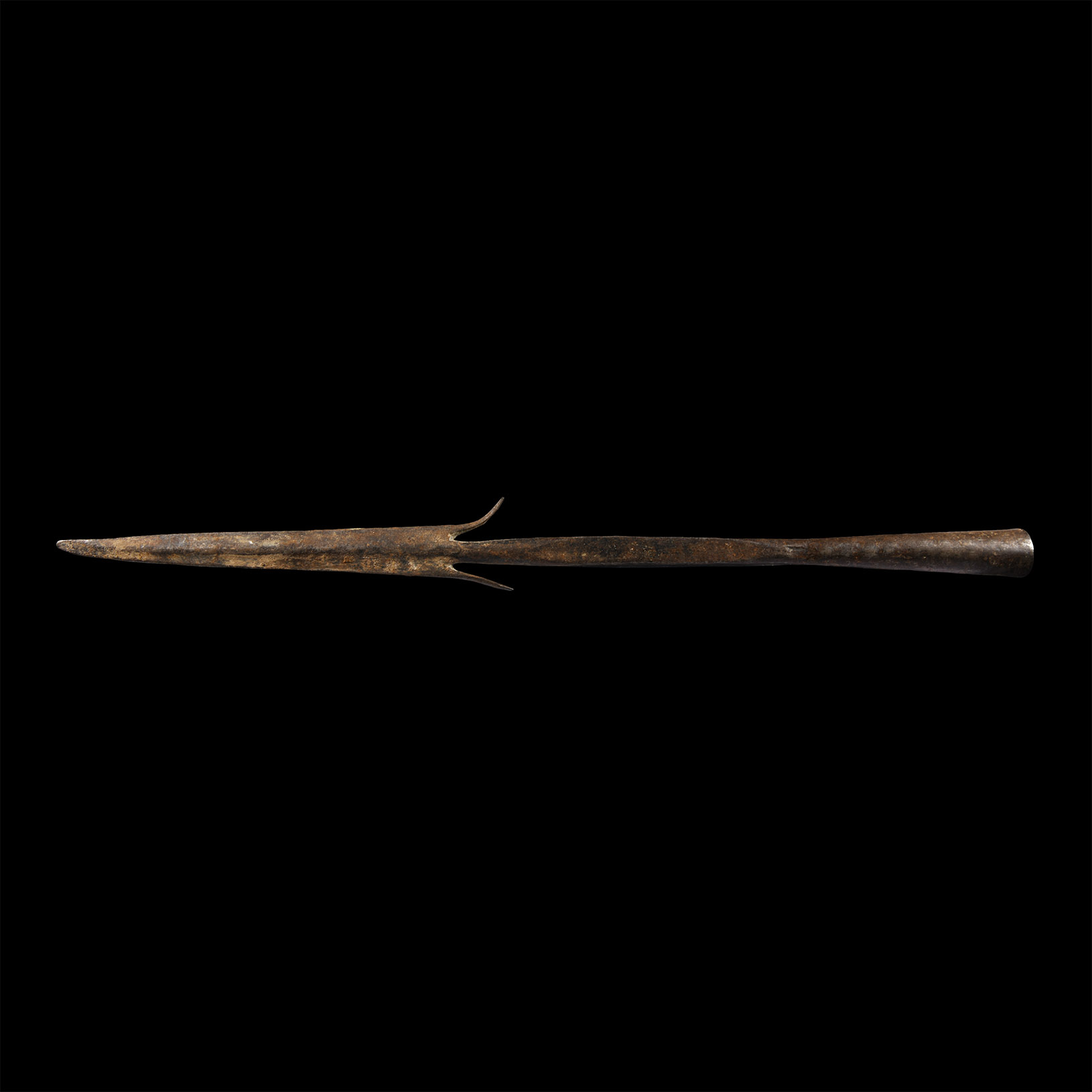
Medieval Socketted Catapult Dart
14TH-16TH CENTURY A.D.
11 3/8 in. (94 grams, 29 cm).
An iron catapult dart formed with a tapering cylindrical socket, square-section neck and barbed triangular head with full-length medial rib to both faces.
ProvenanceAcquired before 2000.
From the collection of a European gentleman living in the UK.
TimeLine Auctions follows a vetting process to ensure the authenticity and legality of all items, reinforcing our commitment to integrity and responsible trading. Each antiquity, antique, and coin lot undergoes thorough examination by a vetting committee of at least ten external specialists, professional trade association members, scientists, and archaeologists: Our Vetting Process
AUCTIONS:
TimeLine is a leading auction house specialising in antiquities, ancient art, collectables, natural history, coins, medals, and books. Our auctions offer museums, collectors, historians, and enthusiasts the opportunity to acquire unique and historically significant pieces.
-
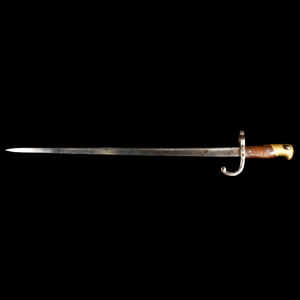
French Gras Model 1874 Rifle Bayonet
Dated 1876 A.D.Sold for (Inc. bp): £65
A Gras bayonet with T-shaped tapering 'epee' blade fitted with steel perforated quillon, rivetted wood grip scales and brass pommel slotted to fit the rifle barrel key; various punchmarks and numbered '7233' to quillon, the back of the blade inscribed 'Usine de Stoyr 1876' in script. 581 grams, 64.5 cm
Good condition.
Acquired on the UK antiques market between 1974-1985. Albert Ward collection, Essex, UK. -
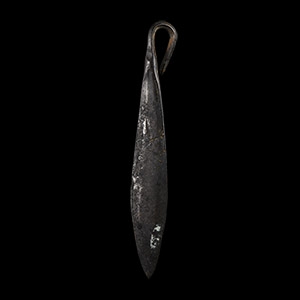
Western Asiatic Arrowhead with Phoenician Letter
1st millennium B.C.Sold for (Inc. bp): £33
A slender leaf-shaped copper-alloy arrowhead with rectangular-section tang, bent over forming a loop; Phoenician letter stamped to one face of the head. 10.1 grams. 90 mm
Acquired 1969-1999. London collection of the late Mr S.M., thence by descent. -
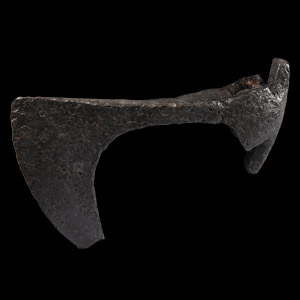
Viking Period Bearded Type Axehead
Circa 9th-11th century A.D.Sold for (Inc. bp): £546
An iron axehead with broad curved blade and spur to the chin, narrow neck, deep socket with lateral spurs and extended plate to the reverse. 777 grams, 20 cm
Acquired 1971-1972. From the collection of the vendor's father. Property of a London, UK, collector.
Iron axeheads of this typology show a sub-trapezoidal asymmetrical blade, sometimes perforated through the centre. They are characterised by two projecting spurs to the back of the shaft-hole.
