
Loading, please wait...
LOT 1066
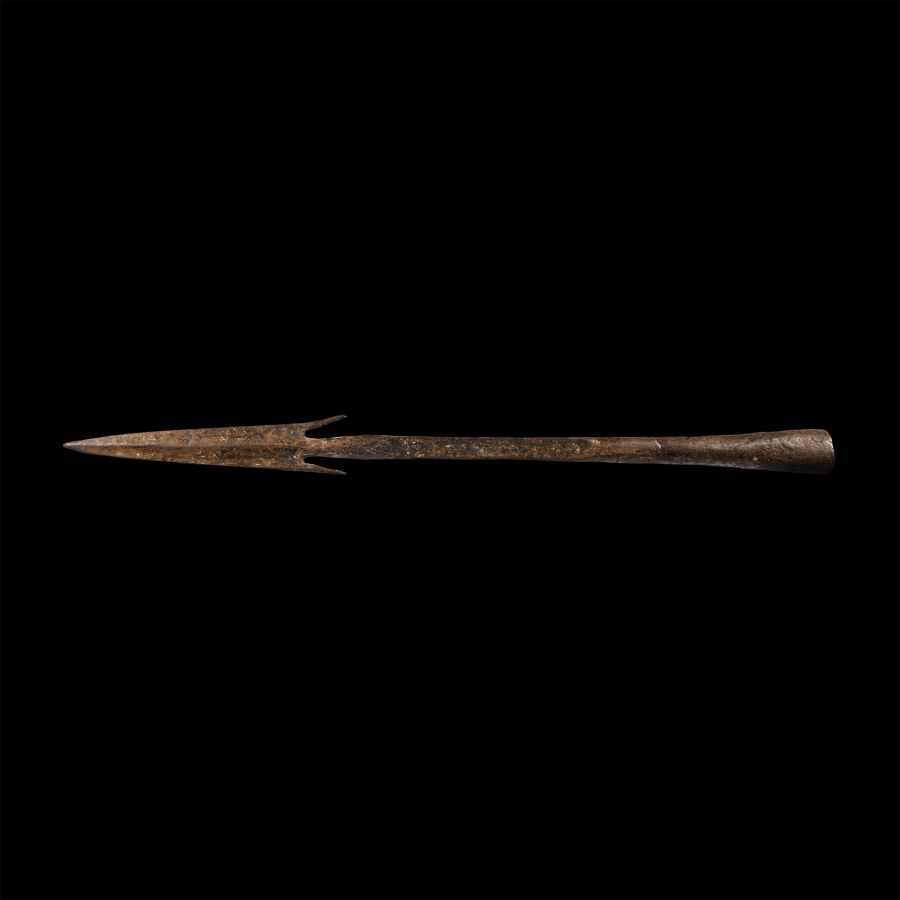
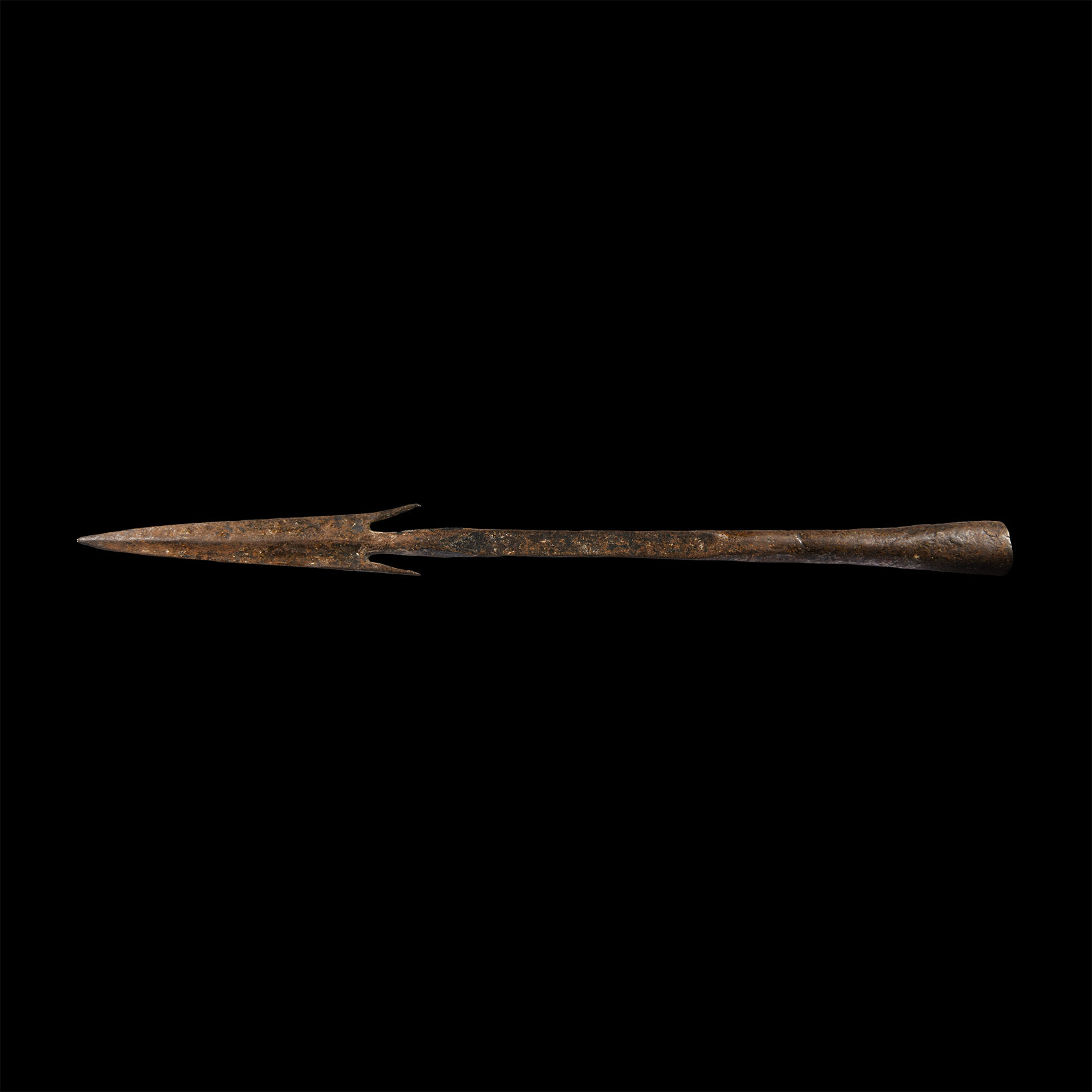
Medieval Socketted Catapult Dart
14TH-16TH CENTURY A.D.
10 5/8 in. (109 grams, 27 cm).
An iron catapult dart formed with a tapering cylindrical socket, square-section neck and barbed triangular head with full-length medial rib to both faces.
ProvenanceAcquired before 2000.
From the collection of a European gentleman living in the UK.
TimeLine Auctions follows a vetting process to ensure the authenticity and legality of all items, reinforcing our commitment to integrity and responsible trading. Each antiquity, antique, and coin lot undergoes thorough examination by a vetting committee of at least ten external specialists, professional trade association members, scientists, and archaeologists: Our Vetting Process
AUCTIONS:
TimeLine is a leading auction house specialising in antiquities, ancient art, collectables, natural history, coins, medals, and books. Our auctions offer museums, collectors, historians, and enthusiasts the opportunity to acquire unique and historically significant pieces.
-
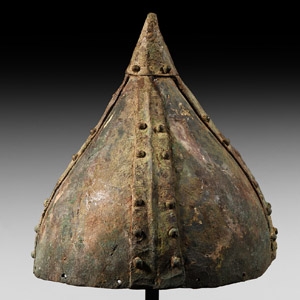
Sassanian Spangenhelm with Rivets
6th-7th century A.D.Sold for (Inc. bp): £4,160
A copper-alloy multi-segmented spangenhelm with an ogival profile, rivetted conical finial and riveted straps running vertically around the circumference, some restoration. 1.14 kg, 23 cm high
UK private collection before 2000. UK art market. Property of a London gentleman. Accompanied by an academic report by Dr Raffaele D'Amato. This lot has been checked against the Interpol Database of stolen works of art and is accompanied by searcher certificate no.11589-199700.
The Spangenhelm is a protective headgear made up from segments or plates held together by a frame. As a popular form of helmet it came to prominence in western Europe in the later Roman Empire, and remained in use for some centuries until replaced by helmets formed from a single sheet. -
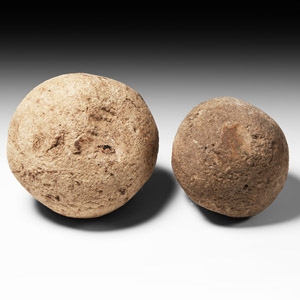
Roman Ballista Catapult Shot Group
1st-3rd century A.D.Sold for (Inc. bp): £156
A pair of differently sized ballistas made from limestone, suitable for use with a catapult type siege weapon. 650 grams total, 55-71 mm
Acquired before 2000. From the collection of a European gentleman living in the UK. -
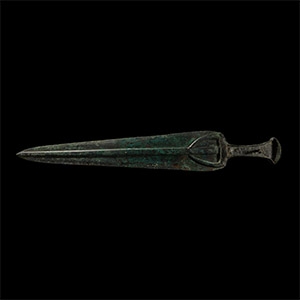
Marlik Sword with Decorated Hilt
14th-10th century B.C.Sold for (Inc. bp): £1,040
A bronze sword with flanged hilt, penannular guard and strong midrib running to the pointed tip, hilt and pommel open to accept inlays, bronze fastening nail still visible in the pommel. 477 grams, 39 cm
Ex S. Motamed collection. with Bellman's Auctions, 20th-26th June 2015, lot 2482. Property of a London gentleman.
According to Khorasani and Negahban, blade and grip of this kind of swords were cast in one-piece mould. The penannular guard was later added to the blade.
