
Loading, please wait...
LOT 0265
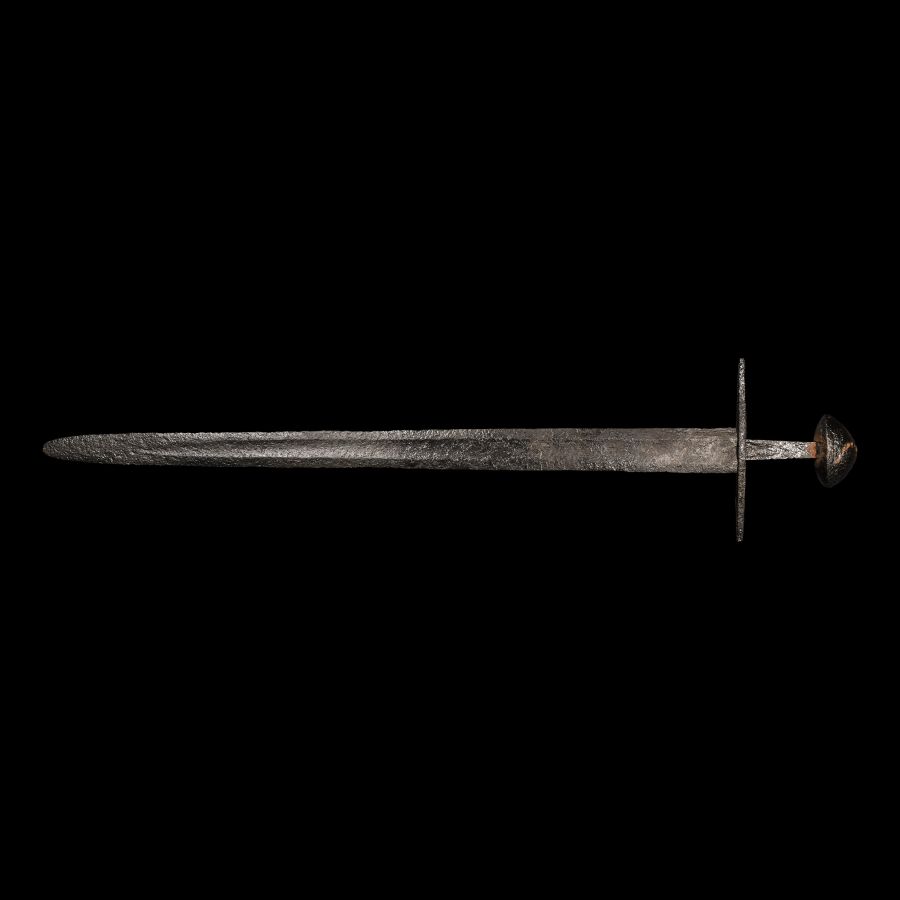
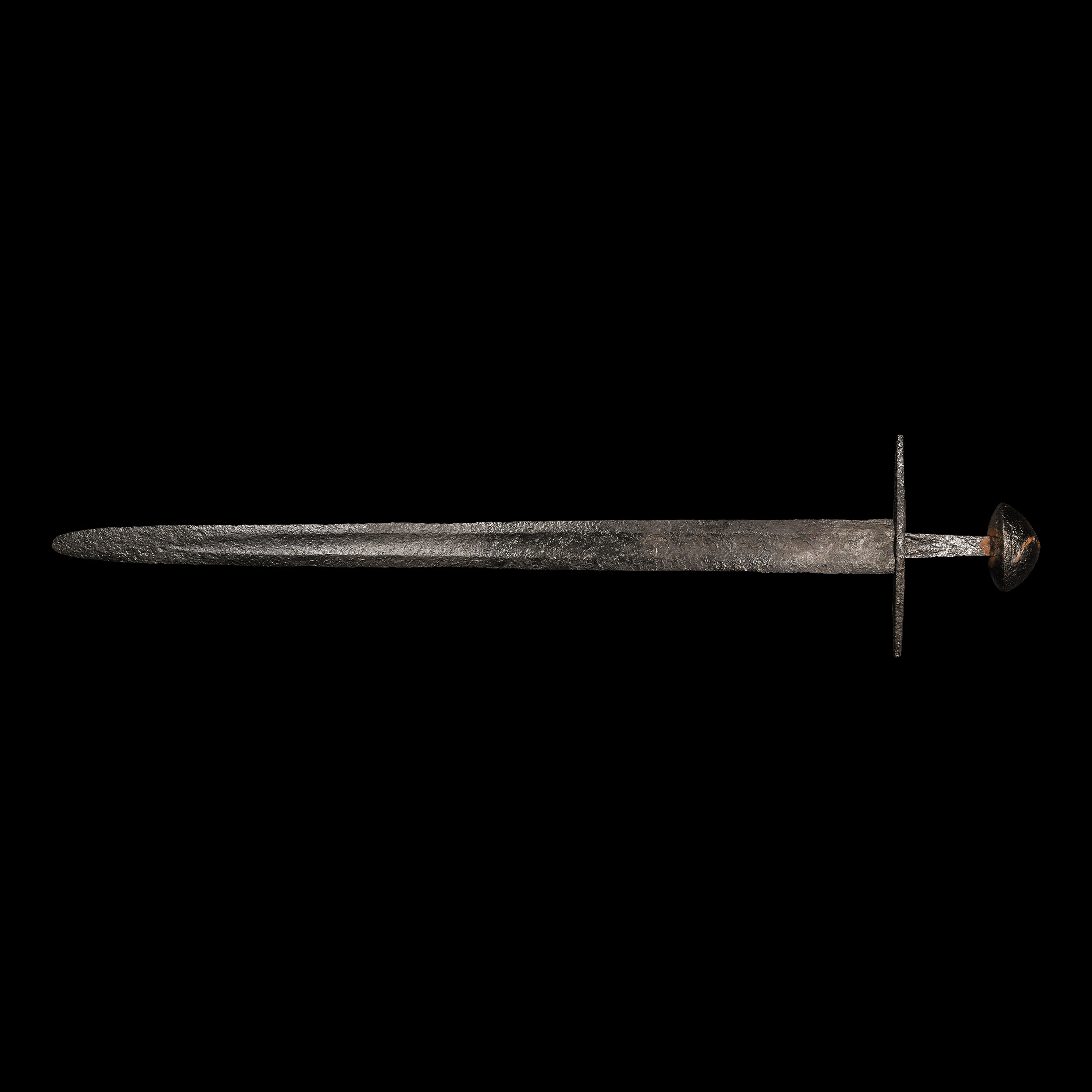
Medieval Single-Handed Long Sword with Crosses
MID 10TH-MID 12TH CENTURY A.D.
39 3/4 in. (1.31 kg, 101 cm).
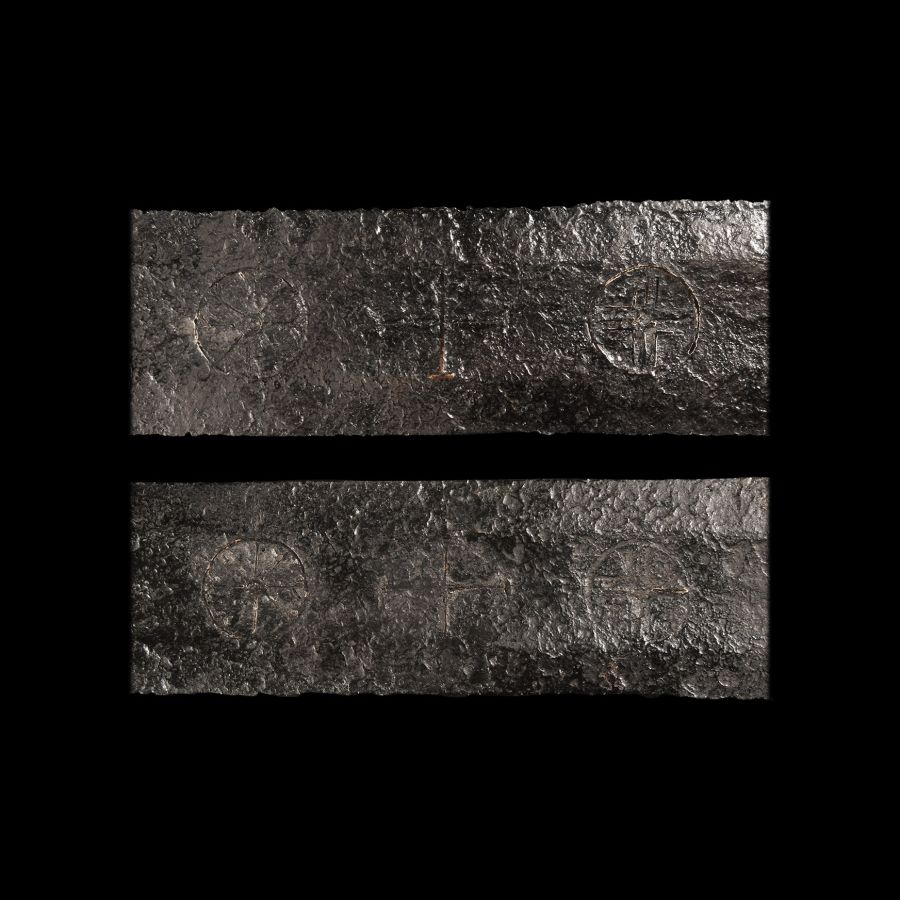
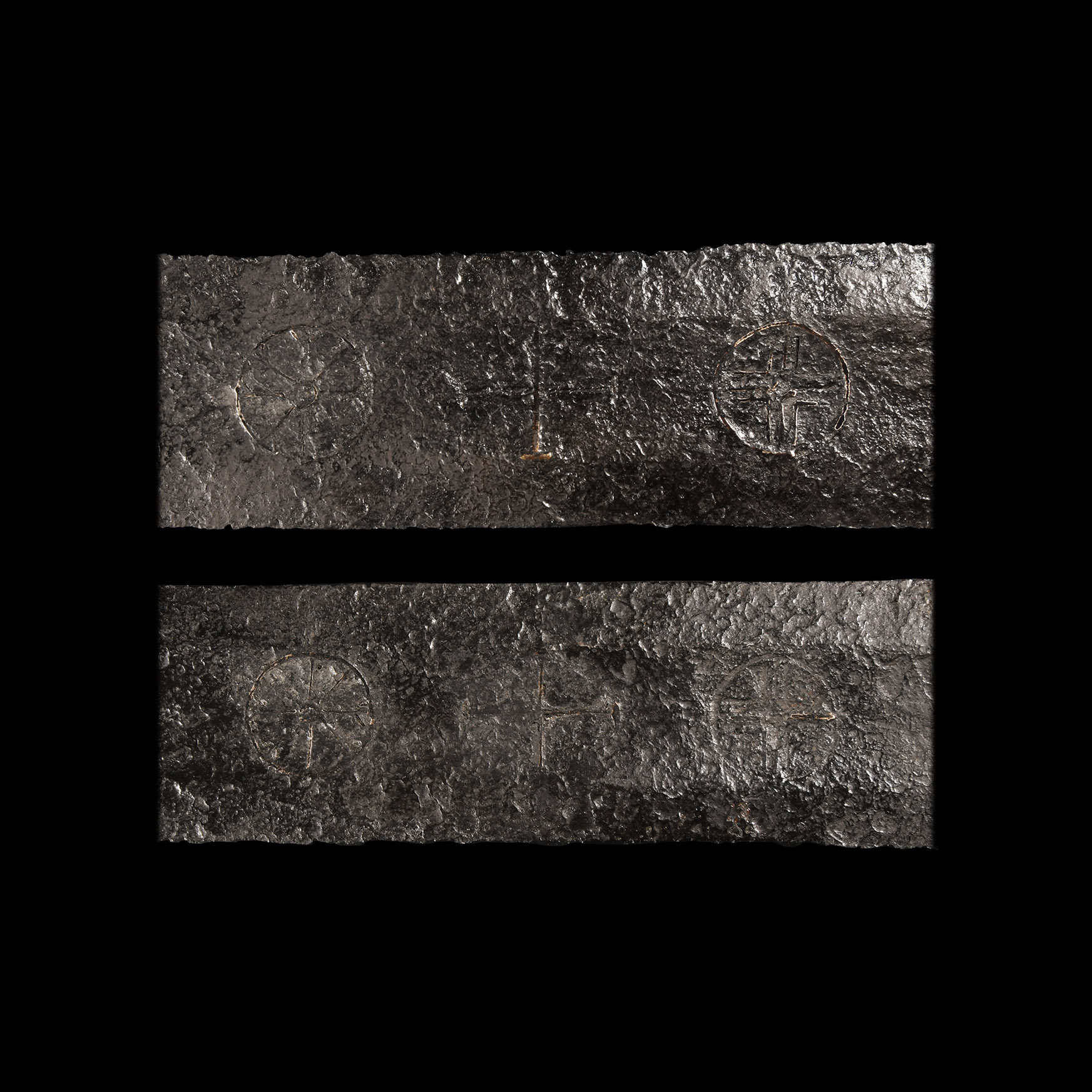
With a broad tapering blade, the wide and shallow fullers with inlaid decoration to both sides comprising a Greek cross within a circle, a cross potent and a wheel; long, straight guard and a short grip with a plain Brazil nut pommel. [No Reserve]
ProvenanceIng Peter Till collection, Austria 1990s.
UK collection, 2000s.
Property of an East Sussex, UK, teacher.
Accompanied by an academic report by Dr Raffaele D'Amato.
Cf. Oakeshott, J.R.E., The Archaeology of the weapons, London, 1960; Peirce, I., Swords of the Viking Age, Suffolk, 2002; Nicolle, D., Arms and Armour of the Crusading Era, 1050-1350, vol I, London, 1999; the sword finds a good parallel with a specimen from Spain, published by Peirce (2002, p.124); with a sword dated to circa 1200, from Germany, preserved in the Wallace collection, London, England (Nicolle, 1999, fig.424); with a sword from Dresden, with the name INGELRII on one side and the phrase HOMO DEI on the other, dated to about 1100; also with a sword once in the Oakeshott collection with the mark of Carrocium, dated to around the 11th century.
FootnotesThe sword is of Oakeshott Type Xa or XI and Petersen Type X. According to Oakeshott (1960, p.204) the swords of type X were a development of Viking sword type VIII with slight modifications. Oakeshott describes such swords as common in the late Viking age (late 10th century) and remaining in use until the first quarter of the 13th century.
CONDITIONTimeLine Auctions follows a vetting process to ensure the authenticity and legality of all items, reinforcing our commitment to integrity and responsible trading. Each antiquity, antique, and coin lot undergoes thorough examination by a vetting committee of at least ten external specialists, professional trade association members, scientists, and archaeologists: Our Vetting Process
AUCTIONS:
TimeLine is a leading auction house specialising in antiquities, ancient art, collectables, natural history, coins, medals, and books. Our auctions offer museums, collectors, historians, and enthusiasts the opportunity to acquire unique and historically significant pieces.
-
Sudanese Kaskara Sword
19th century A.D.Sold for (Inc. bp): £195
Of knightly form; composed of a straight double-edged blade of 35.5 inches in length and with central fuller, cruciform hilt, steel cross-guard and bound wooden handle; accompanied by a tooled leather scabbard. 1.3 kg, 1.07 cm
Acquired from MDL Historic Military Antiques, IK, 2015. The Kusmirek Collection, UK. Accompanied by copies of the purchase invoice and details. -
Etrusco-Italic Breastplate with Mythical Animal
5th century B.C.Sold for (Inc. bp): £4,680
Displaying a repoussé horned animal advancing right, two roundels composed of bulbous rivets flanking the animal and encircling the central design; accompanied by a custom-made display stand. 626 grams total, 28.5 cm high including stand
Collection of Jacques and Henriette Schumann, formed between 1950 and 1970. The Schumanns inherited part of their collection from Henriette’s parents, Alice and Fernand Halphen, andjacques’ maternal grandfather, Albert Lehmann. Collection of Jacques and Henriette Schumann, Christie's, Paris, 30th September 2003, lot 85. Accompanied by a copy of a French cultural passport no.107322. This lot has been checked against the Interpol Database of stolen works of art and is accompanied by search certificate number no.11877-207824.
This type of armour, composed from a bronze breast and back plate with hinged shoulder straps, all the parts backed with iron, was used by Etruscans, Hernici, Aequi and Volsci, the feared enemies of early Rome. In particular our item has many parallels with the disc-cuirass (cardiophylax) found in the Necropolis of Alfadena. -
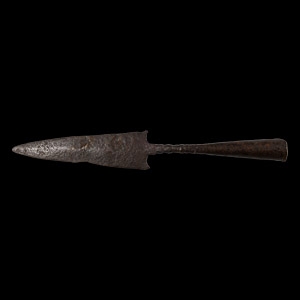
Ummayad Bronze Spearhead
7th-8th century A.D.Estimate: £250 - 350 (+bp*)
Opening Bid: £133
Formed with a broadly triangular blade, narrow neck and tapering round-section socket. 245 grams, 34 cm
Ex old English collection. The Kusmirek Collection, UK.
The basic Arabic term for a spear or lance, whether used by cavalry or infantry, was rumh. In the 7th century it normally would have been ten or twelve cubits long, i.e. four and a half metres.
