
Loading, please wait...
LOT 0309
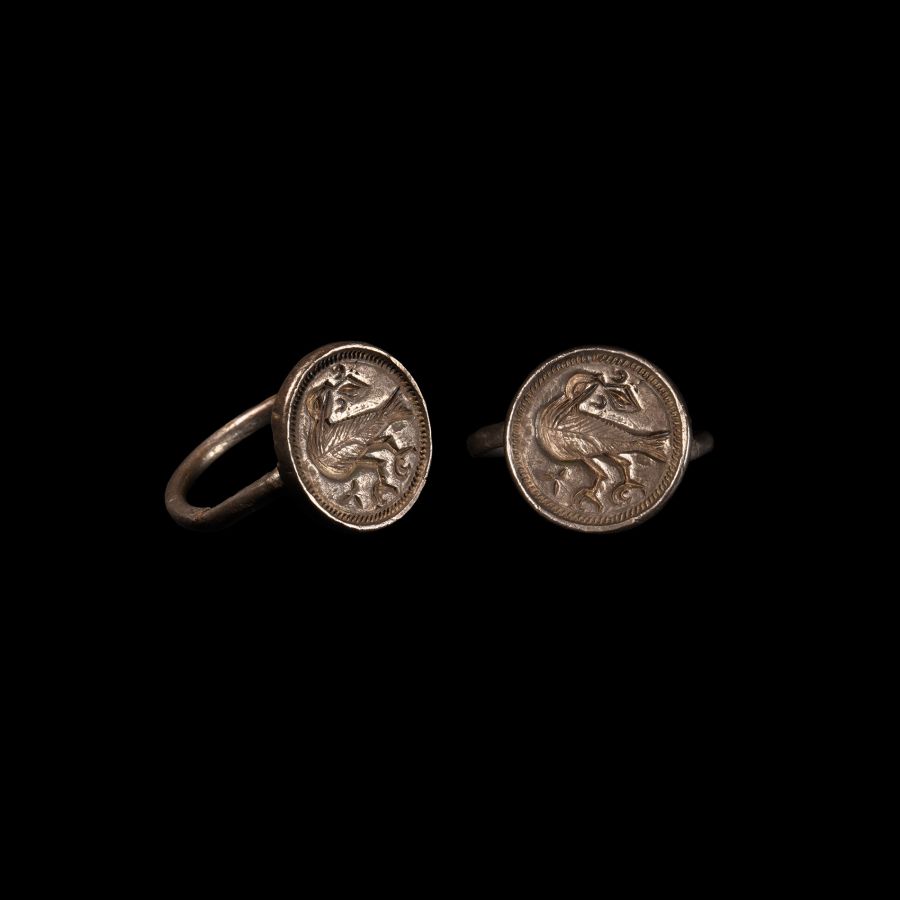
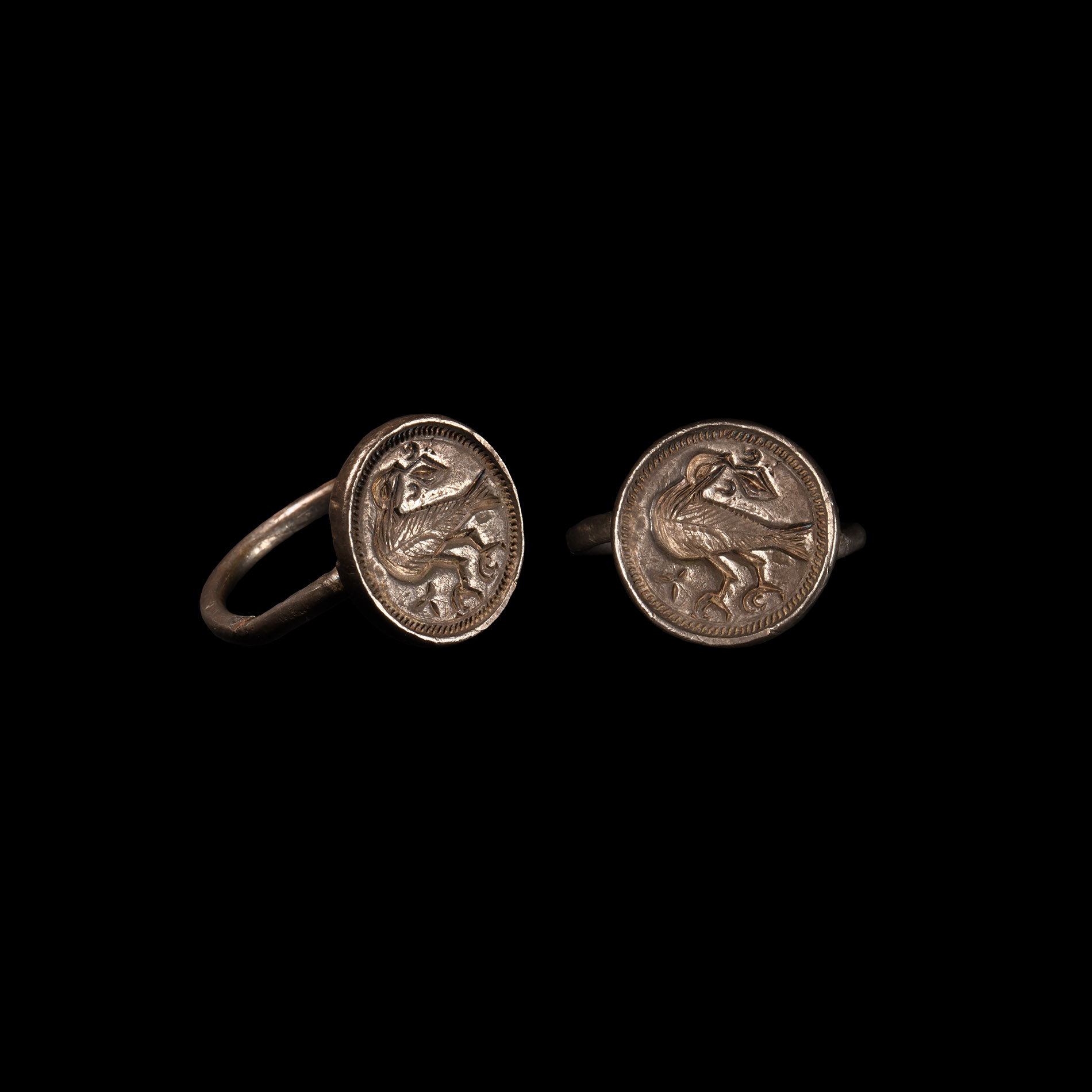
Medieval Silver Signet Ring with Dove
14TH-16TH CENTURY A.D.
1 in. (6.32 grams, 25.89 mm overall, 20.77 mm internal diameter (approximate size British V, USA 10 1/2, Europe 23.77, Japan 22)).
A silver signet ring composed of a round-section hoop and discoid bezel with raised perimeter, engraved with a dove holding a sprig or branch in its beak.
ProvenanceAcquired in the late 1980s-early 1990s.
Important North West London collection.
TimeLine Auctions follows a vetting process to ensure the authenticity and legality of all items, reinforcing our commitment to integrity and responsible trading. Each antiquity, antique, and coin lot undergoes thorough examination by a vetting committee of at least ten external specialists, professional trade association members, scientists, and archaeologists: Our Vetting Process
AUCTIONS:
TimeLine is a leading auction house specialising in antiquities, ancient art, collectables, natural history, coins, medals, and books. Our auctions offer museums, collectors, historians, and enthusiasts the opportunity to acquire unique and historically significant pieces.
LOT 0309
Medieval Silver Signet Ring with Dove
Estimate £600 - 800€700 - 930 (for guidance only)$810 - 1,080 (for guidance only)
-
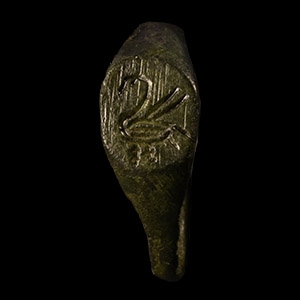
Medieval Ring with Swan
12th-14th century A.D.Sold for (Inc. bp): £72
A copper-alloy ring composed of a slender, misshapen hoop, expanding at the shoulders to an oval-shaped bezel engraved with a swan standing with its wings part-spread. 1.98 grams, 20.66 mm overall, 17.69 mm internal diameter (approximate size British I, USA 4 1/4, Europe 7.44, Japan 7)
Private collection formed since the 1940s. UK art market. Property of an Essex gentleman. -
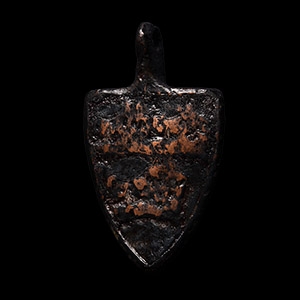
Medieval Knight's 'Swinburn Family' Heraldic Horse Harness Pendant with Three Boar's Heads
13th-14th century A.D.Estimate: £150 - 200 (+bp*)
Opening Bid: £75
A copper-alloy heater shield-shaped harness pendant with integral suspension loop to the upper edge; one face displaying a heraldic device composed of three boars' heads left with remaining traces of red enamel in the field. 16.2 grams, 45 mm
Found near Snargate, Kent, UK. Property of a Kent gentleman. Accompanied by a copy of the British Museum's Portable Antiquities Scheme (PAS) report no.KENT-56AC78, dating it to c.1280-1350 A.D.
The triple boar's head arms is associated with several members of the Swinburne (sometimes Swynbourne) family in the late 13th to early 14th century period. -
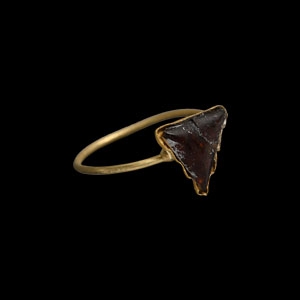
Medieval Gold Ring with Garnet
12th-14th century A.D.Sold for (Inc. bp): £203
A gold ring with slender round-section penannular hoop with bulbous terminals, supporting a triangular cell set with a polished garnet cabochon. 0.68 grams, 16.74 mm overall,13.26 mm internal diameter (approximate size British D 1/2, USA 2, Europe 1.78, Japan 1)
Fine condition.
Ex Abelita family collection, 1980-2015.
