
Loading, please wait...
LOT 1649
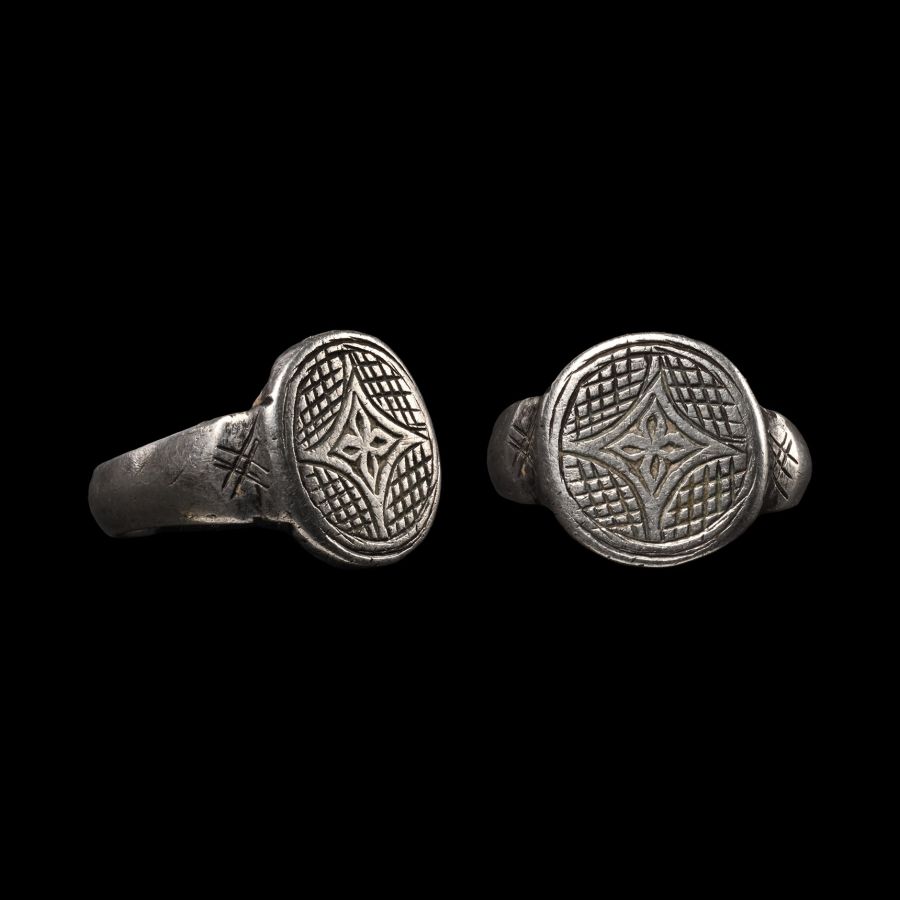
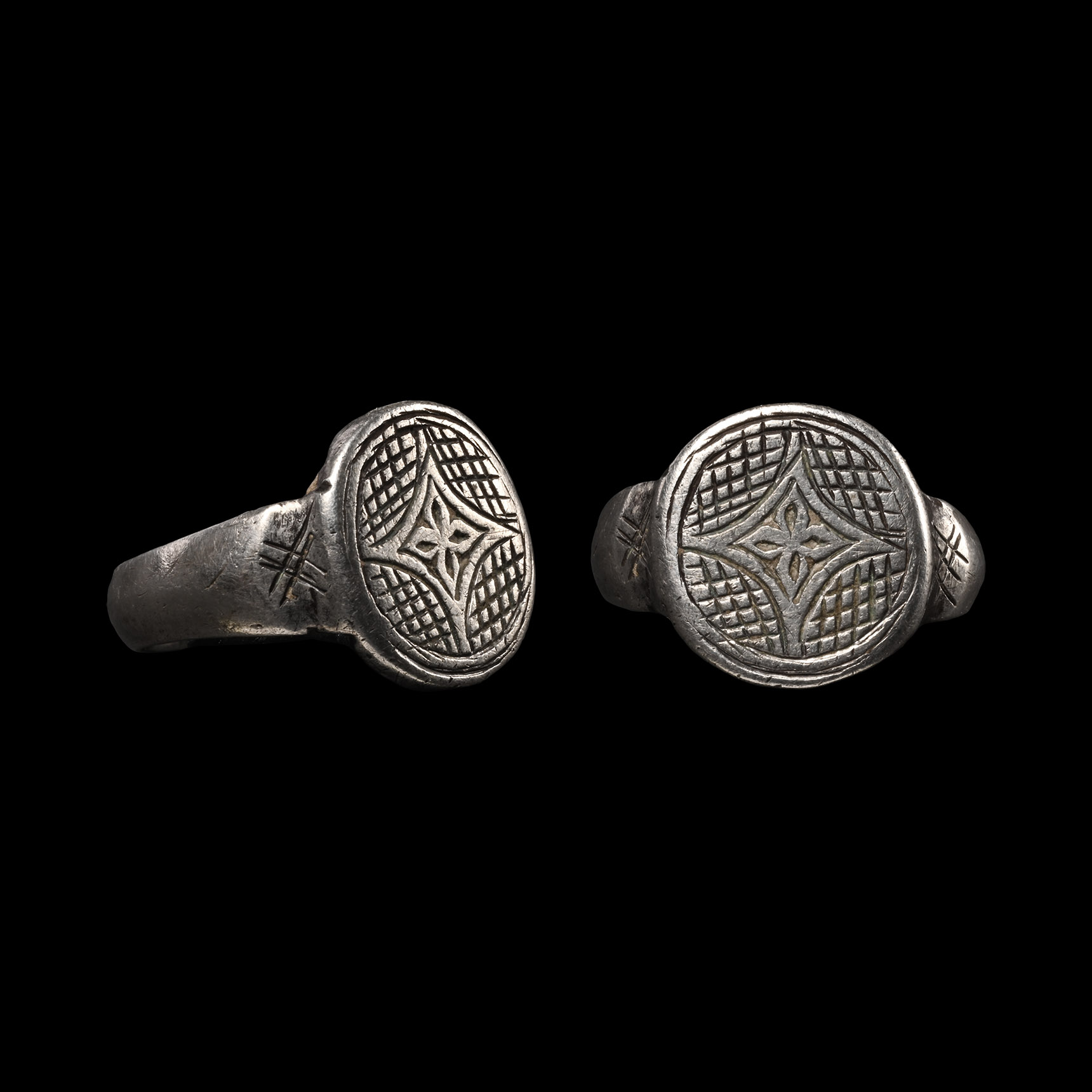
Medieval Silver Ring with Cross
CIRCA 15TH-16TH CENTURY A.D.
3/4 in. (6.35 grams, 20.22 mm overall, 16.83 mm internal diameter (approximate size British M, USA 6, Europe 12.46, Japan 12)).
With D-section hoop, expanding shoulders with hatching; the round bezel with a central cross motif within a lozenge, hatched background. [No Reserve]
ProvenanceEx old English collection.
London art market, 1980s.
TimeLine Auctions follows a vetting process to ensure the authenticity and legality of all items, reinforcing our commitment to integrity and responsible trading. Each antiquity, antique, and coin lot undergoes thorough examination by a vetting committee of at least ten external specialists, professional trade association members, scientists, and archaeologists: Our Vetting Process
AUCTIONS:
TimeLine is a leading auction house specialising in antiquities, ancient art, collectables, natural history, coins, medals, and books. Our auctions offer museums, collectors, historians, and enthusiasts the opportunity to acquire unique and historically significant pieces.
-
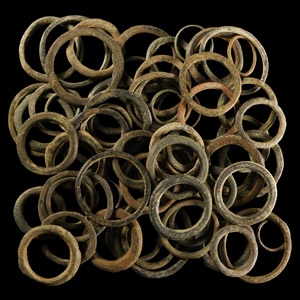
Medieval and Other Bronze Harness Ring Collection
1st-18th century A.D.Sold for (Inc. bp): £46
Mainly slender-bodied and of varying sizes and cross-sections. 188 grams total, 14-34 mm
Found Berkshire, UK. -
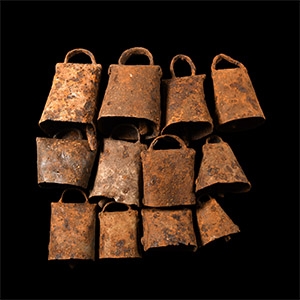
Medieval Iron Bell Group
17th-18th century A.D.Sold for (Inc. bp): £39
Comprising bells of various shapes and sizes, most retaining their suspension loop and clapper and producing a range of sounds. 1 kg total, 5-13 cm
Acquired 1990s-early 2000s. East Anglian private collection.
Like the bell found in Oxfordshire, these bells are quadrangular with sloping sides to a narrow rounded top, furnished of a hanging ring. While these bells are similar in overall shape to Roman and Middle Saxon examples, a post medieval date is perhaps more likely. -
.jpg)
Medieval 'Thames' Pewter Bifacial Wine Tavern Token
Circa 14th-15th century A.D.Sold for (Inc. bp): £52
With a hatched double-headed eagle to one face and barred capital letter 'A' to the other; pierced in two places, perhaps for use as a button 1.11 grams, 18 mm
Found Billingsgate spoil from the Thames foreshore, London, UK.
