
Loading, please wait...

LOT 1803
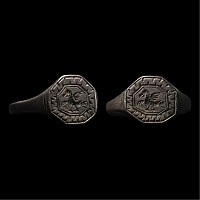
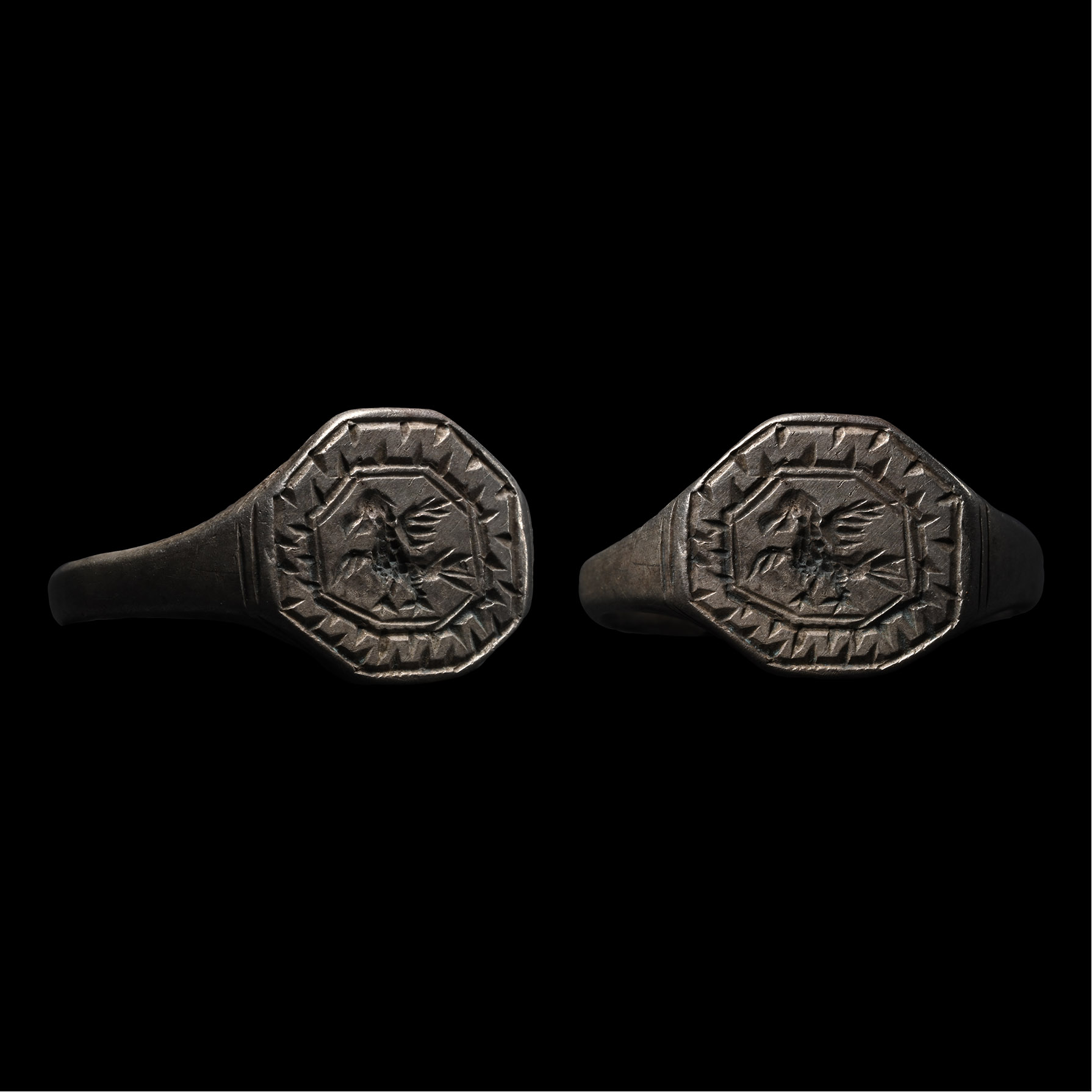
Medieval Silver Ring with Bird
15TH-16TH CENTURY A.D.
7/8 in. (5.38 grams, 22.30 mm overall, 19.15 mm internal diameter (approximate size British P 1/2, USA 7 3/4, Europe 16.86, Japan 16)).
With chamfered shoulders, octagonal bezel, meander border enclosing a perching bird with wings spread. [No Reserve]
ProvenanceAcquired on the European art market since the early 2000s.
From the private Northern Ireland collection of R.M.
Cf. Chadour, A.B., Rings. The Alice and Louis Koch Collection, volume I, Leeds, 1994, item 596, for type.
CONDITIONTimeLine Auctions follows a vetting process to ensure the authenticity and legality of all items, reinforcing our commitment to integrity and responsible trading. Each antiquity, antique, and coin lot undergoes thorough examination by a vetting committee of at least ten external specialists, professional trade association members, scientists, and archaeologists: Our Vetting Process
AUCTIONS:
TimeLine is a leading auction house specialising in antiquities, ancient art, collectables, natural history, coins, medals, and books. Our auctions offer museums, collectors, historians, and enthusiasts the opportunity to acquire unique and historically significant pieces.
-
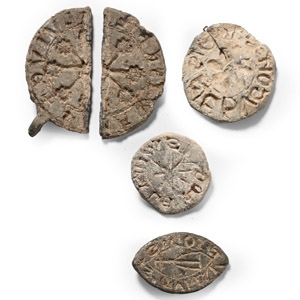
Medieval Lead Seal Matrix Group
12th-14th century A.D.Sold for (Inc. bp): £39
Including disc and vesica types with impressed legends and symbols, the bottom matrix reading 'S’ GVNN’ F’ IOhIS' (seal of Gunnar son of John), possibly of Scandinavian origin based on the first name. 47 grams total, 22-37 mm
Ex Stocker collection, Kent, UK, 1955-early 2000s. -
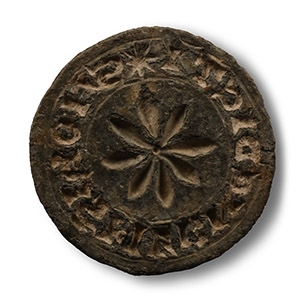
Medieval Lead Seal Matrix for John
12th-14th century A.D.Sold for (Inc. bp): £26
Discoid with strap and knop handle to the reverse, obverse with rosette and surrounding Lombardic script legend '*S’ IOhIS FIL BNEDICTI' (seal of John son of Benedict). 11.6 grams, 29 mm
Ex Stocker collection, Kent, UK, 1955-early 2000s. -
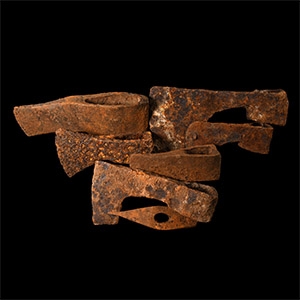
Medieval Iron Axehead Group
15th-17th century A.D.Sold for (Inc. bp): £143
Comprising different axe types and sizes, most with convex cutting edges. 4.65 kg total, 13-22 cm
Acquired 1990s-early 2000s. East Anglian private collection.
Some of these axes (type VIIa in the Glosek's classification) are a common type in Western Europe, widespread between 12th-15th century A.D. Mostly the specimens are 'carpenter's hatchets' that could also be used as offensive weapons if necessary.
