
Loading, please wait...
_900x900.jpg "Medieval Silver Ring Brooch")
_200x200.jpg "Medieval Silver Ring Brooch")
.jpg "Medieval Silver Ring Brooch")
LOT 1880
Medieval Silver Ring Brooch
CIRCA 13TH-14TH CENTURY A.D.
1 in. (2.31 grams, 26.2 mm).
Domed-section hoop with D-section tongue. [No Reserve]
ProvenanceAcquired from Essex Coin Auctions, Essex, UK.
Ex Buckinghamshire, UK, collection.
Cf. similar brooch in PAS HAMP-90BA88 in Leahy, K., Lewis, M., Finds Identified II, Dress fittings & ornaments, Witham, 2020, p.111.
CONDITIONTimeLine Auctions follows a vetting process to ensure the authenticity and legality of all items, reinforcing our commitment to integrity and responsible trading. Each antiquity, antique, and coin lot undergoes thorough examination by a vetting committee of at least ten external specialists, professional trade association members, scientists, and archaeologists: Our Vetting Process
AUCTIONS:
TimeLine is a leading auction house specialising in antiquities, ancient art, collectables, natural history, coins, medals, and books. Our auctions offer museums, collectors, historians, and enthusiasts the opportunity to acquire unique and historically significant pieces.
-
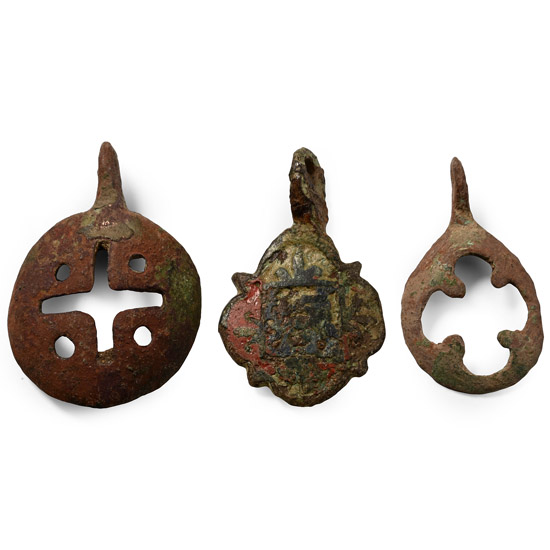
Medieval Knight's Heraldic Horse Harness Pendant Group
13th-15th century A.D.Sold for (Inc. bp): £59
Including domed type with voided cross and pellets, and other types. 11.3 grams total, 29-33 mm
From a UK collection formed in the 1980s. Property of an Essex, UK, gentleman. -
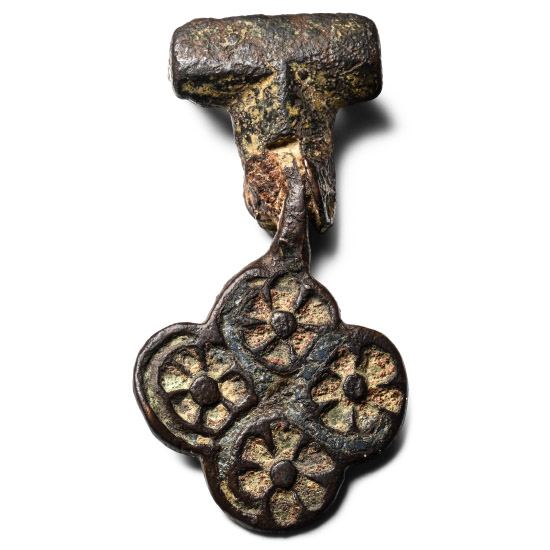
Medieval Knight's Bronze Heraldic Horse Harness Pendant
13th-15th century A.D.Sold for (Inc. bp): £39
Quatrefoil pendant with a hanger, formed as four circular discs, each with a six-petalled flower. 12.9 grams, 47 mm
From the private collection of Graham Slater (1927-2024), Cambridge, UK; formed 1980s-1990s. -
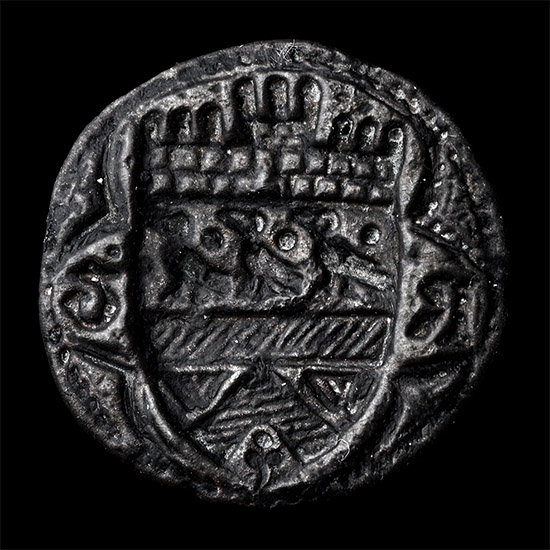
Large Medieval Knight's Heraldic Seal Matrix
Circa 14th-15th century A.D.Sold for (Inc. bp): £143
'Chessman' type with pierced trefoil knop and faceted shank; underside with heater shield and mural crown on a quatrefoil; shield bearing three martlets over a fess with chevron in base. 17.9 grams, 32 mm
From the private collection of a Sussex, UK, gentleman.
