
Loading, please wait...
LOT 1973
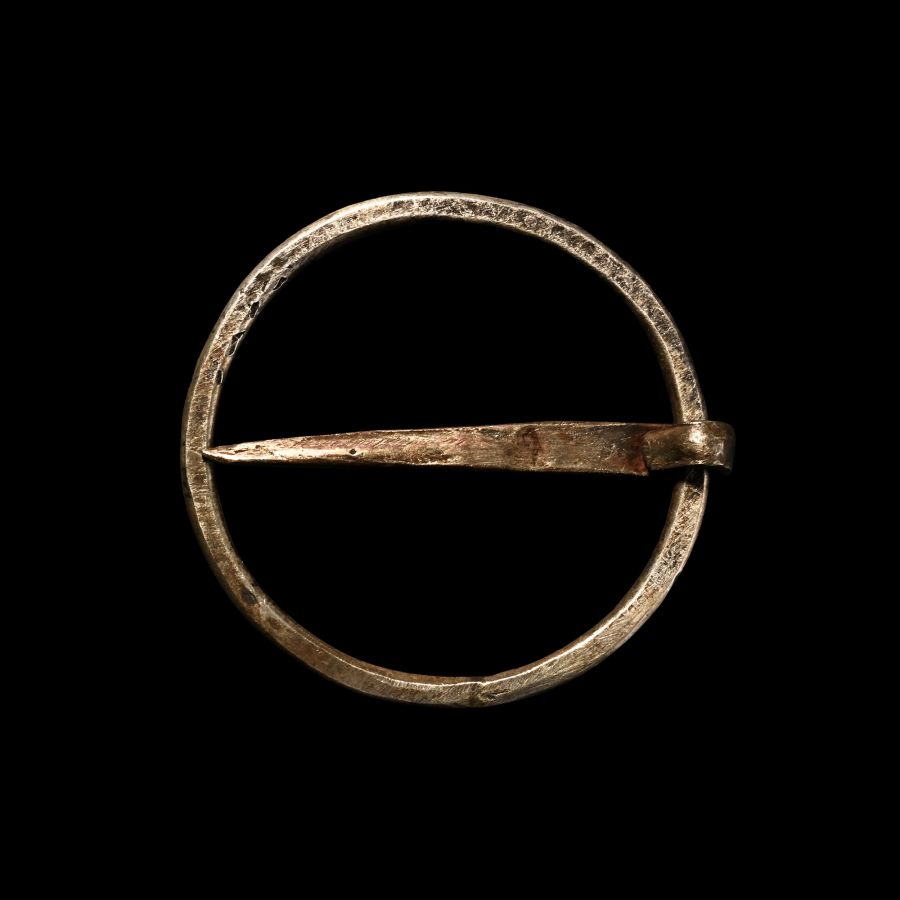
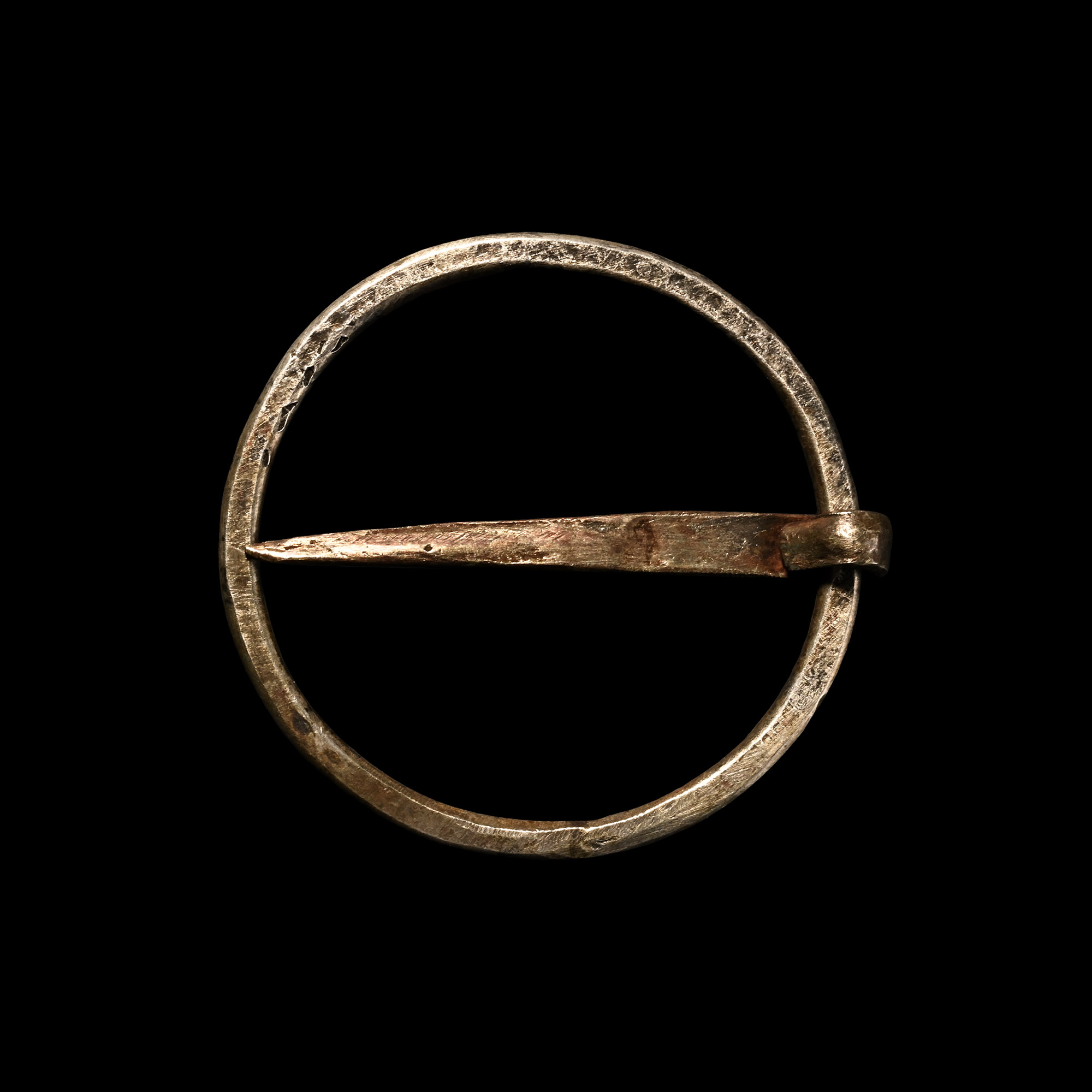
Medieval Silver Ring Brooch
14TH-15TH CENTURY A.D.
1 3/8 in. (4.25 grams, 35 mm).
Featuring a square-section hoop and articulate tongue with a recess to the obverse. [No Reserve]
ProvenanceFrom the private collection of Kenneth Machin (1936-2020), Buckinghamshire, UK; his collection of antiquities and natural history was formed since 1948; thence by descent.
This lot is accompanied by an illustrated lot declaration signed by the Head of the Antiquities Department, Dr Raffaele D'Amato.
Cf. Egan, G. & Pritchard, F., Dress Accessories 1150-1450, London, 2002, item 1336, for type.
CONDITIONTimeLine Auctions follows a vetting process to ensure the authenticity and legality of all items, reinforcing our commitment to integrity and responsible trading. Each antiquity, antique, and coin lot undergoes thorough examination by a vetting committee of at least ten external specialists, professional trade association members, scientists, and archaeologists: Our Vetting Process
AUCTIONS:
TimeLine is a leading auction house specialising in antiquities, ancient art, collectables, natural history, coins, medals, and books. Our auctions offer museums, collectors, historians, and enthusiasts the opportunity to acquire unique and historically significant pieces.
-
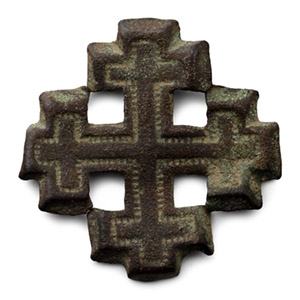
Medieval Bronze Knight's Holy Sepulchre Badge
Circa 13th-14th century A.D.Sold for (Inc. bp): £59
Formed as a cross-crosslet, the symbol of the Knights of the Holy Sepulchre, with punched-point border. 1.01 grams, 21 mm
Found East Anglia, UK. This lot is accompanied by an illustrated lot declaration signed by the Head of the Antiquities Department, Dr Raffaele D'Amato.
The 'Equestrian Order of the Holy Sepulchre of Jerusalem' was an order of knighthood under the protection of the Pope, formed around 1099 AD by Duke Godfrey of Bouillon, the leader of the First Crusade. It was established for the protection of pilgrims travelling to the Holy Land and was recognised by a Papal Bull in about 1113 AD. -
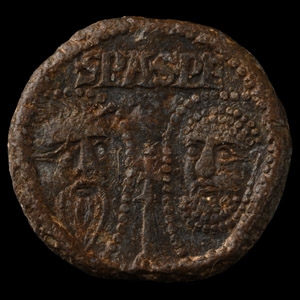
Medieval Pope Boniface IX Lead Papal Bulla
1389-1404 A.D.Sold for (Inc. bp): £143
The obverse depicting the busts of St Peter and St Paul each within an inverted pear-shaped compartment defined by pellets; cross pattee supported on a staff between the busts and at the top of the bulla in the centre letters 'SPASPE', abbreviations for St Paul and St Peter; reverse inscribed over three lines 'BONI / FATIVS:/ PP:VIIII', with an omega above the letters 'PP'; both obverse and reverse faces with a pelletted perimeter. 51.7 grams, 36 mm
Found UK. Property of a Worlingworth, Suffolk, UK, private collector. This lot is accompanied by an illustrated lot declaration signed by the Head of the Antiquities Department, Dr Raffaele D'Amato.
Pope Boniface IX, born Pietro Tomacelli, was the 204th Pope of the Roman Catholic Church, reigning from 1389 to 1404. He served during the Western Schism, a period where rival claimants to the papacy existed in both Rome and Avignon. -
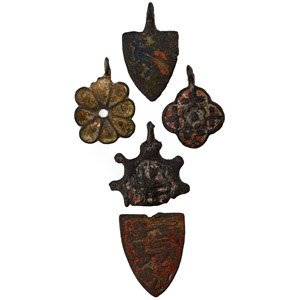
Medieval Knight's Bronze Heraldic Horse Harness Pendant Group
14th-15th century A.D.Sold for (Inc. bp): £124
Including heater, octofoil and other types, some with enamel to the heraldic design. 38.3 grams total, 35-42 mm
Found East Anglia, UK. This lot is accompanied by an illustrated lot declaration signed by the Head of the Antiquities Department, Dr Raffaele D'Amato.
