
Loading, please wait...
LOT 0418
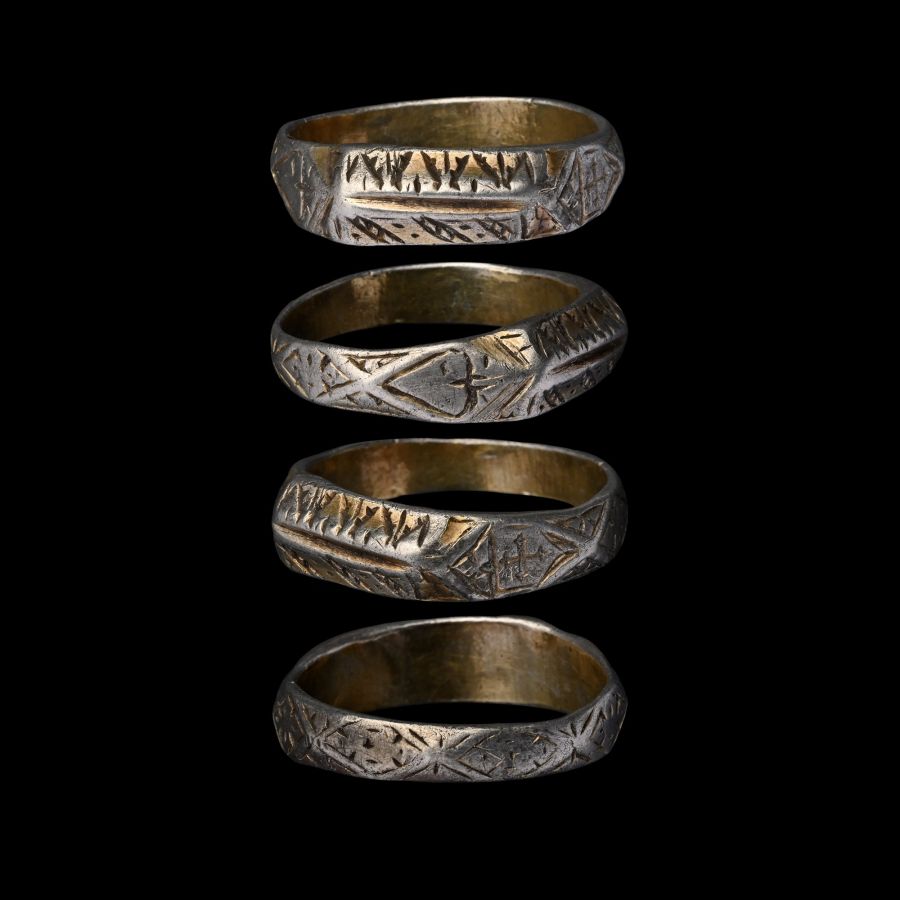
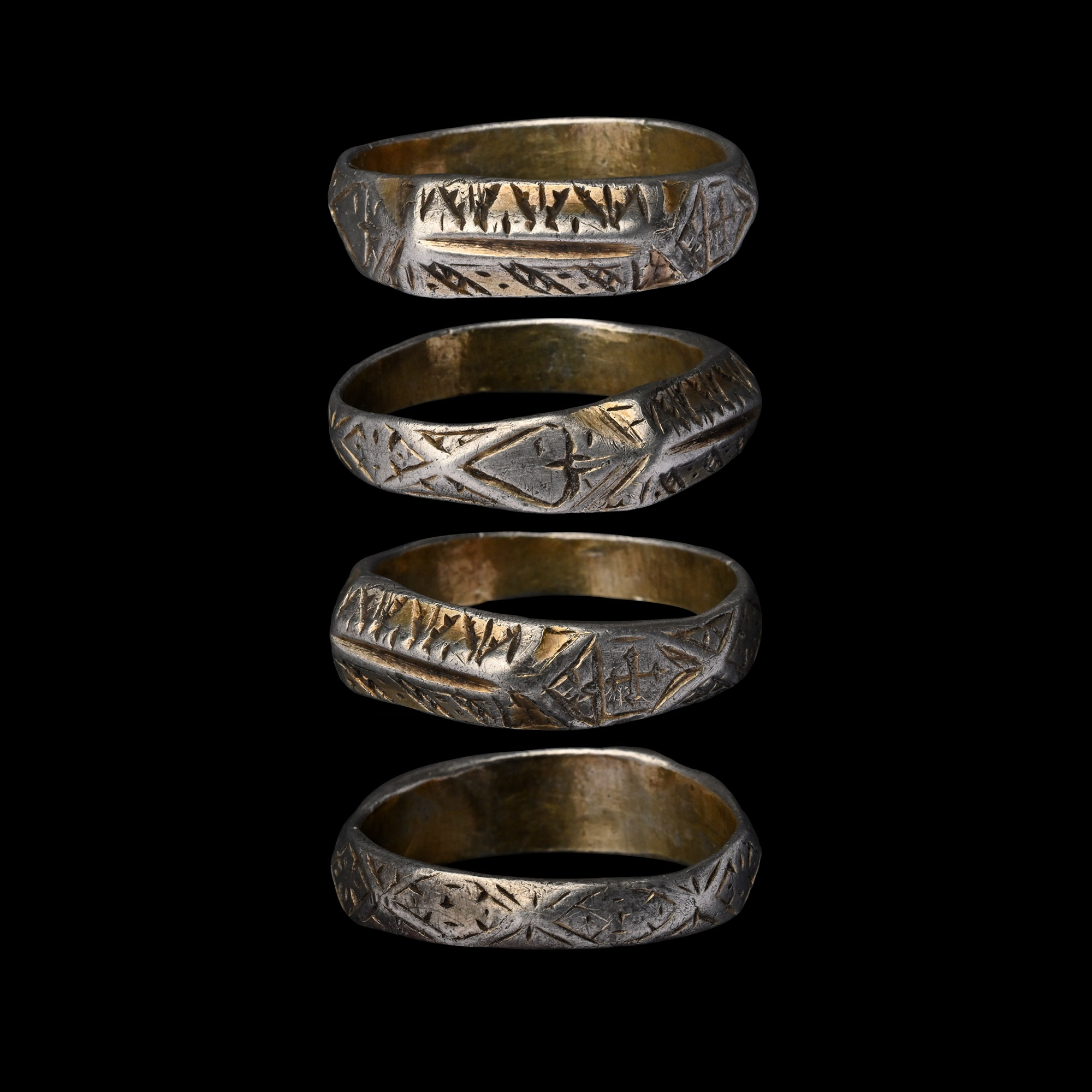
Medieval Silver Iconographic Type Ring with Heart and Cross
15TH CENTURY A.D.
7/8 in. (4.13 grams, 22.85 mm overall, 19.78 mm internal diameter (approximate size British S 1/2, USA 9 1/4, Europe 20.63, Japan 19)).
The lower shank with facets, each with a reserved cross pommee; the shoulders each with a heater-shaped panel, one with a cross moline and the other with a heart; the bezel in two panels, one with a row of hearts, the other with ropework; traces of gilding to the bezel.
ProvenanceAcquired on the UK art market in the 1980s.
From an East Anglian private collection.
Cf. Chadour, A.B., Rings. The Alice and Louis Koch Collection, volume I, Leeds, 1994, items 587-588, for type.
CONDITIONTimeLine Auctions follows a vetting process to ensure the authenticity and legality of all items, reinforcing our commitment to integrity and responsible trading. Each antiquity, antique, and coin lot undergoes thorough examination by a vetting committee of at least ten external specialists, professional trade association members, scientists, and archaeologists: Our Vetting Process
AUCTIONS:
TimeLine is a leading auction house specialising in antiquities, ancient art, collectables, natural history, coins, medals, and books. Our auctions offer museums, collectors, historians, and enthusiasts the opportunity to acquire unique and historically significant pieces.
LOT 0418
Medieval Silver Iconographic Type Ring with Heart and Cross
Sold for (Inc. bp): £1,300
-
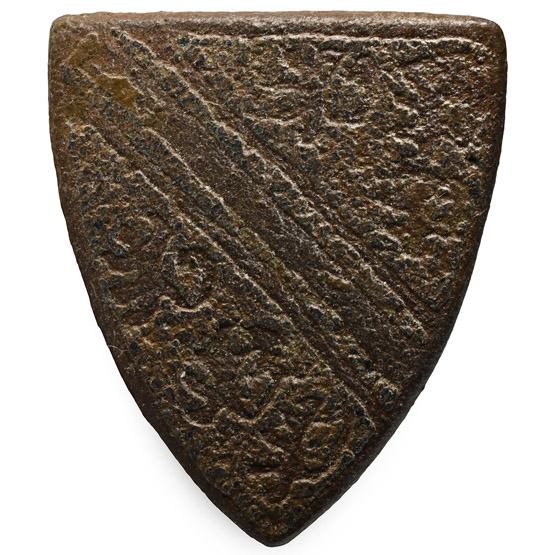
Medieval Knight's Enamelled Bronze Heraldic 'De Bohun, Earls of Hereford' Horse Harness Stud
Circa 14th century A.D.Sold for (Inc. bp): £351
Heater-shaped with fixing stud to reverse, heraldic design of two groups of three lions divided by two diagonal bands of blue enamel. 16.8 grams, 31 mm
Found Shottesbrooke, Windsor and Maidenhead, UK. Accompanied by a copy of the British Museum's Portable Antiquities Scheme (PAS) report no.SUR-D59AA0.
The arms are those of the Bohun family, Earls of Hereford. -
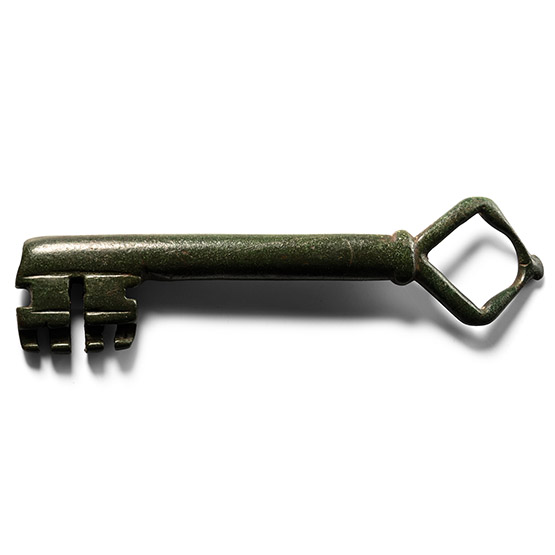
Large Medieval Bronze Door Key
14th-15th century A.D.Sold for (Inc. bp): £59
With voided lozenge bow, tubular shaft with scooped forward end, split ward with bits. 46.8 grams, 10.6 cm
Found Norfolk, UK. -
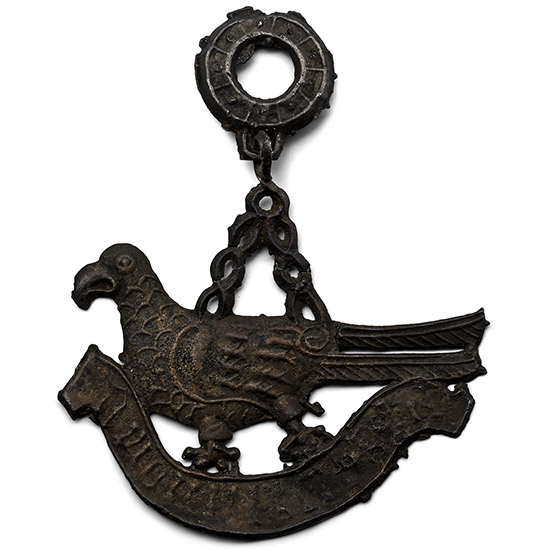
Large Medieval Pewter 'Love Conquers All' Secular Badge
Circa 14th-15th century A.D.Sold for (Inc. bp): £572
Formed as a standing bird (dove or popinjay) facing left with elongated tail and curved beak, standing on a scroll with partially faded inscription 'AMOR VINCIT OMNIA' (love conquers all), attachment ring to the top; complete and undamaged. 11 grams, 76 mm
Ex European collection. Ex Cambridgeshire, UK, collection.
