
Loading, please wait...
LOT 0345
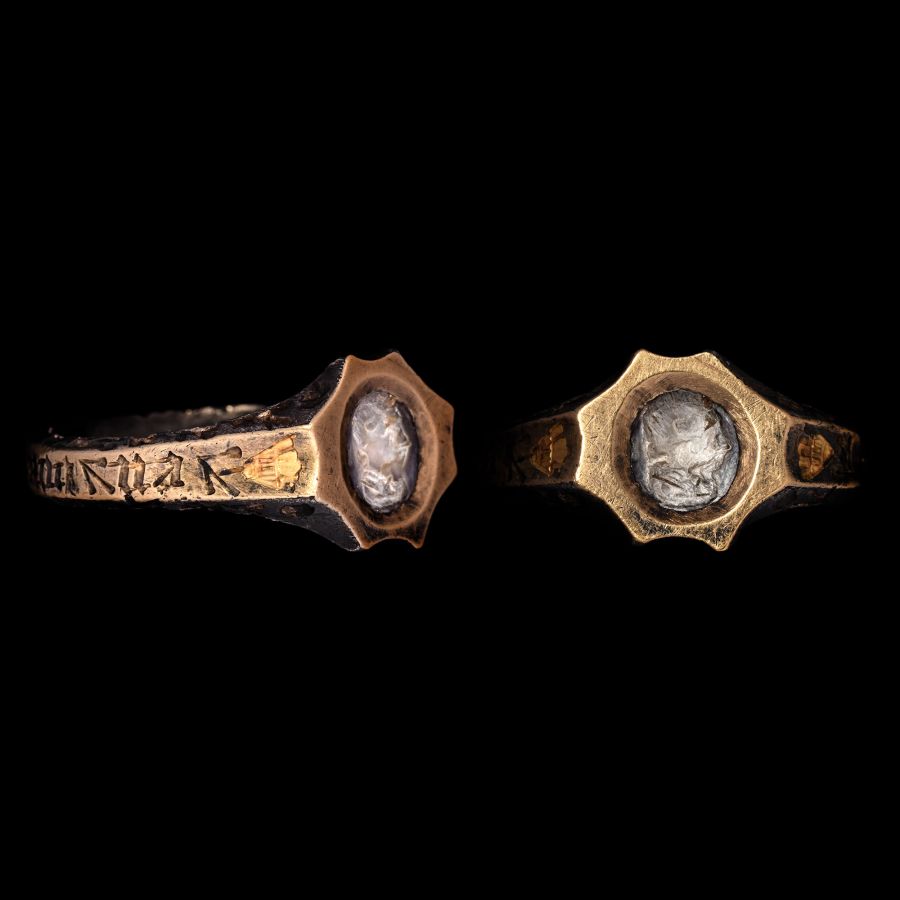
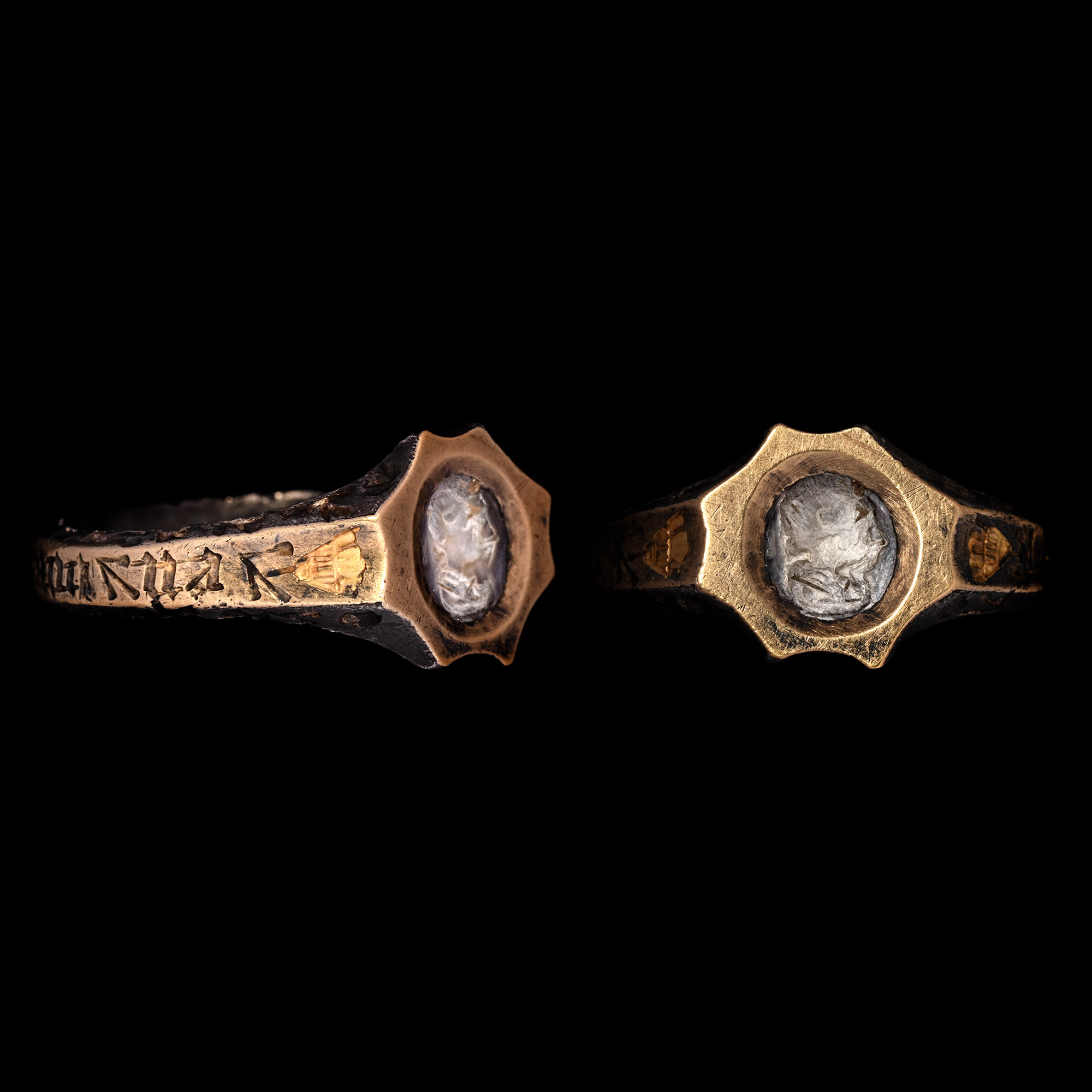
Medieval Silver-Gilt Ring with Male Head Gemstone and Inscriptions
15TH CENTURY A.D.
1 in. (4.72 grams, 23.64 mm overall, 20.45 mm internal diameter (approximate size British R 1/2, USA 8 3/4, Europe 19.38, Japan 18)).
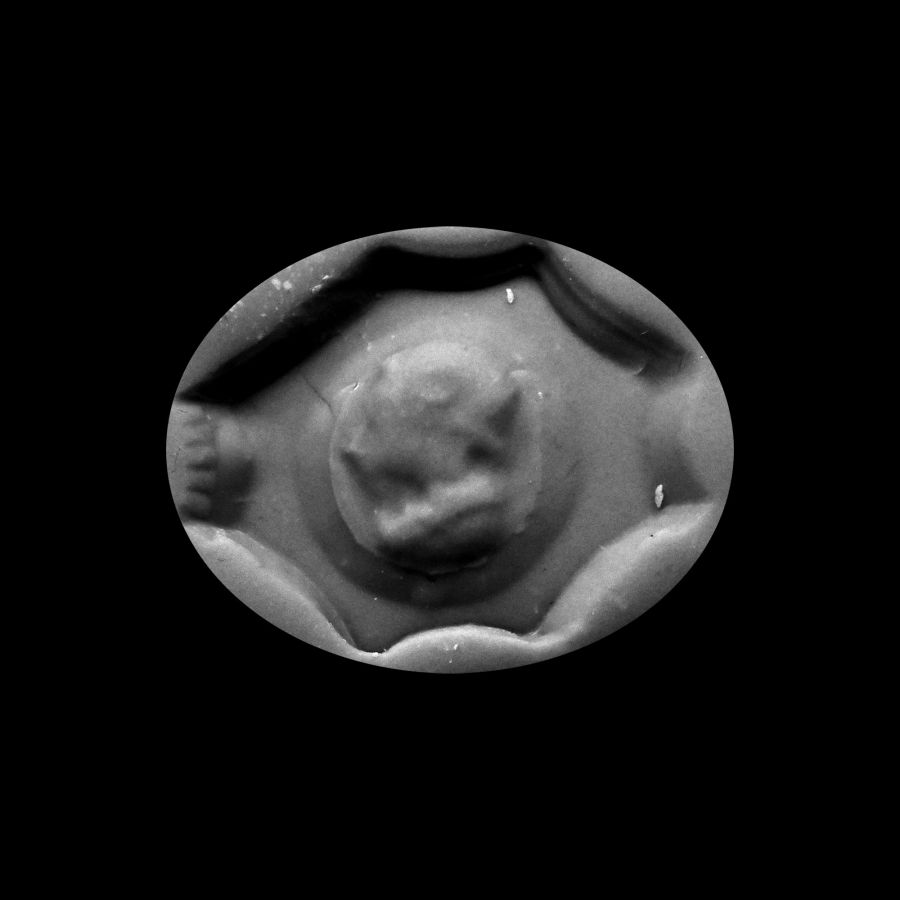
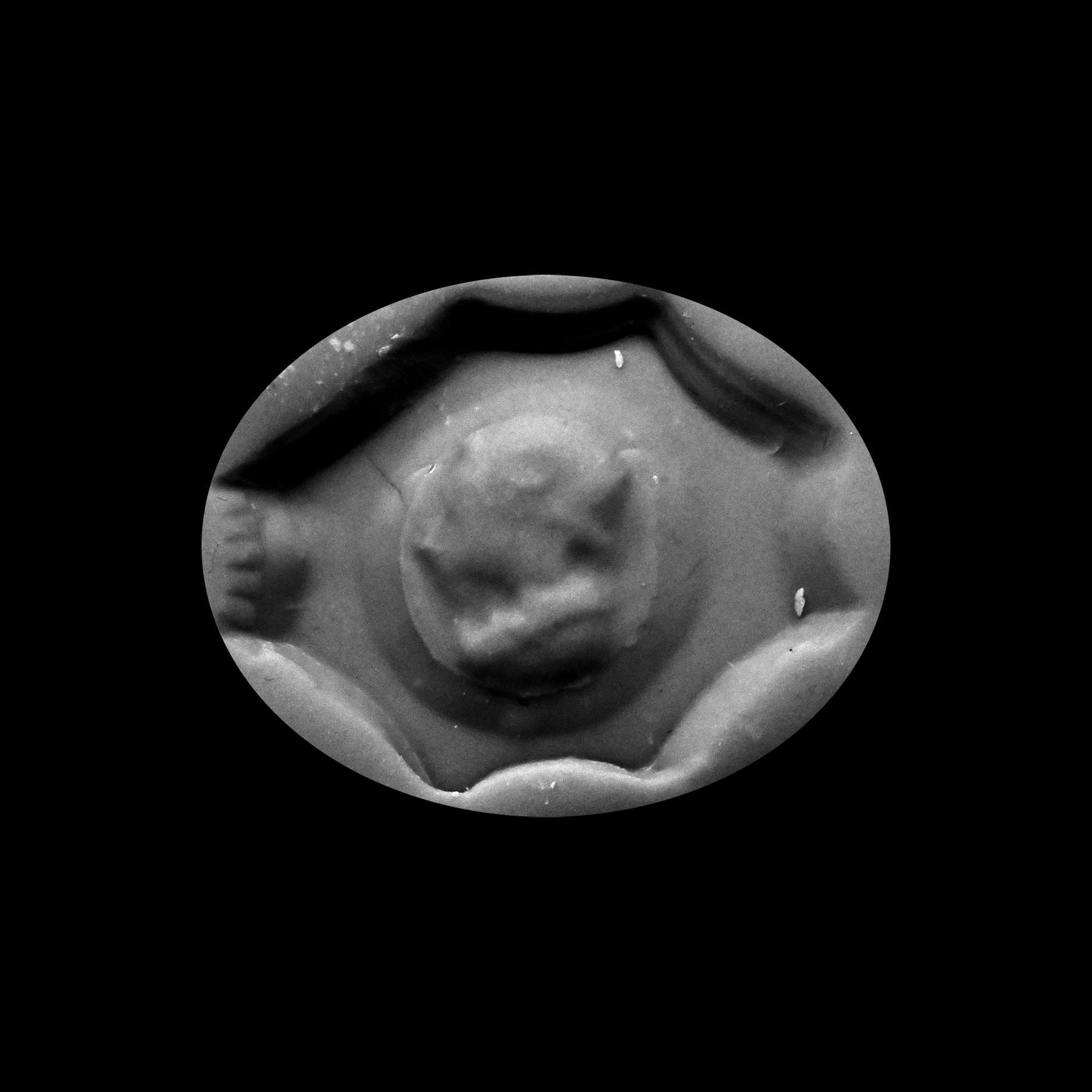
With applied outer layer of gold engraved with flowers and the words, “en bon an” (twice) (‘a good year’); the flat bezel with a recessed centre set with a medieval mother-of-pearl intaglio depicting a male bust in profile; supplied with a museum-quality impression.
ProvenanceFound whilst searching with a metal detector in Dorset, UK, on Sunday, 30th December 2018.
Acquired on the English art market.
Accompanied by a copy of the British Museum's Portable Antiquities Scheme (PAS) report no.DEV-5E4EDA.
This lot has been checked against the Interpol Database of stolen works of art and is accompanied by search certificate no.13069-248371.
Cf. Portable Antiquities Scheme (PAS) no.DEV-5E4EDA.
FootnotesThe inscription is in black letter appears to read “en bon an”, a good year. The inscription is paralleled on a good number of 15th century rings, often also decorated with flowers and branches between the words, such as British Museum catalogue numbers AF.1057 and 1960,1103.1.
CONDITIONTimeLine Auctions follows a vetting process to ensure the authenticity and legality of all items, reinforcing our commitment to integrity and responsible trading. Each antiquity, antique, and coin lot undergoes thorough examination by a vetting committee of at least ten external specialists, professional trade association members, scientists, and archaeologists: Our Vetting Process
AUCTIONS:
TimeLine is a leading auction house specialising in antiquities, ancient art, collectables, natural history, coins, medals, and books. Our auctions offer museums, collectors, historians, and enthusiasts the opportunity to acquire unique and historically significant pieces.
LOT 0345
Medieval Silver-Gilt Ring with Male Head Gemstone and Inscriptions
Sold for (Inc. bp): £4,680
-
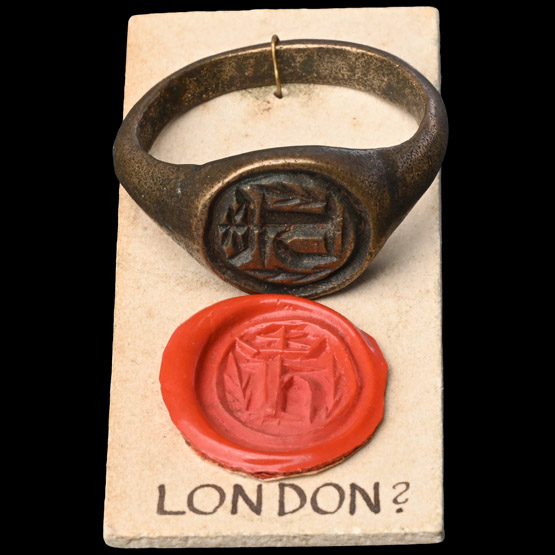
Large Medieval 'London' Bronze Signet Ring
15th-16th century A.D.Sold for (Inc. bp): £130
D-section hoop and disc bezel with crowned 'H' between fronds; attached to a collector's card with sample seal impression and legend 'London?'. 11.69 grams total, 26.75 mm overall, 22.20 mm internal diameter (approximate size British X, USA 11 1/2, Europe 26.29, Japan 25)
Found London, UK. From the collection of Dame Joan Evans (1893-1977), thence gifted during her lifetime to a gentleman collector friend from South East England.
Dame Joan Evans, DBE, FSA, FRHistS, enjoyed a long and distinguished career as an author and historian. She was appointed the president of the Society of Antiquaries in 1959, the first woman to hold this position, serving until 1964. From 1948 to 1951, Joan Evans served as President of the Royal Archaeological Institute. She received the Society’s gold medal in 1973. Joan Evans was honoured with a host of honorary degrees and fellowships, as well as fellowships of the Royal Historical Society and the Royal Society of Literature. She was a Chevalier of the Légion d’Honneur, and was appointed a Dame of the British Empire in 1976. She served as a trustee of both the London and the British museums, and as a member of the advisory council of the Victoria and Albert Museum. -
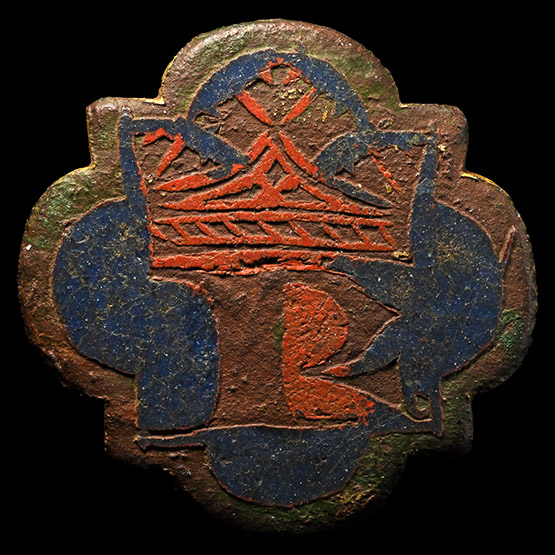
Large Medieval Enamelled Bronze 'Crowned R' Stud
15th century A.D.Sold for (Inc. bp): £520
Quatrefoil type with interstitial points, reserved capital 'R' on a blue enamelled field, reserved crown above. 24.4 grams, 42 mm
Found Norfolk, UK. -
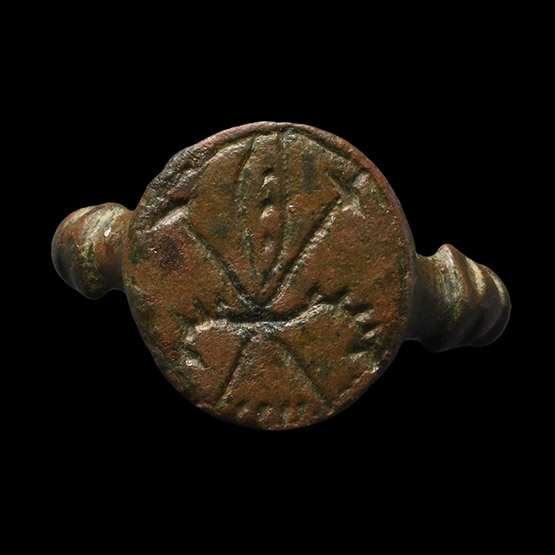
Medieval Bronze Ring with Fleur-de-Lys
12th century A.D.Sold for (Inc. bp): £85
Comprising a D-section hoop with the shoulders formed as stylised beast-heads, a discoid bezel with fleur-de-lys. 5.01 grams, 22.48 mm overall, 18.86 mm internal diameter (approximate size British Q 1/2, USA 8 1/4, Europe 18.12, Japan 17)
Found UK. Acquired on the UK and EU art market before 2000. From the private collection of a Surrey, UK, gentleman.
A circular bezel with a stylised flower decoration is soldered onto a thin ribbon-shaped link, which is flat on the inside and has two grooves on the outside. The style of the bezel decoration is Western Medieval, although the ring’s style finds parallels in specimens of Eastern Europe.
