
Loading, please wait...
LOT 1943
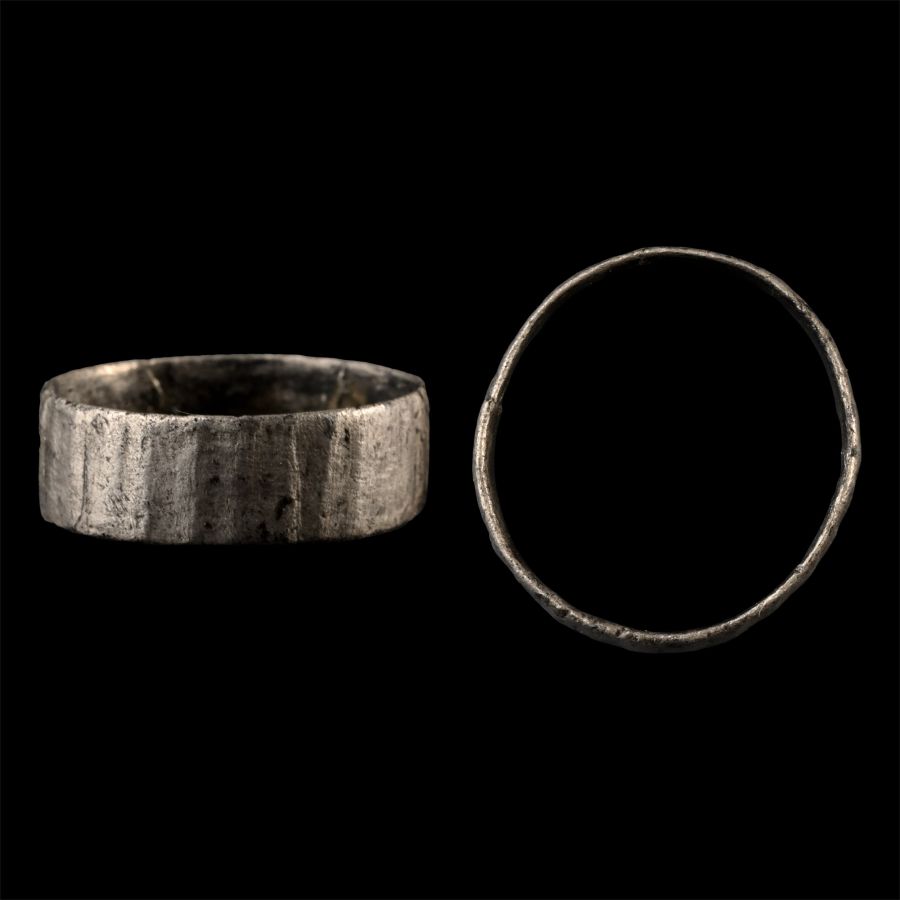
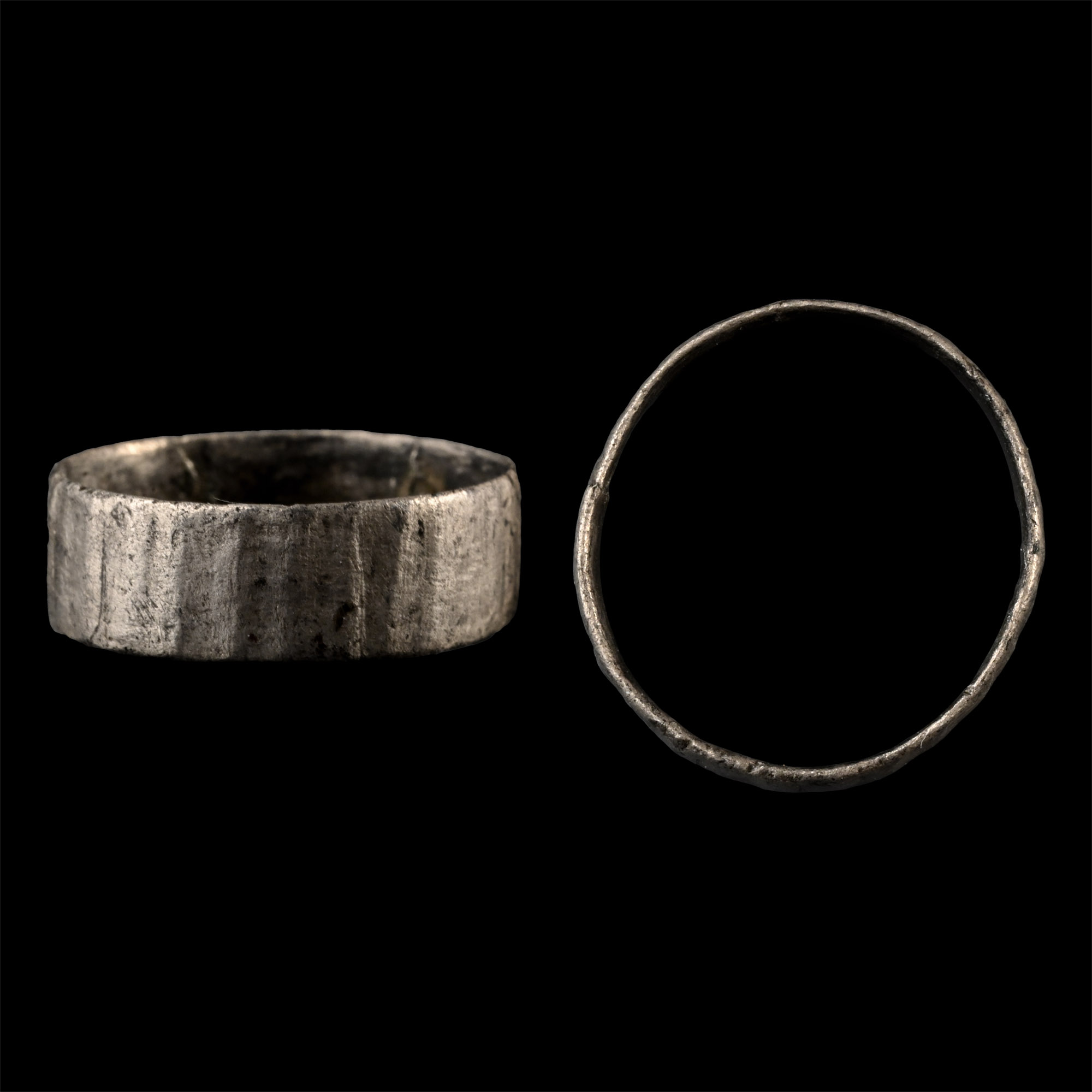
Medieval Silver Fluted Ring
15TH-16TH CENTURY A.D.
3/4 in. (2.59 grams, 21.06 mm overall, 18.94 mm internal diameter (approximate size British Q, USA 8, Europe 17.49, Japan 16)).
Rectangular-section wide band with dense fluting to the outer face. [No Reserve]
ProvenanceAcquired on the UK art market in the 1970s-1990s.
Property of a Nottinghamshire, UK, gentleman.
This lot is accompanied by an illustrated lot declaration signed by the Head of the Antiquities Department, Dr Raffaele D'Amato.
TimeLine Auctions follows a vetting process to ensure the authenticity and legality of all items, reinforcing our commitment to integrity and responsible trading. Each antiquity, antique, and coin lot undergoes thorough examination by a vetting committee of at least ten external specialists, professional trade association members, scientists, and archaeologists: Our Vetting Process
AUCTIONS:
TimeLine is a leading auction house specialising in antiquities, ancient art, collectables, natural history, coins, medals, and books. Our auctions offer museums, collectors, historians, and enthusiasts the opportunity to acquire unique and historically significant pieces.
-
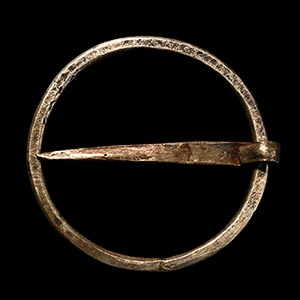
Medieval Silver Ring Brooch
14th-15th century A.D.Sold for (Inc. bp): £33
Featuring a square-section hoop and articulate tongue with a recess to the obverse. 4.25 grams, 35 mm
From the private collection of Kenneth Machin (1936-2020), Buckinghamshire, UK; his collection of antiquities and natural history was formed since 1948; thence by descent. This lot is accompanied by an illustrated lot declaration signed by the Head of the Antiquities Department, Dr Raffaele D'Amato. -
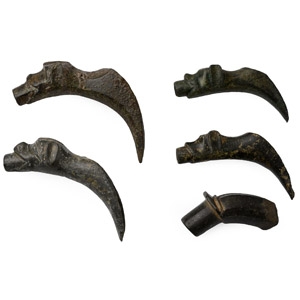
Medieval Bronze Priest's Laver Holy Water Pouring Vessel Spout Collection
14th-15th century A.D.Sold for (Inc. bp): £91
Each with stylised zoomorphic and other detailing, mouth closed around a round-section spout, curved round-section neck with section cut away for attachment. 297 grams total, 53-87 mm
Found East Anglia, UK. This lot is accompanied by an illustrated lot declaration signed by the Head of the Antiquities Department, Dr Raffaele D'Amato.
A priest's laver was a large ceremonial basin used for ritual ablutions. -
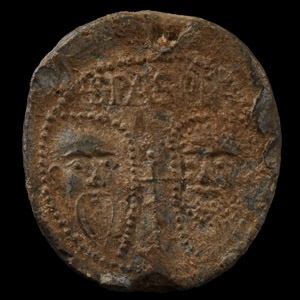
Medieval Pope Honorius III Lead Papal Bulla
1216-1227 A.D.Sold for (Inc. bp): £143
The obverse depicting the busts of St Peter and St Paul each within an inverted pear-shaped compartment defined by pellets; cross pattee supported on a staff between the busts and at the top of the bulla in the centre letters 'SPASPE', abbreviations for St Paul and St Peter; reverse inscribed over three lines 'HONO/RIVS/.PP.III.', with an omega above the letters 'PP'; both obverse and reverse faces with a pelletted perimeter. 51 grams, 41 mm
Found UK. Property of a Worlingworth, Suffolk, UK, private collector. This lot is accompanied by an illustrated lot declaration signed by the Head of the Antiquities Department, Dr Raffaele D'Amato.
Pope Honorius III, born Cencio Savelli, was head of the Catholic Church and ruler of the Papal States from 18 July 1216 to his death. A canon at the Basilica di Santa Maria Maggiore, he came to hold a number of important administrative positions, including that of Camerlengo.
