
Loading, please wait...
LOT 1895
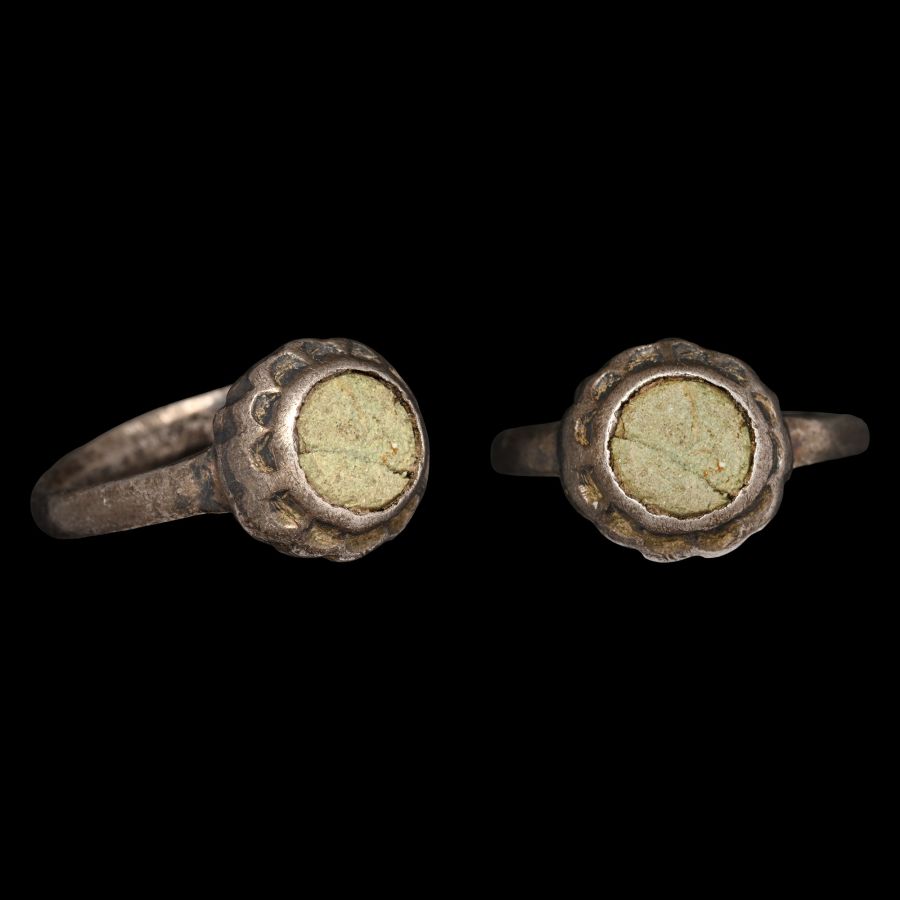
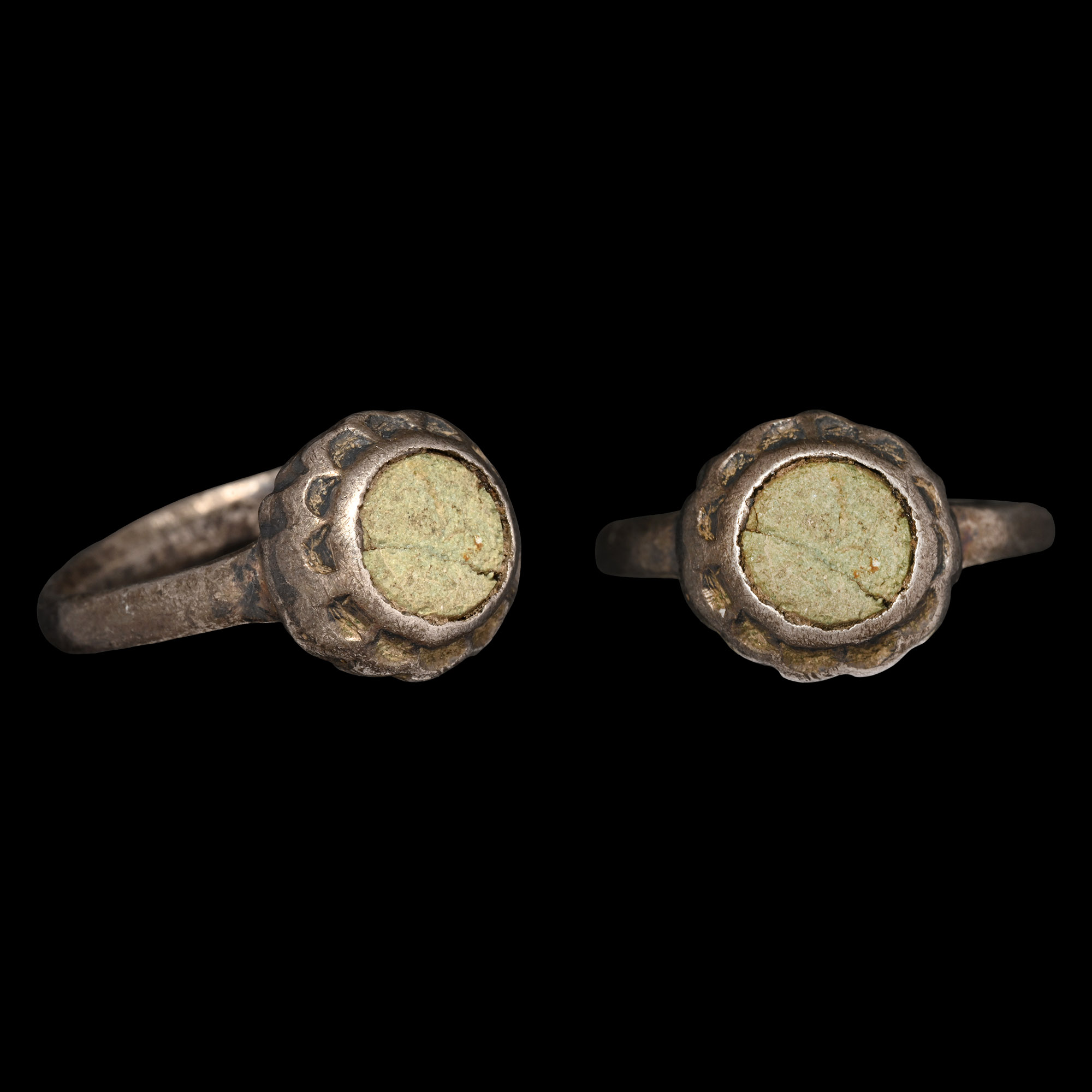
Medieval Silver Enamelled Ring
CIRCA 14TH-15TH CENTURY A.D.
1 in. (4.01 grams, 23.16 mm overall, 16.68 mm internal diameter (approximate size British L 1/2, USA 6, Europe 11.87, Japan 11)).
Featuring a slender hoop and a circular bezel with a piecrust edge and a rosette underneath, a recess at the centre with light-green enamel. [No Reserve]
ProvenanceFrom the private collection of a European gentleman (1942-2024), formed since the 1970s.
CONDITIONTimeLine Auctions follows a vetting process to ensure the authenticity and legality of all items, reinforcing our commitment to integrity and responsible trading. Each antiquity, antique, and coin lot undergoes thorough examination by a vetting committee of at least ten external specialists, professional trade association members, scientists, and archaeologists: Our Vetting Process
AUCTIONS:
TimeLine is a leading auction house specialising in antiquities, ancient art, collectables, natural history, coins, medals, and books. Our auctions offer museums, collectors, historians, and enthusiasts the opportunity to acquire unique and historically significant pieces.
-
.jpg)
Medieval Bronze Ring with Sun Motif
14th-16th century A.D.Sold for (Inc. bp): £33
Comprising a D-section shank with stud to the underside, drum-shaped bezel with impressed central starburst. 11.49 grams, 26.04 mm overall, 19.37 mm internal diameter (approximate size British R, USA 8 1/2, Europe 18 3/4, Japan 18)
Ex German art market, 2000s. Acquired from an EU collector living in London. From the collection of a Surrey, UK, gentleman. -
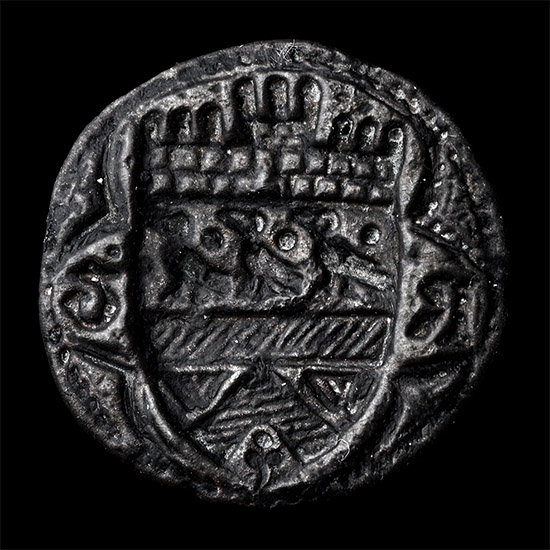
Large Medieval Knight's Heraldic Seal Matrix
Circa 14th-15th century A.D.Sold for (Inc. bp): £143
'Chessman' type with pierced trefoil knop and faceted shank; underside with heater shield and mural crown on a quatrefoil; shield bearing three martlets over a fess with chevron in base. 17.9 grams, 32 mm
From the private collection of a Sussex, UK, gentleman. -
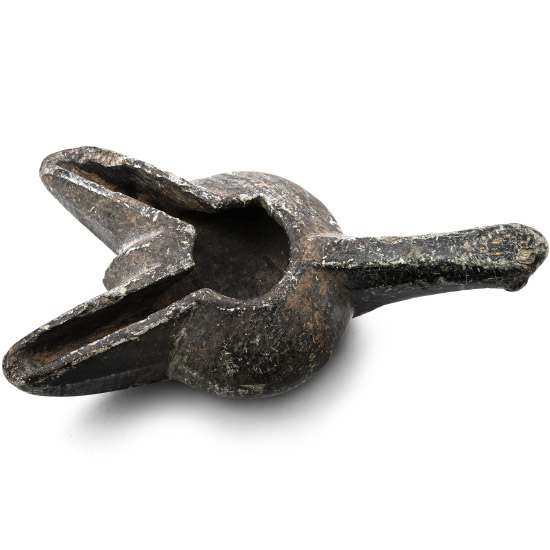
Large Medieval Stone Oil Lamp
9th-11th century A.D.Estimate: £300 - 400 (+bp*)
Opening Bid: £60
Spherical body with two U-shaped nozzles, a tapering handle to the rear. 840 grams, 21.5 cm
From an important collection of lamps, Germany, 1970s.
