
Loading, please wait...
LOT 1643
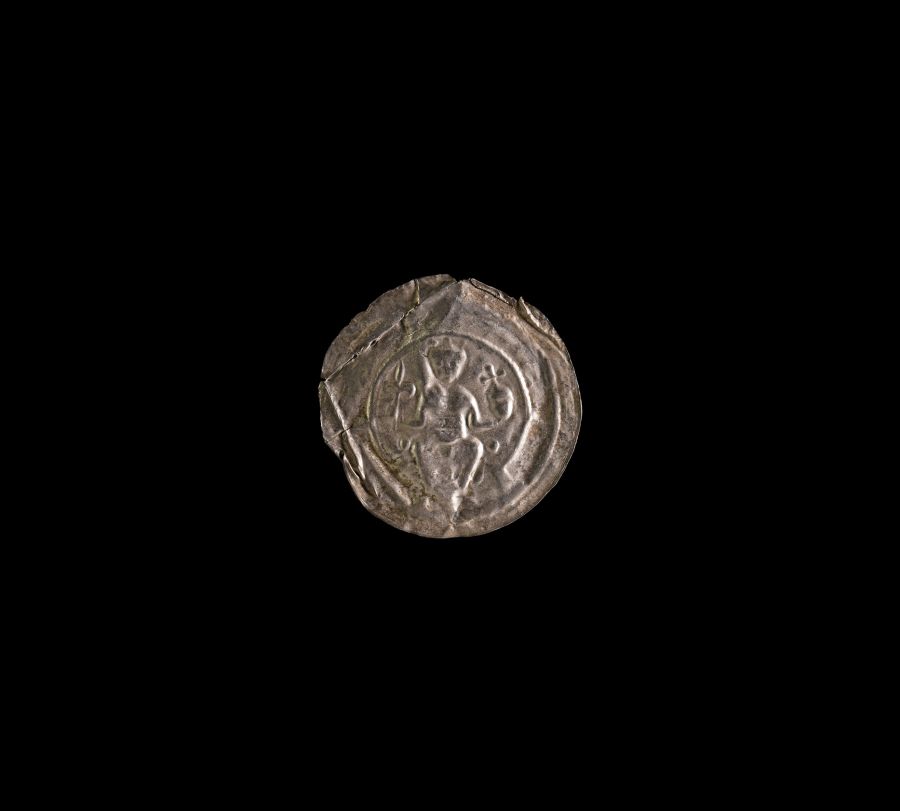
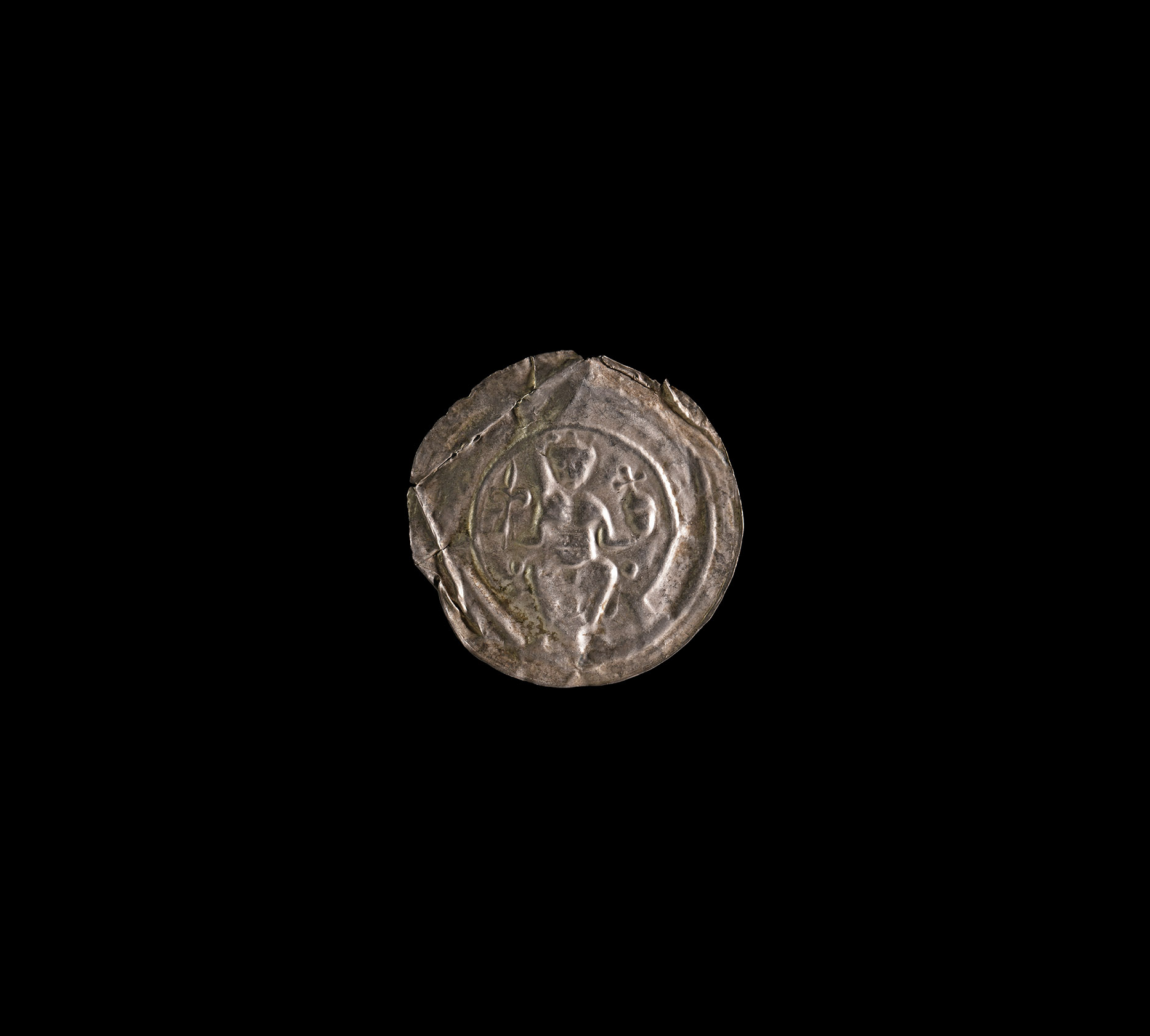
Medieval Silver Bracteate with Seated Figure
GERMANY, 11TH CENTURY A.D.
1 1/4 in. (0.95 grams, 31.5 mm).
Repoussé work with an enthroned figure holding cross-on-globe and a sceptre.
ProvenanceAcquired on the European art market between 1975-2000.
Ex property of a Dutch collector.
TimeLine Auctions follows a vetting process to ensure the authenticity and legality of all items, reinforcing our commitment to integrity and responsible trading. Each antiquity, antique, and coin lot undergoes thorough examination by a vetting committee of at least ten external specialists, professional trade association members, scientists, and archaeologists: Our Vetting Process
AUCTIONS:
TimeLine is a leading auction house specialising in antiquities, ancient art, collectables, natural history, coins, medals, and books. Our auctions offer museums, collectors, historians, and enthusiasts the opportunity to acquire unique and historically significant pieces.
LOT 1643
Medieval Silver Bracteate with Seated Figure
Estimate £200 - 300€230 - 350 (for guidance only)$270 - 410 (for guidance only)
-
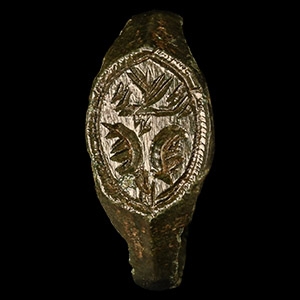
Medieval Bronze Ring with Foliage
15th-16th century A.D.Sold for (Inc. bp): £46
The slender hoop expanding to carinated shoulders, elliptical bezel engraved with stylised foliage. 1.71 grams, 18.50 mm overall, 16.19 mm internal diameter (approximate size British L, USA 5 3/4, Europe 11.24, Japan 10)
Private collection formed since the 1940s. UK art market. Property of an Essex gentleman. -
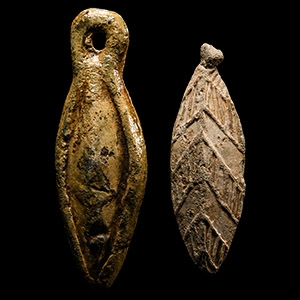
Medieval Plumb Bob Weight Group
Circa 14th-16th century A.D.Sold for (Inc. bp): £13
Each with a lozenge-shaped cross-section, one complete with suspension loop, the other with raised hatched panels. 174 grams total, 64-76 mm
Ex Simmons Gallery, London E11, UK, in the 1990s. From a North London collection. -
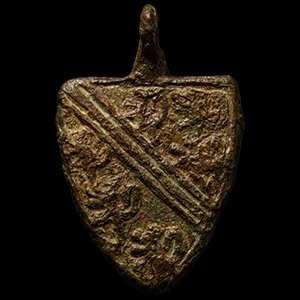
Medieval Bronze Knight's 'De Bohun Family' Heraldic Horse Harness Pendant
14th-15th century A.D.Sold for (Inc. bp): £104
A heater-shield-shaped pendant with integral suspension loop; device: [azure] a bend argent, cotised and between six lioncels [or]. 9.5 grams, 36 mm
Found Nottinghamshire, UK.
The well-known de Bohun family were Earls of Essex and Hereford. Whilst the enamelling is lost, this is a distinctive coat of arms.
