
Loading, please wait...
LOT 1299
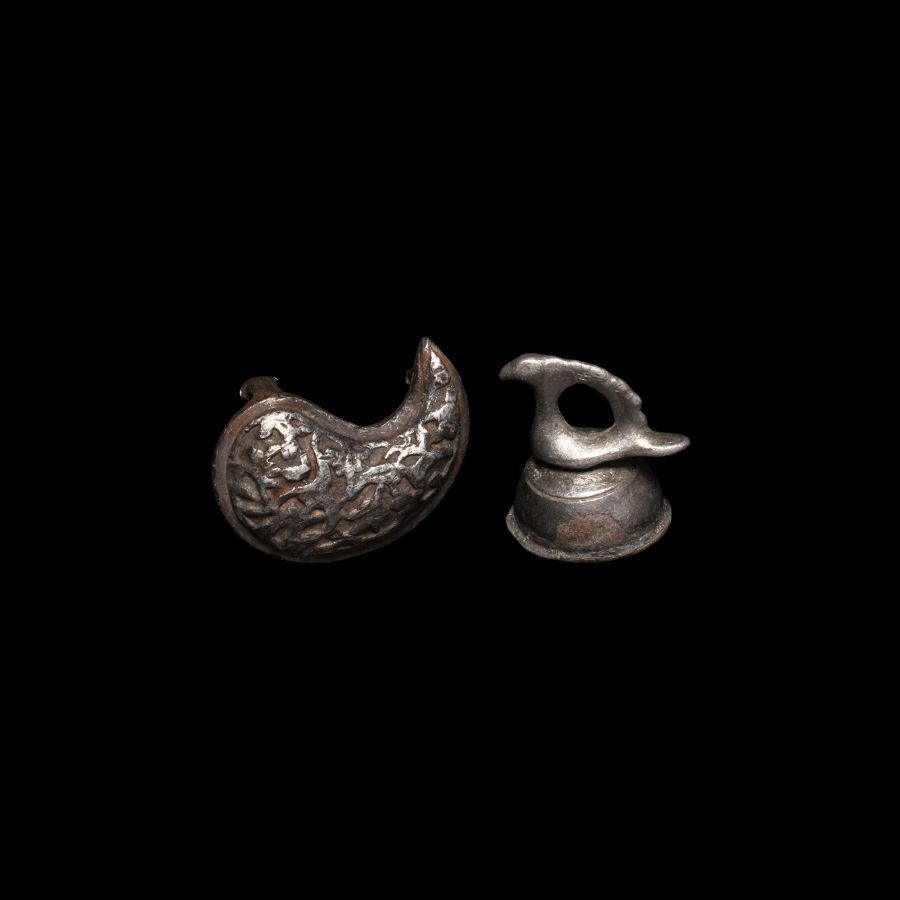
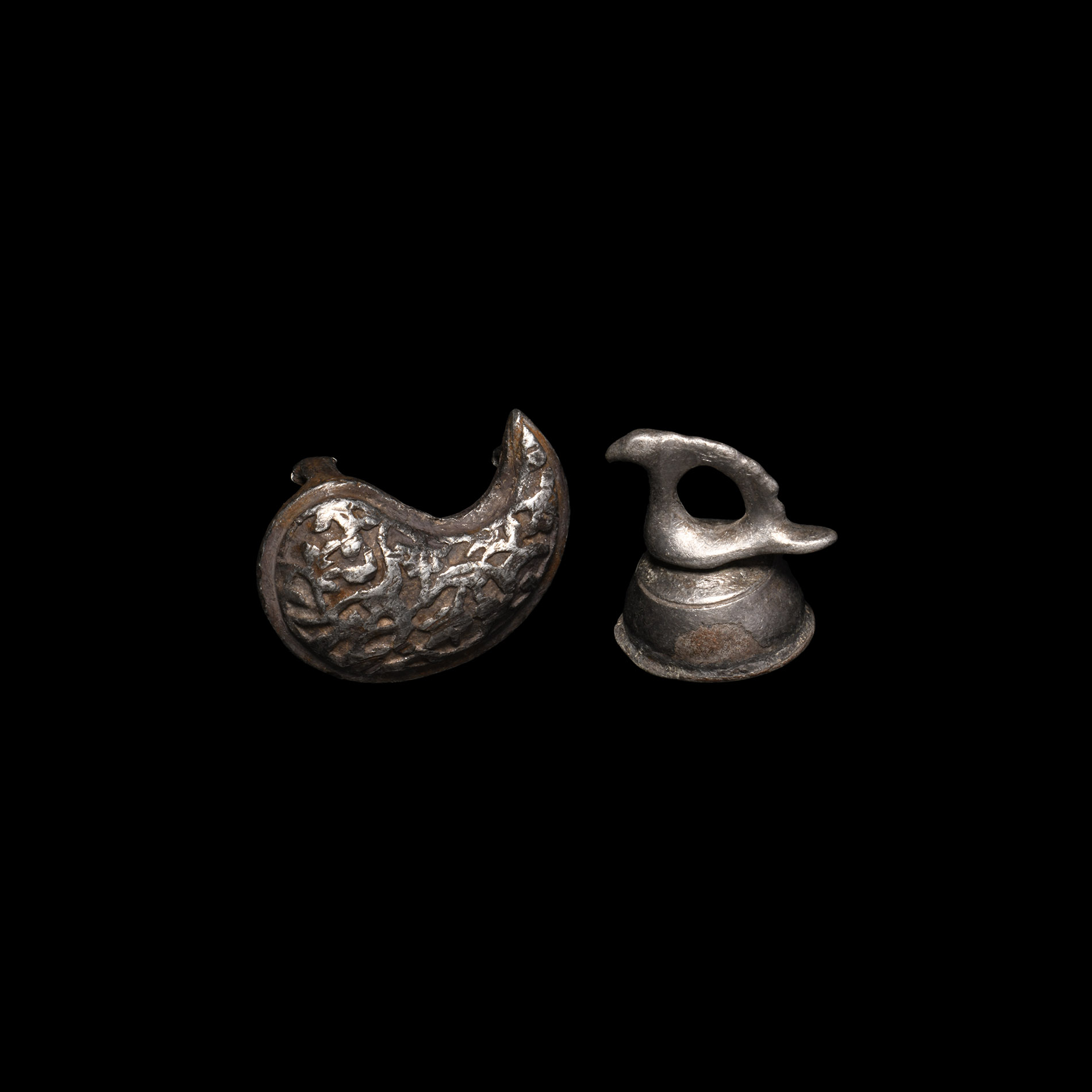
Medieval Silver Artefact Group
CIRCA 14TH CENTURY A.D.
5/8 - 1 in. (12 grams total, 18-25 mm).
A group of two silver artefacts comprising: a possible finial formed as a bird seated on a domed base with suspension loop to reverse; a comma-shaped mount or fitting displaying an entwined motif and with four mounting claws to the underside. [2, No Reserve]
ProvenanceEssex gallery, early 2000s.
CONDITIONTimeLine Auctions follows a vetting process to ensure the authenticity and legality of all items, reinforcing our commitment to integrity and responsible trading. Each antiquity, antique, and coin lot undergoes thorough examination by a vetting committee of at least ten external specialists, professional trade association members, scientists, and archaeologists: Our Vetting Process
AUCTIONS:
TimeLine is a leading auction house specialising in antiquities, ancient art, collectables, natural history, coins, medals, and books. Our auctions offer museums, collectors, historians, and enthusiasts the opportunity to acquire unique and historically significant pieces.
-
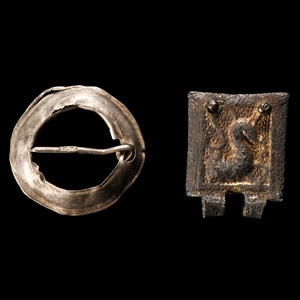
Medieval 'Thames' Artefact Group
Circa 14th-15th century A.D.Sold for (Inc. bp): £26
A group of two metallic artefacts: a copper-alloy strap end or other fitting retaining two rivets, displaying a regardant lionesque creature in relief advancing left, traces of gilding; a silver annular brooch with chamfered outer face, articulate pin stamped with maker's mark 'WW' with a rectangular cartouche. 6.36 grams total, 25-27 mm
Found on the Thames foreshore, London, UK. Acquired on the UK antiques market between 1974-1985. Albert Ward collection, Essex, UK. -
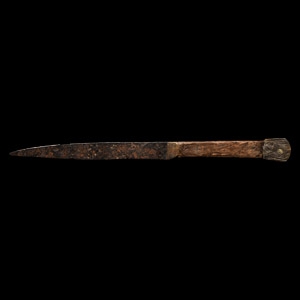
Medieval Knife with Bronze Pommel and Veiled Figure
Circa 1500 A.D.Estimate: £200 - 300 (+bp*)
Opening Bid: £100
A scale tanged knife with iron blade and single cutting edge, wooden scales, bronze pommel incised with a veiled female figure to one face and a male figure to the other; remains of gilding to the neck of the handle. 22.7 grams, 18.2 cm long
Acquired 1960s-1990s. Late Alison Barker collection, a retired London barrister. -
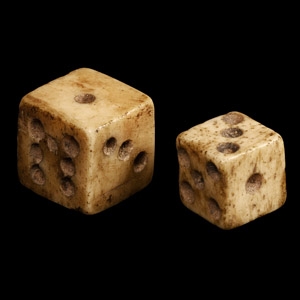
Medieval 'Thames' Bone Dice Pair
14th-16th century A.D.Sold for (Inc. bp): £130
A pair of differently sized bone dice with recessed dot numbering, configured: 1:4; 2:6; 3:5 and 1:6; 2:5; 3:4. 3.28 grams total, 8-10 mm
Found on the Thames foreshore, London, UK. Acquired 1960s-1990s. From the late Alison Barker collection, a retired London barrister.
