
Loading, please wait...


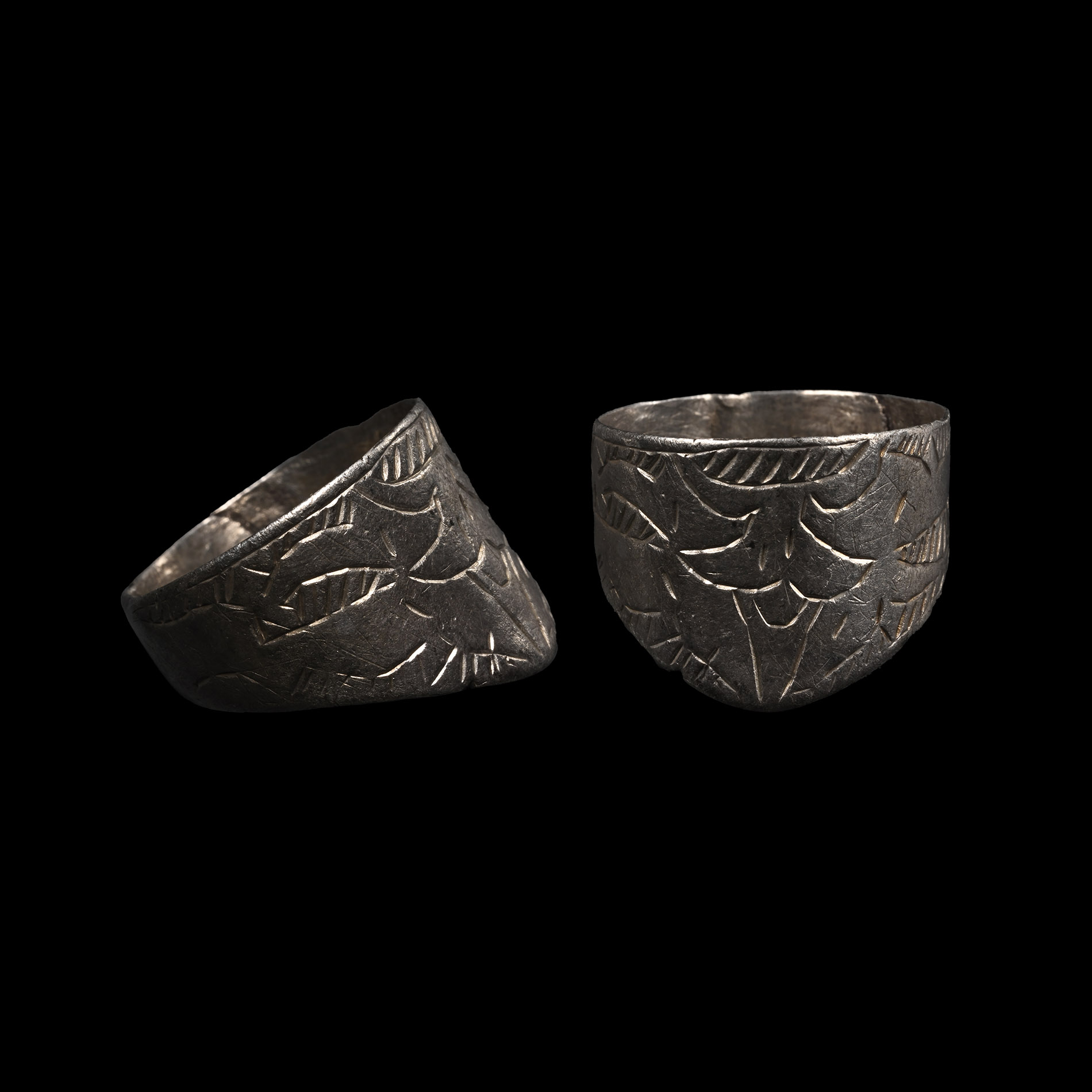
LOT 1813
Medieval Silver Archer's Thumb Ring
CIRCA 14TH CENTURY A.D.
7/8 in. (4.82 grams, 21.06 mm overall, 19.05 mm internal diameter (approximate size British R, USA 8 1/2, Europe 18 3/4, Japan 18)).
Penannular with butted ends to the hoop, triangular extension with hatched fleur-de-lys motif in low relief; edge nicked.
ProvenancePrivate collection formed since the 1940s.
UK art market.
Property of an Essex, UK, gentleman.
TimeLine Auctions follows a vetting process to ensure the authenticity and legality of all items, reinforcing our commitment to integrity and responsible trading. Each antiquity, antique, and coin lot undergoes thorough examination by a vetting committee of at least ten external specialists, professional trade association members, scientists, and archaeologists: Our Vetting Process
AUCTIONS:
TimeLine is a leading auction house specialising in antiquities, ancient art, collectables, natural history, coins, medals, and books. Our auctions offer museums, collectors, historians, and enthusiasts the opportunity to acquire unique and historically significant pieces.
-
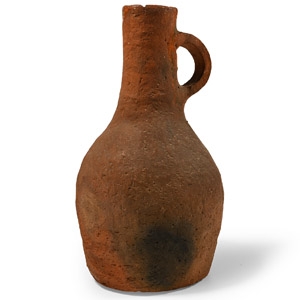
Medieval Red Ware Flagon
15th-16th century A.D.Sold for (Inc. bp): £39
With broad base and squat profile, sloping shoulder and tall tubular neck, rounded rim, single lateral loop handle below; signs of green glaze remaining around the lip. 569 grams, 20.5 cm
From a family collection mostly formed in the 1940s-1950s, thence by descent. -
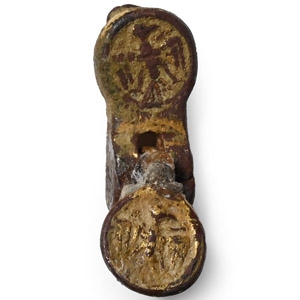
Medieval Gilt Bronze Knight's Heraldic Horse Harness Pendant with Hanger
14th-15th century A.D.Sold for (Inc. bp): £33
Formed as a disc with rivet to reverse, reserved spread-eagle motif, with hinged bar and roundel bearing similar motif. 4.9 grams, 29 mm
From the collection of a gentleman, acquired on the London art market in the 1990s. -
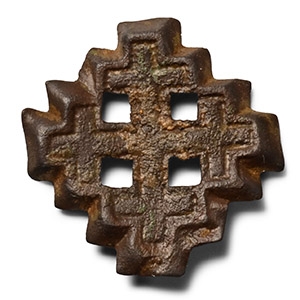
Medieval Bronze Knight's Holy Sepulchre Badge
Circa 13th-14th century A.D.Sold for (Inc. bp): £143
Formed as a cross-crosslet, the symbol of the Knights of the Holy Sepulchre, with punched-point border. 0.87 grams, 21mm
Found whilst searching with a metal detector near Eynsham, Oxfordshire, UK, before 1996.
The 'Equestrian Order of the Holy Sepulchre of Jerusalem' was an order of knighthood under the protection of the Pope, formed around 1099 AD by Duke Godfrey of Bouillon, the leader of the First Crusade. It was established for the protection of pilgrims travelling to the Holy Land and was recognised by a Papal Bull in about 1113 AD.
