
Loading, please wait...
LOT 1861
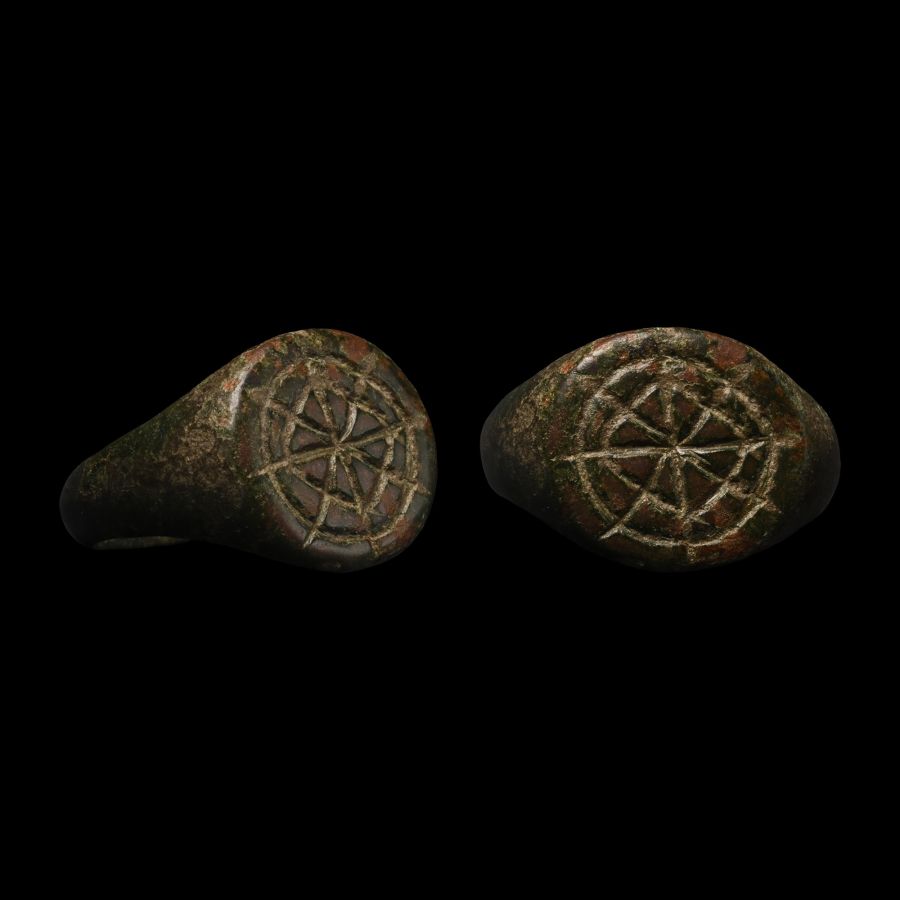
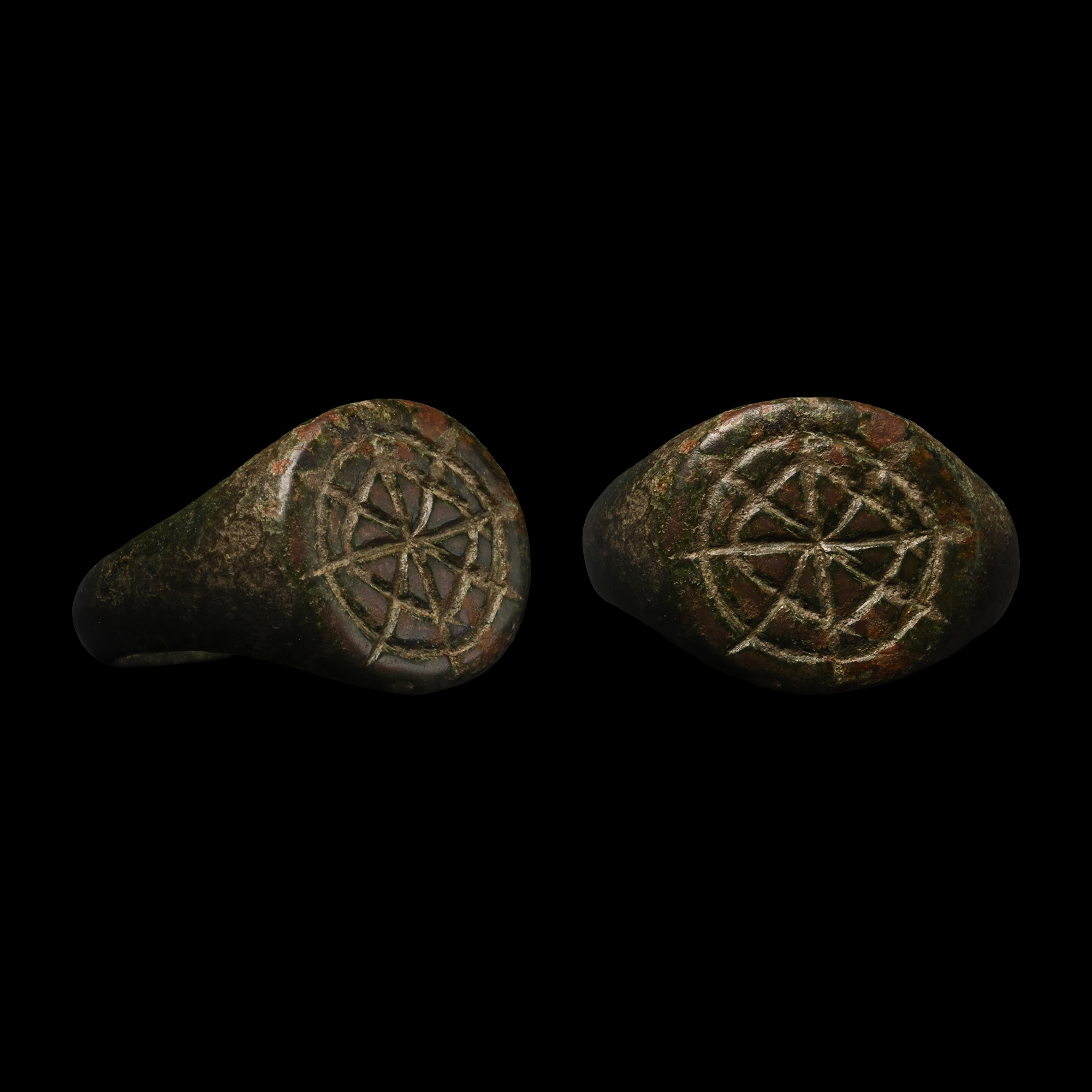
Medieval Signet Bronze Ring with Web
15TH-16TH CENTURY A.D.
1 in. (7.99 grams, 23.53 mm overall, 18.97 mm internal diameter (approximate size British Q 1/2, USA 8 1/4, Europe 18.12, Japan 17)).
Comprising a D-section expanding hoop and an oval bezel with a grid design resembling a spider's web. [No Reserve]
ProvenanceAcquired on the UK and EU art market before 2000.
From the private collection of a Surrey, UK, gentleman.
Cf. PAS no. NMS-F36D46, for the type of signet rings, with a D-section hoop and an oval bezel engraved with a merchant's mark.
FootnotesIn the Middle Ages, the signet ring became a distinctive sign of belonging to a specific noble family or clan, or Guild. The ring, with the coat of arms or symbol of the Guild or Corporation engraved on the bezel, was pressed onto melted sealing wax to seal letters, edicts, and contracts, guaranteeing the document's authenticity.
CONDITIONTimeLine Auctions follows a vetting process to ensure the authenticity and legality of all items, reinforcing our commitment to integrity and responsible trading. Each antiquity, antique, and coin lot undergoes thorough examination by a vetting committee of at least ten external specialists, professional trade association members, scientists, and archaeologists: Our Vetting Process
AUCTIONS:
TimeLine is a leading auction house specialising in antiquities, ancient art, collectables, natural history, coins, medals, and books. Our auctions offer museums, collectors, historians, and enthusiasts the opportunity to acquire unique and historically significant pieces.
-
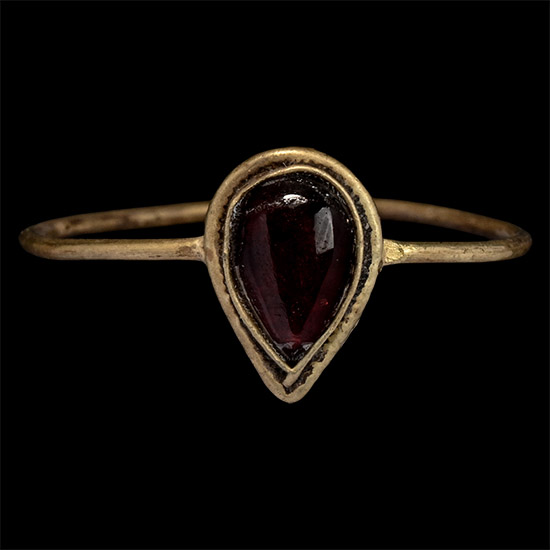
Medieval Gold Ring with Garnet
14th-16th century A.D.Sold for (Inc. bp): £390
Slender hoop and teardrop-shaped bezel with inset garnet cabochon. 0.79 grams, 20.15 mm overall, 16.97 mm internal diameter (approximate size British M 1/2, USA 6 1/4, Europe 13.09, Japan 12)
From the collection of a late Japanese gentleman, 1970-2000s. -
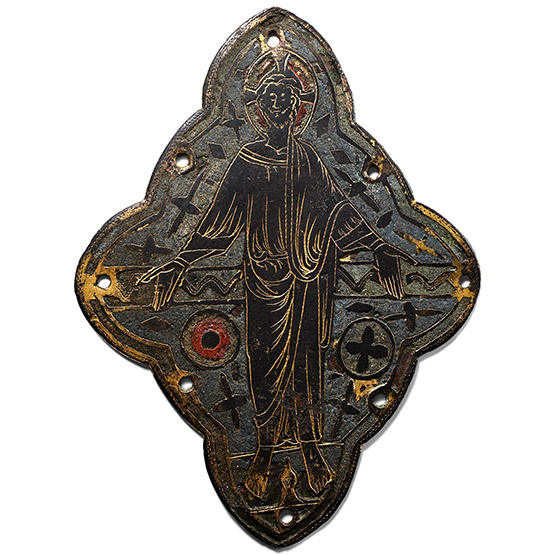
Large Medieval Gilt Bronze Champleve Plaque Depicting Christ in Majesty
Limoges, 13th century A.D.Sold for (Inc. bp): £3,900
Decorated in blue, green and red champlevé enamel, displaying the engraved figure of a standing Christ, his hands gesturing outwards towards the viewer; traces of original gilding; originally the central panel of a processional cross. 124 grams, 15.2 cm
Private collection, Europe. Acquired on the French art market. This lot has been checked against the Interpol Database of stolen works of art and is accompanied by search certificate number no.13092-248393.
From the 12th to 14th century, there was a large industry producing metal objects decorated in enamel using the champlevé technique, of which most of the survivals and probably most of the original production, are religious objects such as reliquaries, crosses and statues of saints. The centre of this production was Limoges, France. -
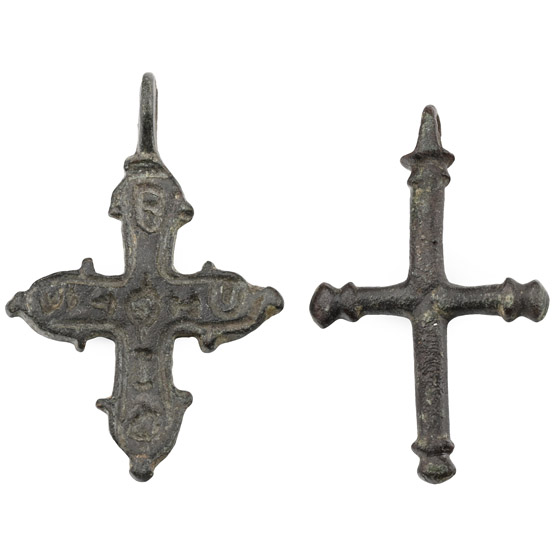
Late Medieval Bronze Cross Pendant Group
14th-16th century A.D.Sold for (Inc. bp): £111
Comprising: a cross pommee pendant with 'OMONIA' (harmony) impressed legend; narrow cross pendant with collared lobe finials. 7.98 grams total, 36-39 mm
Ex German art market, 2000s. Acquired from an EU collector living in London. From the collection of a Surrey, UK, gentleman.
