
Loading, please wait...
LOT 1574
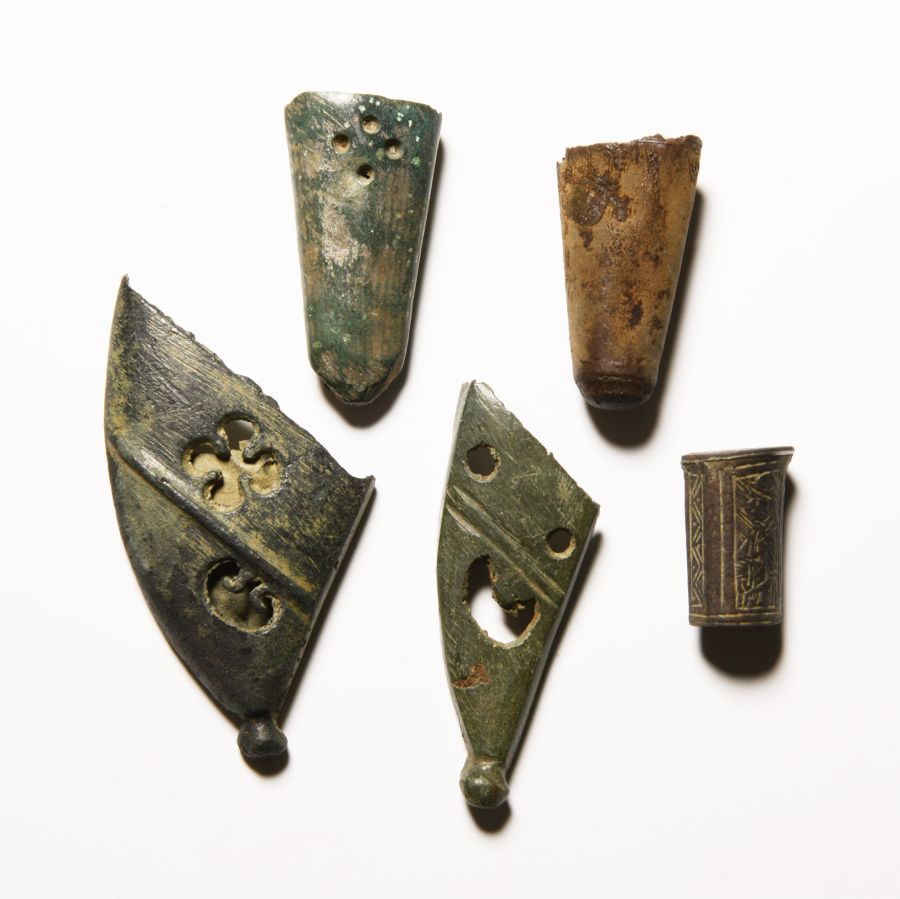
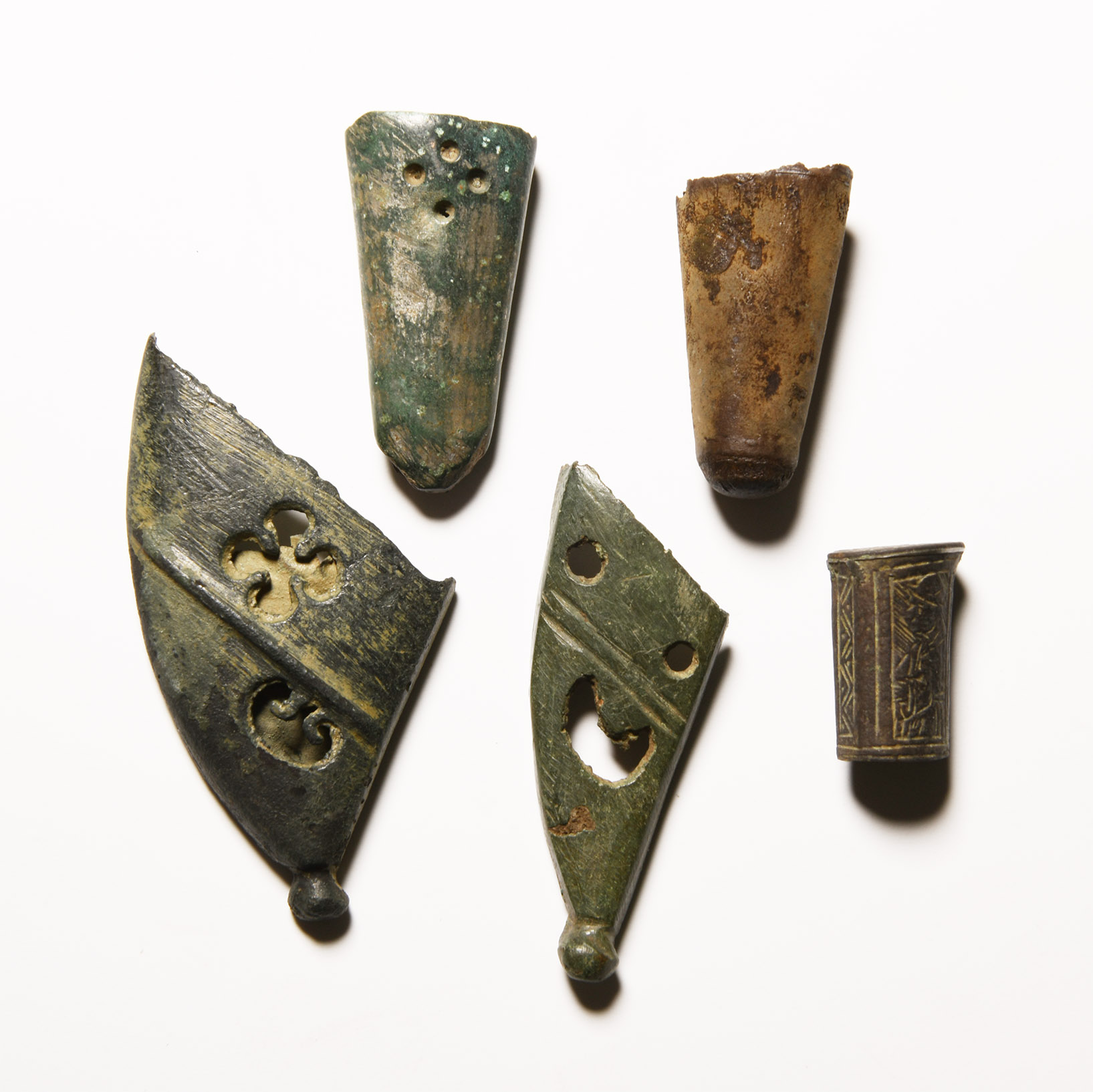
Medieval Scabbard Chape and Pommel Group
14TH-15TH CENTURY A.D.
3/4 - 2 in. (39.6 grams total, 21-50 mm).
Comprising a variety of chape styles, including examples with decorative piercing; a decoratively incised pommel with X-motif to cap and two figural panels to the side walls, separated by a chevron column. [5, No Reserve]
ProvenanceAcquired on the UK market, 1990s.
Property of a retired academic.
TimeLine Auctions follows a vetting process to ensure the authenticity and legality of all items, reinforcing our commitment to integrity and responsible trading. Each antiquity, antique, and coin lot undergoes thorough examination by a vetting committee of at least ten external specialists, professional trade association members, scientists, and archaeologists: Our Vetting Process
AUCTIONS:
TimeLine is a leading auction house specialising in antiquities, ancient art, collectables, natural history, coins, medals, and books. Our auctions offer museums, collectors, historians, and enthusiasts the opportunity to acquire unique and historically significant pieces.
-

Medieval and Later 'Thames' Iron Key Collection
Circa 15th-17th century A.D.Sold for (Inc. bp): £299
All complete or very near complete and of different types and sizes, including examples with simple geometric ornament. 290 grams total, 3-16.5 cm
Found Billingsgate spoil from the Thames foreshore, London, UK. -
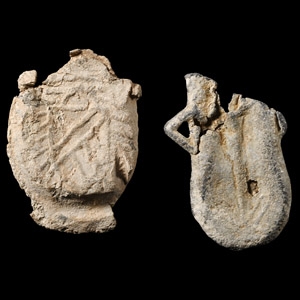
Medieval Pilgrim Ampulla Group
13th-15th century A.D.Sold for (Inc. bp): £59
Fragmentary remains of two different types of pilgrim ampullae, one retaining a handle; one displaying a cross to one face and shield to the other. 56.6 grams total, 45 mm each
Acquired on the UK market, 1990s. Property of a retired academic. -
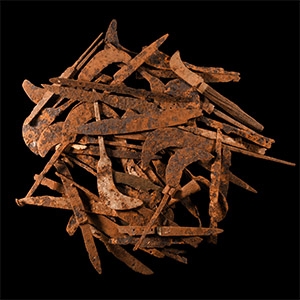
Medieval Iron Artefact Group
14th-16th century A.D.Sold for (Inc. bp): £169
Comprising small scythes and knife blades of various types. 1.75 kg total, 11-24 cm
Acquired 1990s-early 2000s. East Anglian private collection.
A variety of 14th and 15th century forms of knives are represented here including several with stepped backs. In the 14th century the blades of the knives became to be longer and thinner and frequently marked.
