
Loading, please wait...
LOT 1913
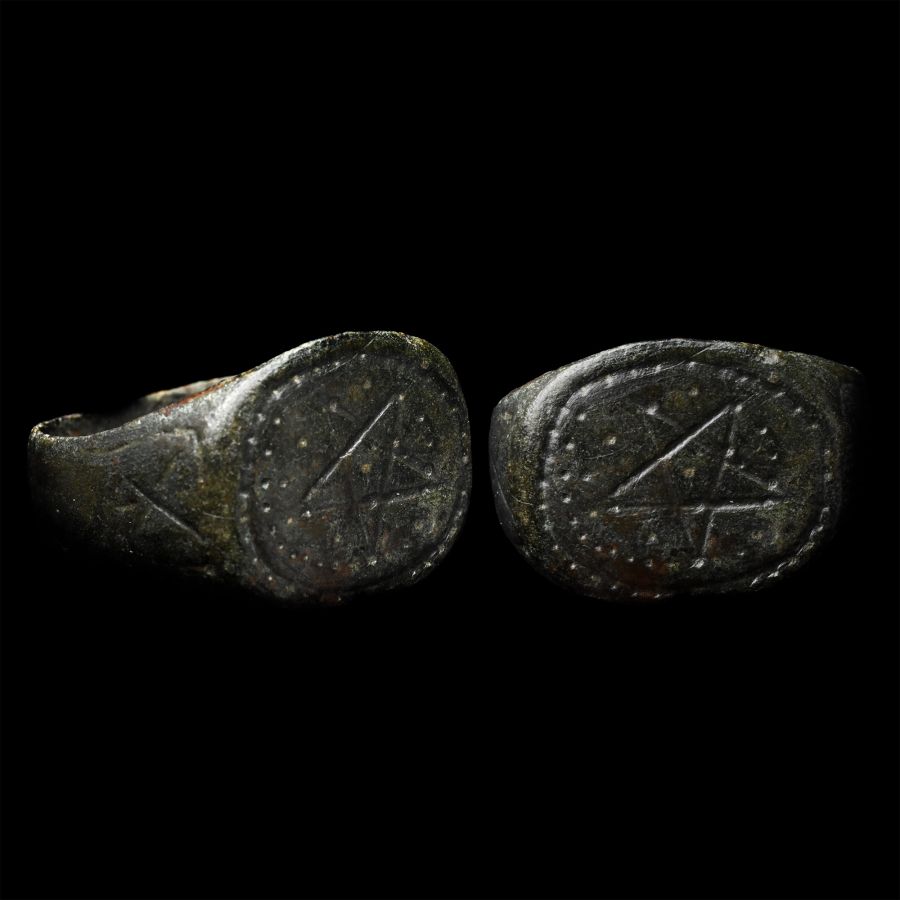
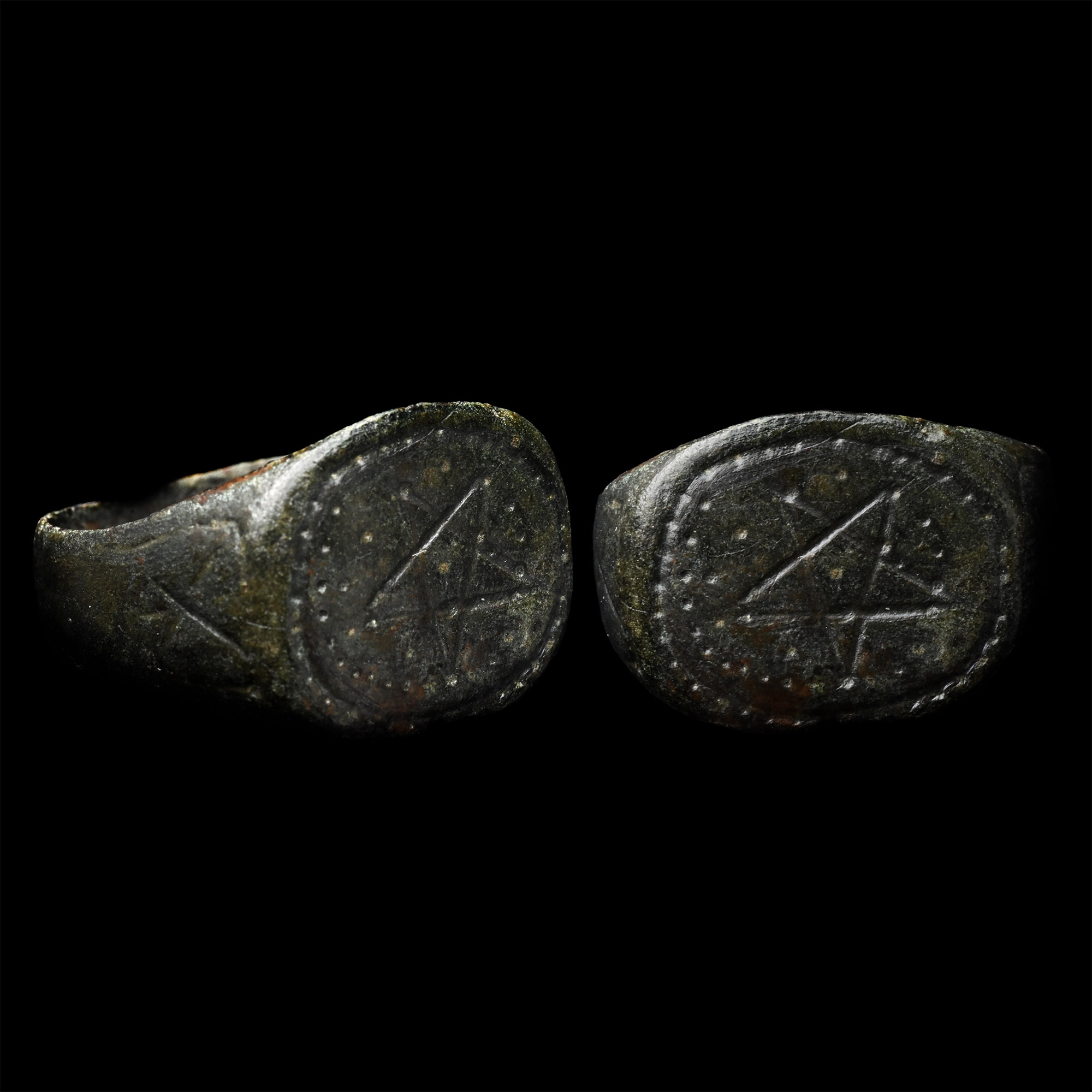
Medieval Ring with Pentagram
12TH-14TH CENTURY A.D.
3/4 in. (6.26 grams, 21.40 mm overall, 18.99 x 19.16 mm internal diameter (approximate size British S, USA 9, Europe 20, Japan 19)).
With a wide hoop and an X-motif on each shoulder, oval bezel with a pentagram within pelletted border. [No Reserve]
ProvenanceEx German art market, 2000s.
Acquired from an EU collector living in London.
From the collection of a Surrey, UK, gentleman.
TimeLine Auctions follows a vetting process to ensure the authenticity and legality of all items, reinforcing our commitment to integrity and responsible trading. Each antiquity, antique, and coin lot undergoes thorough examination by a vetting committee of at least ten external specialists, professional trade association members, scientists, and archaeologists: Our Vetting Process
AUCTIONS:
TimeLine is a leading auction house specialising in antiquities, ancient art, collectables, natural history, coins, medals, and books. Our auctions offer museums, collectors, historians, and enthusiasts the opportunity to acquire unique and historically significant pieces.
-
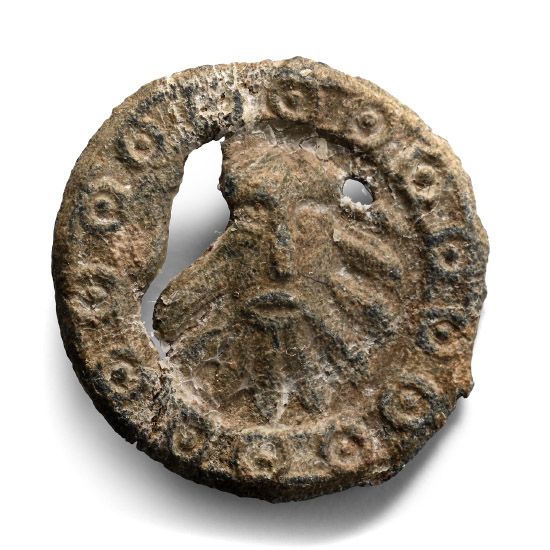
Medieval Pewter Head of John the Baptist Pilgrim's Badge
England, 14th-15th century A.D.Sold for (Inc. bp): £52
Discoid type depicting a bearded face within a raised border of annulets, each with a pellet at its centre; integrally cast pin to reverse. 2.97 grams, 20 mm
Found Alford, Lincolnshire, UK. Recorded with UKDFD no.49065.
The badge possibly represents the head of John the Baptist on a platter, but an alternative interpretation is that it depicts the face of Christ in a form known as the 'Vernicle' or 'Veronica', which arises from the legend that the face of Christ was miraculously impressed on the handkerchief or veil that Saint Veronica gave to him to wipe his face on the way to Calvary. In support of the case for this interpretation, Spencer illustrates another circular badge of generally similar type (No. 254c), but with a border inscribed with the first line of a popular 14th-century prayer composed in honour of the Vernicle. In support of the case for the John the Baptist interpretation, some very similar badges depict a rather dishevelled head with a sharply couped neck. -
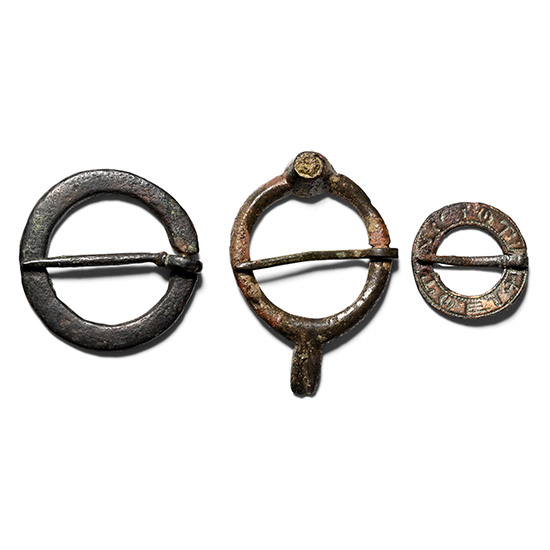
Medieval Bronze Ring Brooch Group
Circa 13th-15th century A.D.Sold for (Inc. bp): £59
Comprising three annular brooches, one with floral motifs, one with a raised cell with traces of inlay, and the smallest with an inscription of meaningless letters. 5.86 grams total, 14-30 mm
From the private collection of Graham Slater (1927-2024), Cambridge, UK; formed 1980s-1990s. -
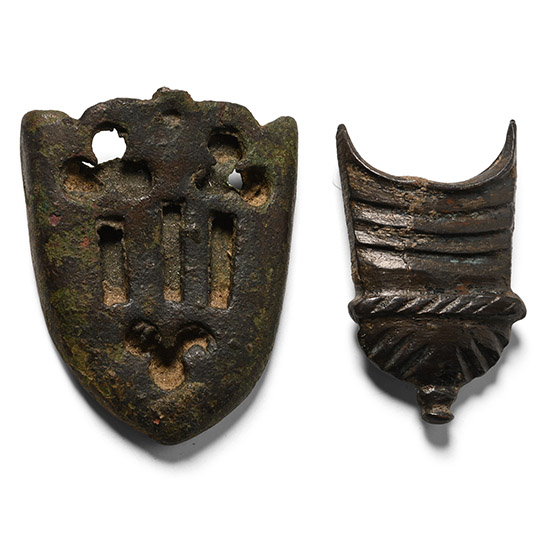
Medieval Bronze Dagger Chape Group
Circa 13th-14th century A.D.Sold for (Inc. bp): £14
Comprising: an openwork chape with three fleur-de-lys motifs and three vertical bars; a chape with horizontal stripes and a faux-ropework border. 22.1 grams total, 36-42 mm
From the private collection of Graham Slater (1927-2024), Cambridge, UK; formed 1980s-1990s. Accompanied by two previous dealer's sales tickets.
