
Loading, please wait...
LOT 1307
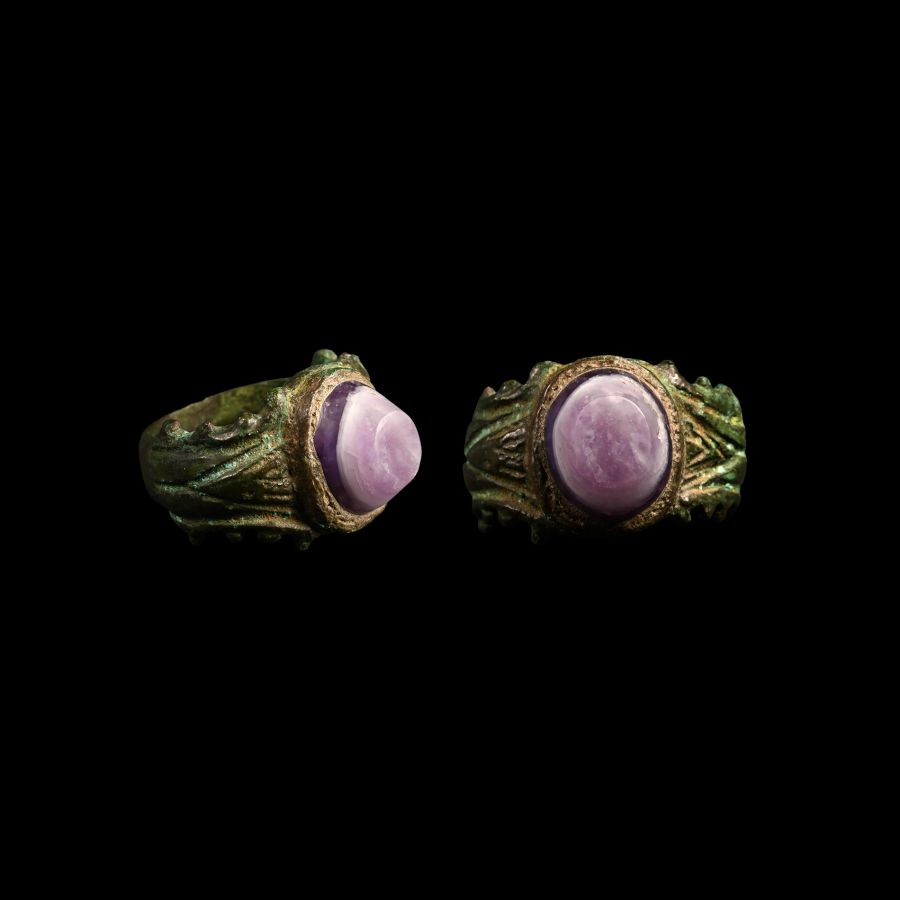
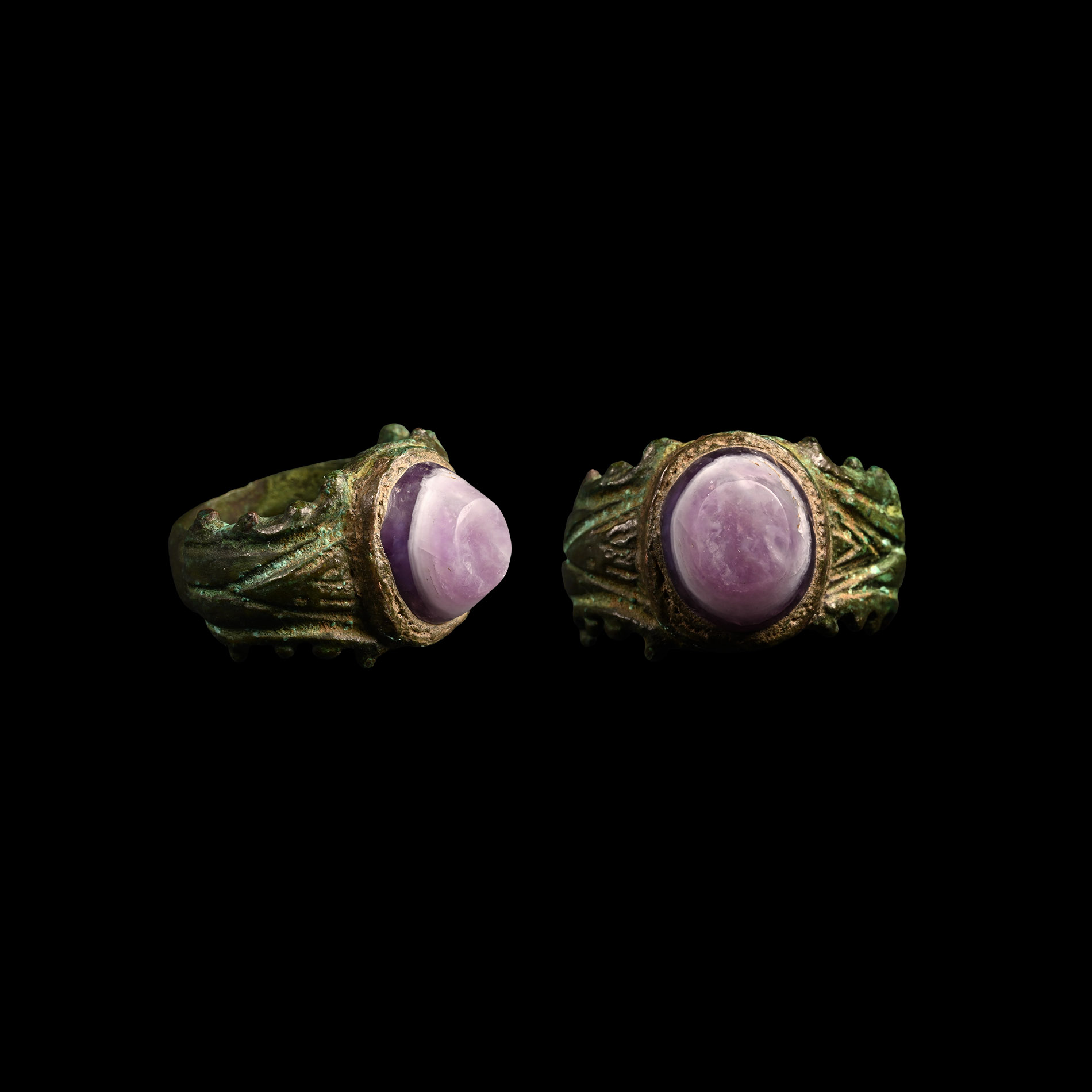
Medieval Ring with Amethyst Gemstone
CIRCA 15TH CENTURY A.D.
1 in. (9.66 grams, 27.48 mm overall, 16.49 mm internal diameter (approximate size British M 1/2, USA 6 1/4, Europe 14.35, Japan 13)).
A copper-alloy ring composed of a D-section hoop and broad, shaped shoulders decorated with knops to the edges and channeling to the interior, the oval bezel set with a later polished amethyst. [No Reserve]
ProvenanceAcquired in the late 1990s-2000.
Property of an East London gentleman.
TimeLine Auctions follows a vetting process to ensure the authenticity and legality of all items, reinforcing our commitment to integrity and responsible trading. Each antiquity, antique, and coin lot undergoes thorough examination by a vetting committee of at least ten external specialists, professional trade association members, scientists, and archaeologists: Our Vetting Process
AUCTIONS:
TimeLine is a leading auction house specialising in antiquities, ancient art, collectables, natural history, coins, medals, and books. Our auctions offer museums, collectors, historians, and enthusiasts the opportunity to acquire unique and historically significant pieces.
-
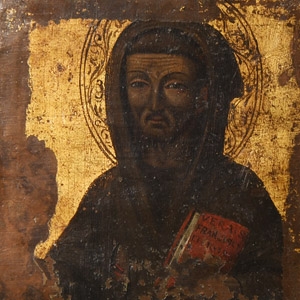
Cretan Icon of Saint Francis of Assisi
15th century A.D.Sold for (Inc. bp): £1,170
An icon from a possible triptych of Veneto-Cretan School depicting nimbate Saint Francis of Assisi, wearing the brown habit of the Franciscan order, fitted with a hood, facing towards the right, a red book in his left hand with the inscription Vera S. Francisci effigies(true portrait of Saint Francis); mounted in a perspex display frame. 152 grams, 20 cm high
Property of a London lady, part of her family's collection.
With the conquest of Crete by the Venetians, Latin saints were introduced to Byzantine iconography. Saint Francis was one of the most beloved Latin saints among the Cretan faithful, depicted in the iconography of Cretan Orthodox churches, including the Panaghia Kera of Kritsa (13th-14th century A.D.). This figure was probably part of a triptych, having at the centre the image of the Mother of God with the Child, or a Desis. The placement of Francis in this icon would suggests the owner’s strong affiliation with the Franciscan order, which had a strong presence on Crete from the 13th century onwards. It was believed that Saint Francis himself stopped on the island on his way to the Holy Land in 1219. -

Medieval Saint Edward the Confessor Pilgrim's Badge
Circa 11th-12th century A.D.Sold for (Inc. bp): £117
A copper-alloy pilgrim's badge in the form of the letter E, in reference to Saint Edward; the upper face decorated with shallow recessed channels tracing the plan of the letter and openwork fleurs between the bars; recessed reverse; two perforations for attachment. 2.9 grams, 26 mm
Acquired in the late 1990s-2000. Property of an East London gentleman. -

Medieval and Other Artefact Collection
15th century A.D. and laterSold for (Inc. bp): £26
A mixed group of metallic artefacts including lead weights and spindle whorls, copper-alloy decorative mounts, nail; clothes fitting and other items. 923 grams total, 15-64 mm
Found Wiltshire, UK.
