
Loading, please wait...
LOT 1653
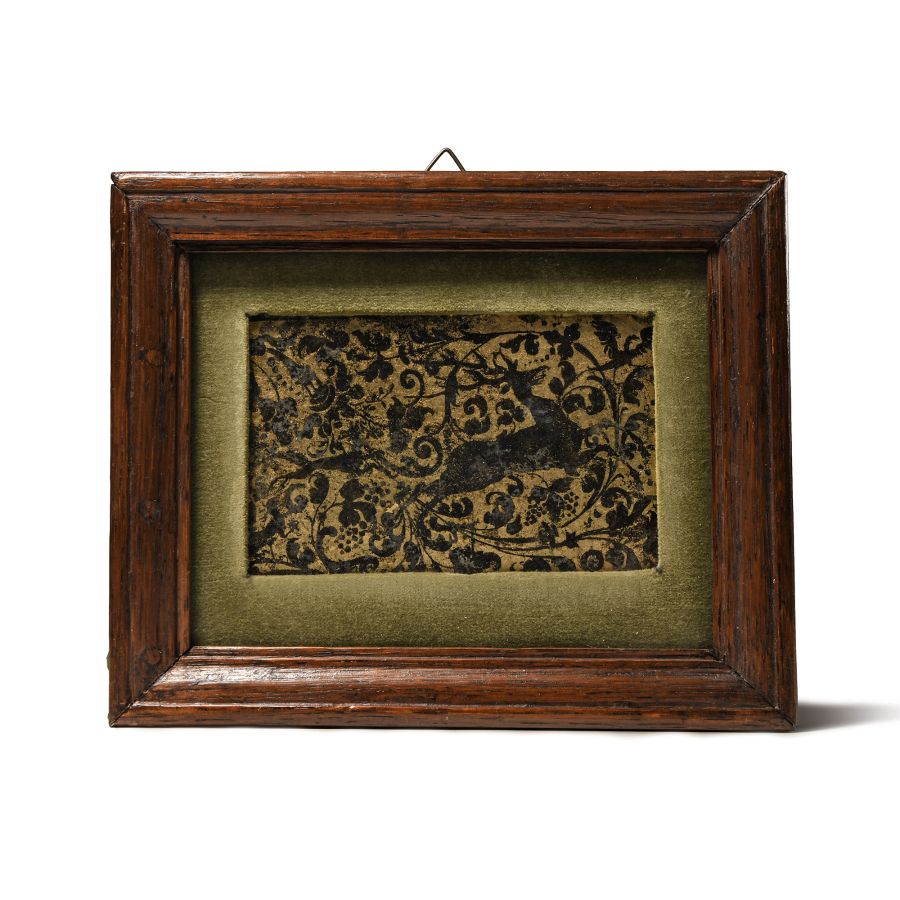
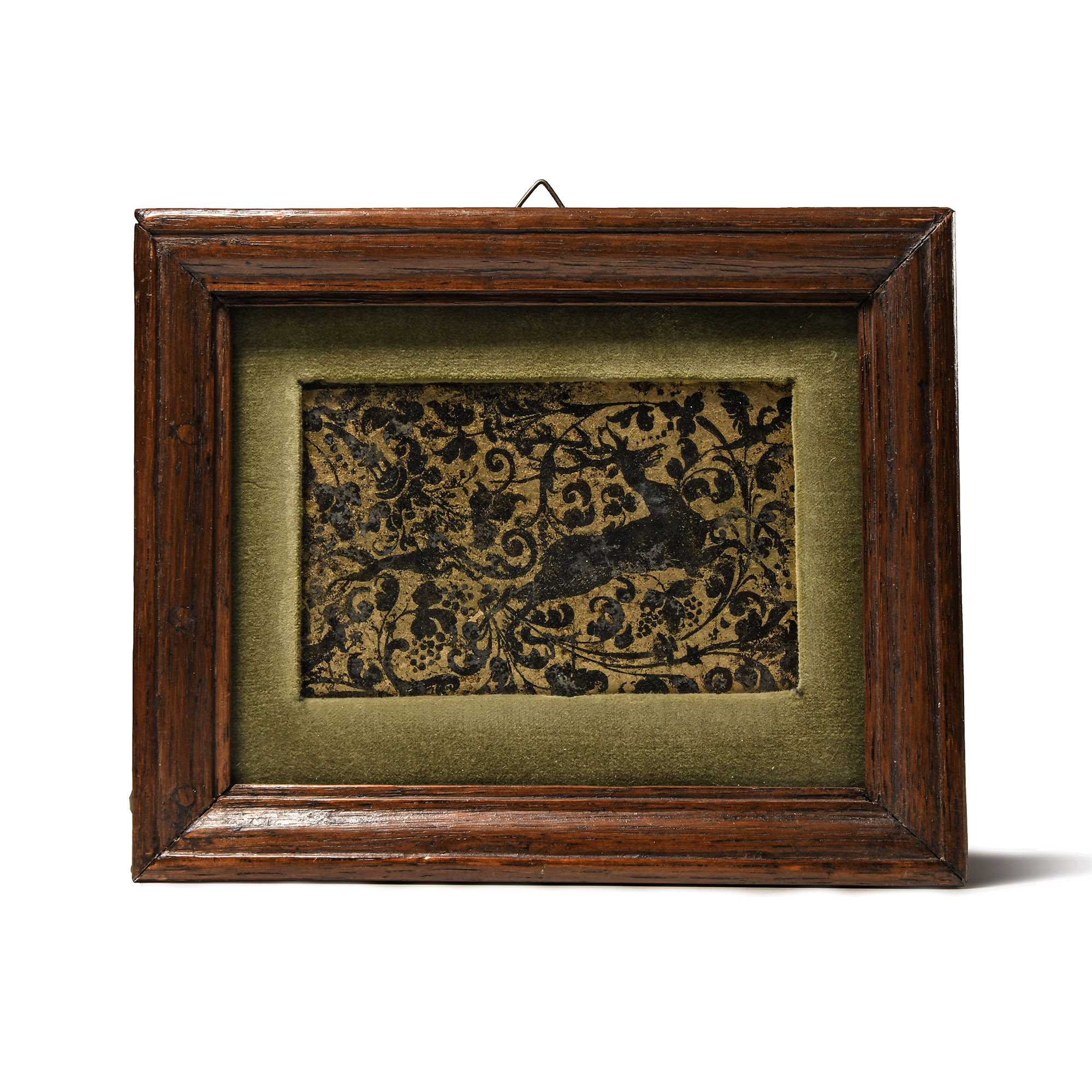
Medieval Reverse Glass Painting of a Stag
RHINELAND, CIRCA 1520 A.D.
7 3/4 x 6 /4 in. (324 grams, 19.5 x 16 cm).
Rectangular glass panel with detailed painting of a stag bounding through dense coils of foliage, smaller hind to the rear and bird with spread wings; gilt field, mounted in a glazed wooden frame with velvet reveal. [No Reserve]
ProvenanceSchnitzler collection since 1930.
Ex central London gallery.
TimeLine Auctions follows a vetting process to ensure the authenticity and legality of all items, reinforcing our commitment to integrity and responsible trading. Each antiquity, antique, and coin lot undergoes thorough examination by a vetting committee of at least ten external specialists, professional trade association members, scientists, and archaeologists: Our Vetting Process
AUCTIONS:
TimeLine is a leading auction house specialising in antiquities, ancient art, collectables, natural history, coins, medals, and books. Our auctions offer museums, collectors, historians, and enthusiasts the opportunity to acquire unique and historically significant pieces.
-
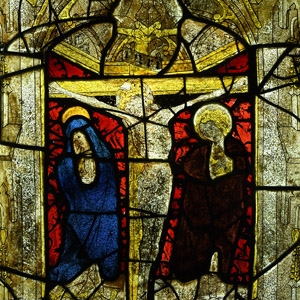
Medieval Stained Glass Panel with the Crucifixion
Germany, Erfurt(?), circa 1420 A.D.Sold for (Inc. bp): £2,889
Rectangular with lead came framing; scene of the Crucifixion with emaciated nimbate Christ on the Christ flanked by a robed and nimbate male and female figure (Mary Magdalene), within an arch formed by two vertical pillars with facet detailing, scroll with 'INRI' above. 3.3 kg, 59.5 x 44 cm
Galerie de Chartres, 8 March 2009, lot 12. Ex central London gallery. This lot has been checked against the Interpol Database of stolen works of art and is accompanied by search certificate no.11904-207296. -
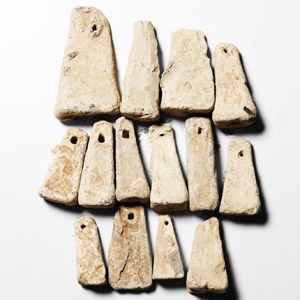
Medieval and Other Standing Lead Weight Collection
Circa 15th century A.D. and laterSold for (Inc. bp): £33
The majority pierced for suspension, with a square base and body tapering towards the apex. 753 grams total, 32-54 mm
Acquired on the UK art market. Property of a Ruislip, UK, gentleman, by inheritance. -
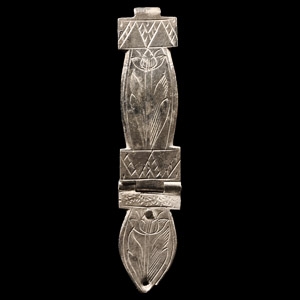
Medieval Complete Silver Vellum Manuscript Clasp
1400-1600 A.D.Sold for (Inc. bp): £117
The baluster-shaped plate with hooked clasp to one edge and engraved with a tulip-like design with chevrons either side; articulate leaf-shaped terminal engraved with a similar floral motif; two rivet holes with one remaining rivet; maker's mark 'II' or 'H' stamped to reverse. 4.97 grams, 59 mm
Found whilst searching with a metal detector near Deighton, Yorkshire, UK, on 1st October 2017 by Mr David Brooks. Accompanied by a copy of the British Museum's Portable Antiquities Scheme (PAS) report no.YORYM-C84DCC. Declared and disclaimed as Treasure with reference no.2017 T908. Accompanied by a copy of the Report for HM Coroner with reference no.2017 T908. Accompanied by a copy of a letter from the British Museum regarding the proposed return of the find.
A Howsam clasp type A.5.1.
