
Loading, please wait...
LOT 1984
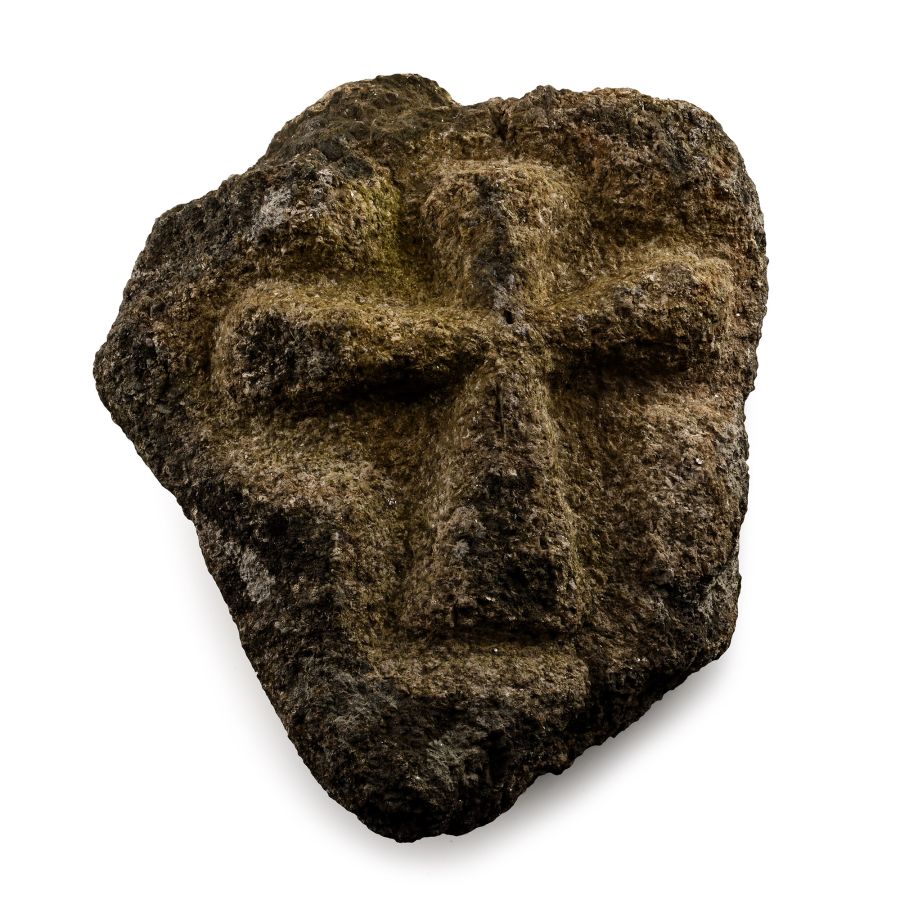
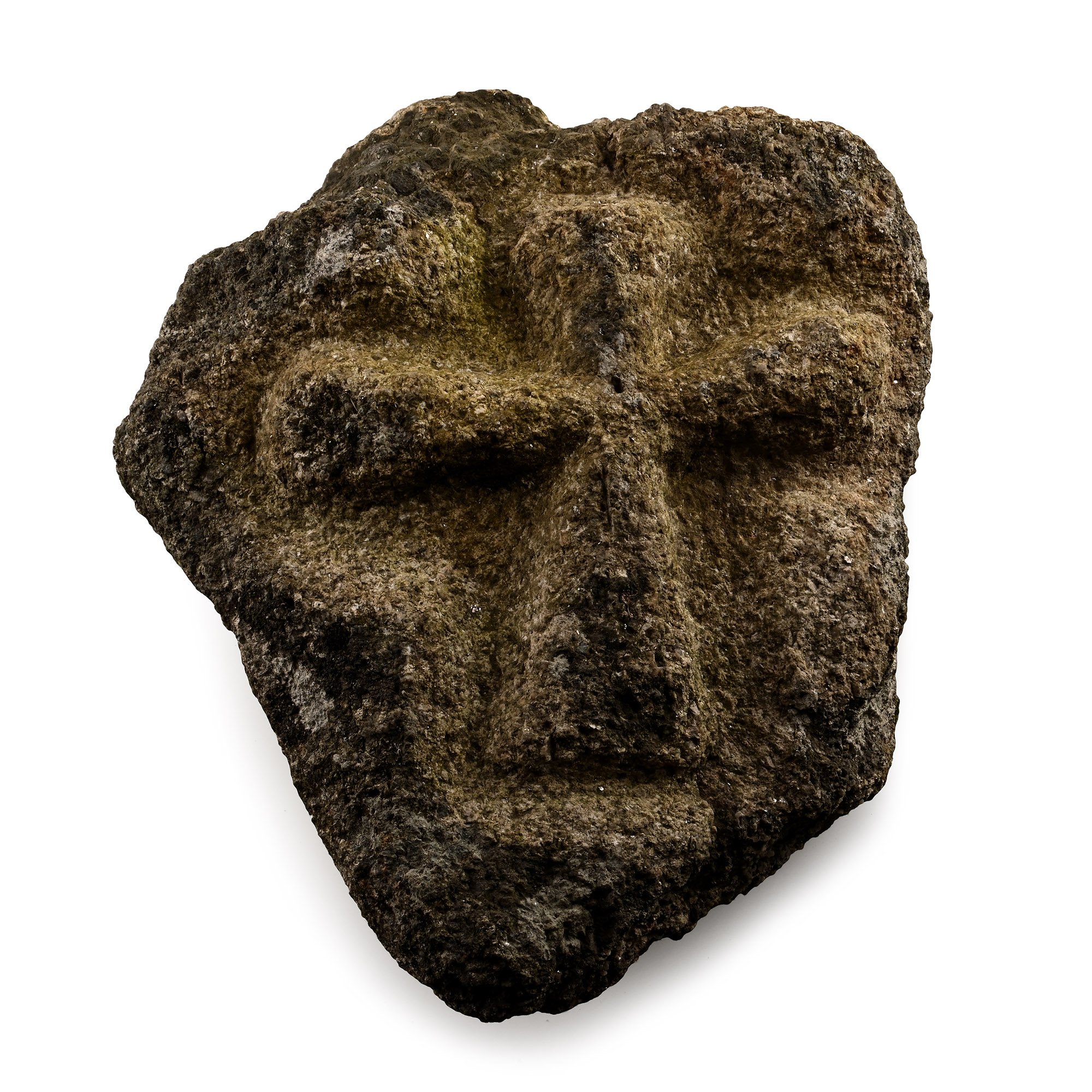
Medieval Pilgrim's Waymark Stone with Cross
13TH CENTURY A.D. OR LATER
15 1/8 in. (14.3 kg, 38.5 cm).
Irregular fragment with reserved expanding-arm cross in high-relief.
ProvenanceAcquired on the UK art market in the early 2000s.
This lot is accompanied by an illustrated lot declaration signed by the Head of the Antiquities Department, Dr Raffaele D'Amato.
TimeLine Auctions follows a vetting process to ensure the authenticity and legality of all items, reinforcing our commitment to integrity and responsible trading. Each antiquity, antique, and coin lot undergoes thorough examination by a vetting committee of at least ten external specialists, professional trade association members, scientists, and archaeologists: Our Vetting Process
AUCTIONS:
TimeLine is a leading auction house specialising in antiquities, ancient art, collectables, natural history, coins, medals, and books. Our auctions offer museums, collectors, historians, and enthusiasts the opportunity to acquire unique and historically significant pieces.
-
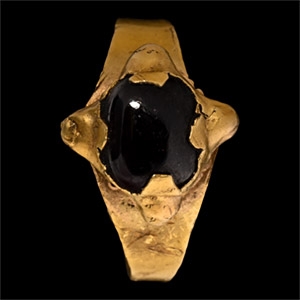
Large Medieval Gold Glove Ring with Cabochon
12th-14th century A.D.Sold for (Inc. bp): £1,040
Flat-section hoop with applied cell formed as a cushion with four radiating knops on the shoulder, open top revealing inset irregular polished garnet. 7.98 grams, 33.09 mm overall, 23.73 mm internal diameter (approximate size British Z+3, USA 13 3/4, Europe 32.57, Japan 31)
Acquired on the European art market in the 1990s. UK collection of a European gentleman. This lot is accompanied by an illustrated lot declaration signed by the Head of the Antiquities Department, Dr Raffaele D'Amato. -
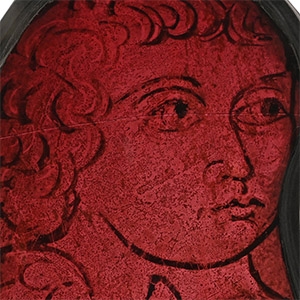
Medieval Stained Glass Panel with Praying Youth
France, 14th-15th century A.D.Sold for (Inc. bp): £364
Bust in three-quarter view with one hand below the chin; possibly an angel's wing beside the hand; lead frame with hoop. 100 grams, 13.2 cm
Galerie de Chartres, 2009. Ex central London gallery. This lot is accompanied by an illustrated lot declaration signed by the Head of the Antiquities Department, Dr Raffaele D'Amato. -
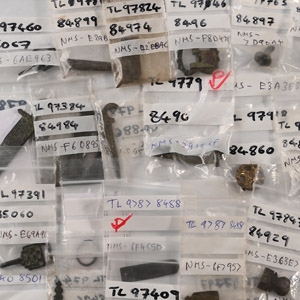
Roman, Medieval and Later Artefact Group
1st-16th century A.D.Sold for (Inc. bp): £98
Including buckles, strap ends, buttons, brooches, hooked tangs, a ring and other types. 117 grams total, 15-89 mm
Found Norfolk, UK. This lot is accompanied by an illustrated lot declaration signed by the Head of the Antiquities Department, Dr Raffaele D'Amato.
Among the various objects you can note an important Roman copper-alloy brooch of Colchester derivative (Harlow 2.a sub-type,NMS-58B6C4). These are usually dated between 60 and 150 AD.
