
Loading, please wait...
LOT 2195
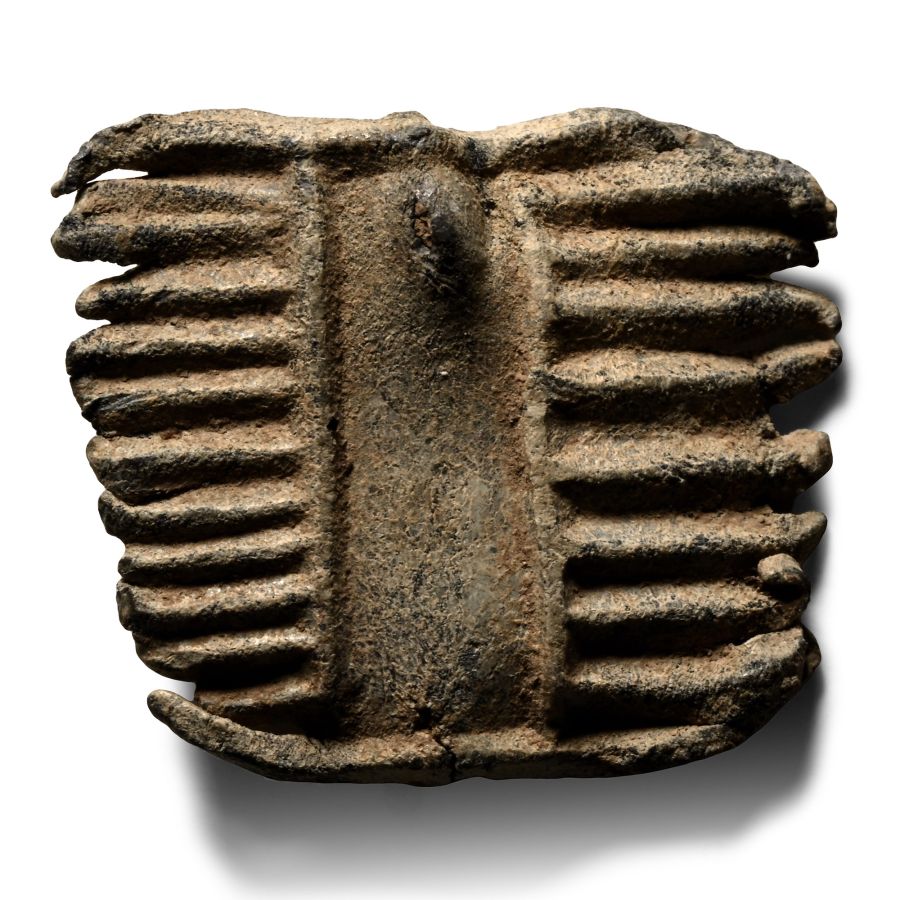
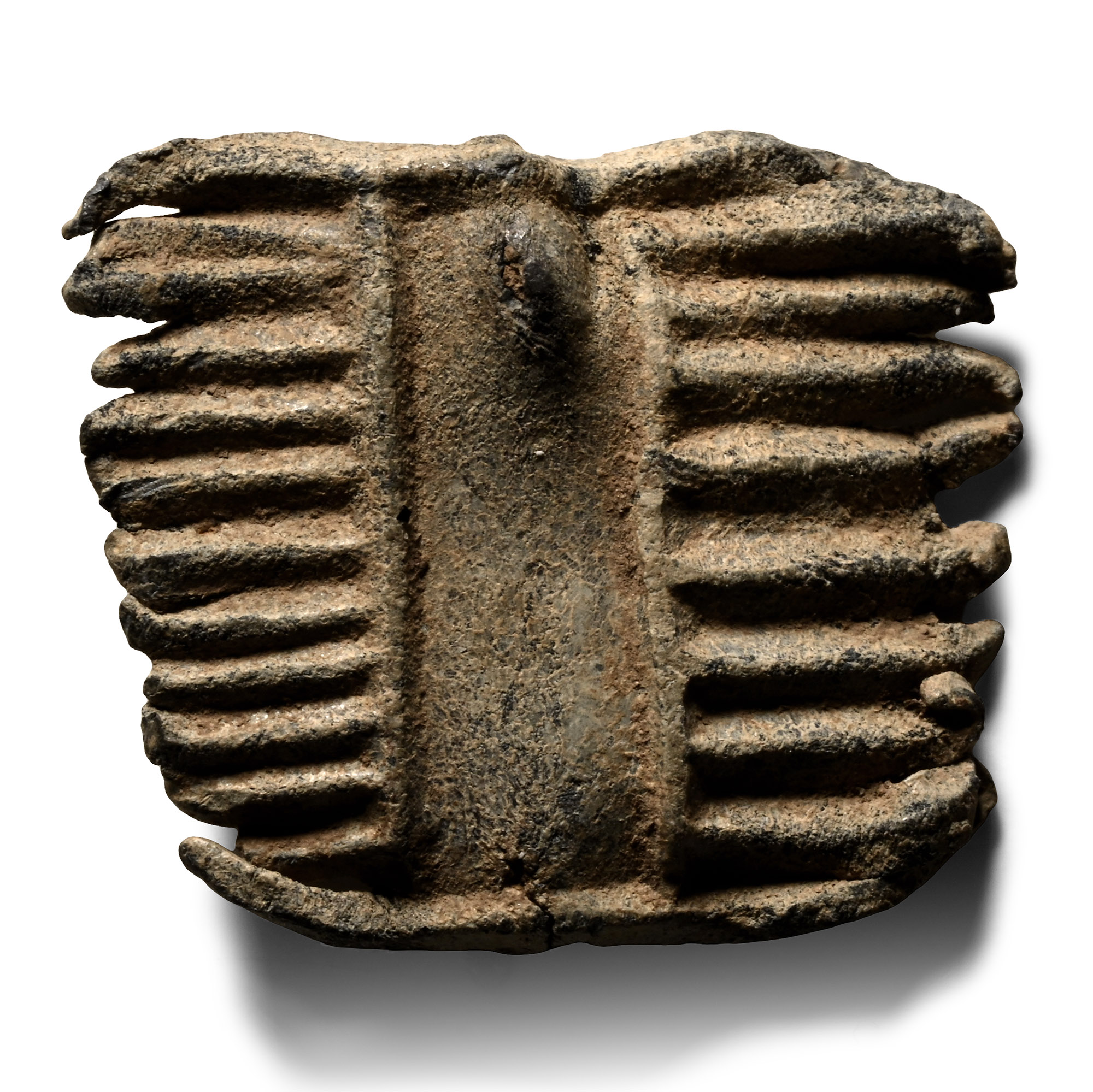
Medieval Pewter Secular Badge
CIRCA 14TH-15TH CENTURY A.D.
7/8 in. (3.86 grams, 22 mm).
Subrectangular plaque with vertical bar and lateral teeth representing a double-edged comb of St. Blaise. [No Reserve]
ProvenanceFrom a retired Lincolnshire, UK, gentleman's collection, a long time member of the Pewter Society.
LiteratureCf. Mitchiner, M., Medieval Pilgrim & Secular Badges, London, 1986, item 637, for type.
CONDITIONTimeLine Auctions follows a vetting process to ensure the authenticity and legality of all items, reinforcing our commitment to integrity and responsible trading. Each antiquity, antique, and coin lot undergoes thorough examination by a vetting committee of at least ten external specialists, professional trade association members, scientists, and archaeologists: Our Vetting Process
AUCTIONS:
TimeLine is a leading auction house specialising in antiquities, ancient art, collectables, natural history, coins, medals, and books. Our auctions offer museums, collectors, historians, and enthusiasts the opportunity to acquire unique and historically significant pieces.
-
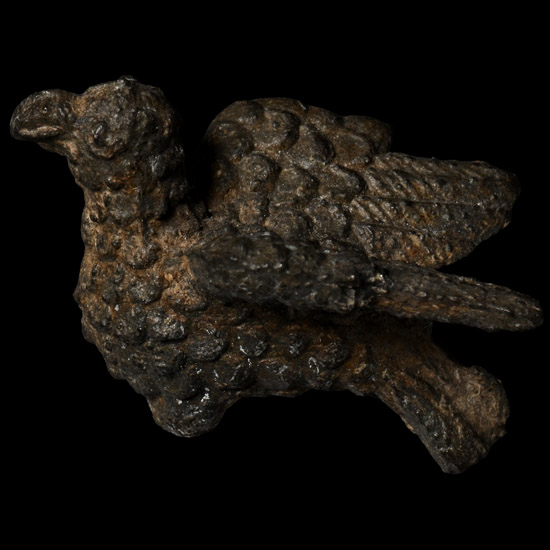
Medieval Bronze Bird Finial
14th-16th century A.D.Sold for (Inc. bp): £78
Modelled in the round with raised feather detailing, wings raised and open, an erect head with a curving beak. 18 grams, 33 mm
From the private collection of a European gentleman (1942-2024), formed since the 1970s. -
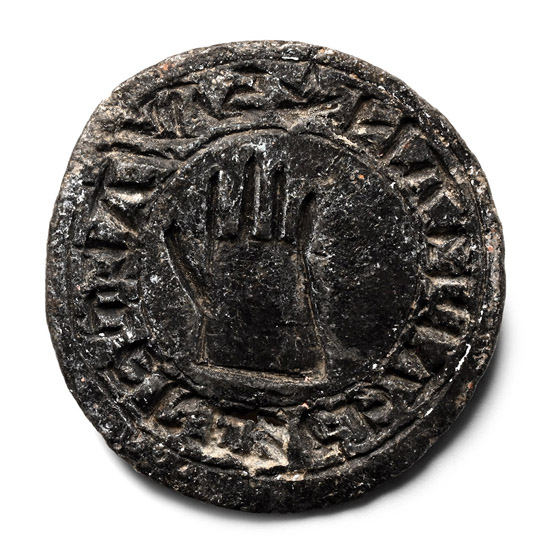
Medieval Lead Votive Seal Matrix with Hand
14th-15th century A.D. or laterSold for (Inc. bp): £46
Discoid in plan with lug to reverse; central motif of an open hand with legend to the border '* WALTER LE CHAPMAN [Walter the chapman]. 9.75 grams, 26.8 mm
From the late Peter Hooper pewter and lead collection, who was a guest lecturer at West Dean College and was a longtime member of the Pewter Society who contributed to the Pewter Society Magazine.
Because such surnames were still meaningfully ‘occupational’ at this period, and ‘chapman’ means ‘(small-scale) seller/tradesman’, it may well be that Walter made his living from selling gloves. -
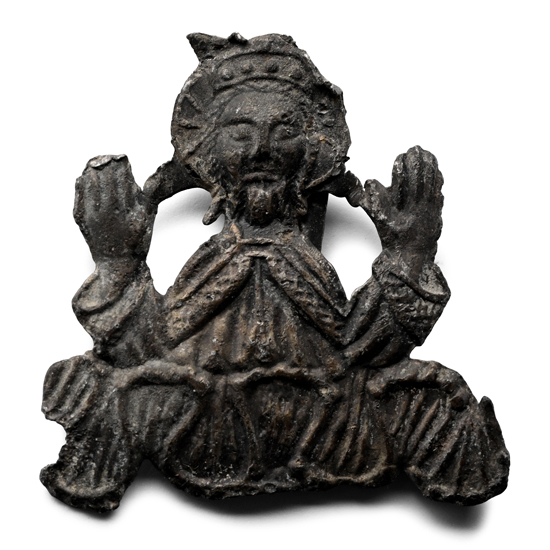
Medieval Pewter Pilgrim's Badge of Christ with Raised Hands
14th-15th century A.D.Sold for (Inc. bp): £156
Low-relief image of nimbate Christ with hands raised and palms facing, emerging above a nebuly scroll; associated with the cult of Richard Caister of Norwich; pin to reverse. 5.35 grams, 31 mm
From a retired Lincolnshire, UK, gentleman's collection, a long time member of the Pewter Society.
