
Loading, please wait...
LOT 2093
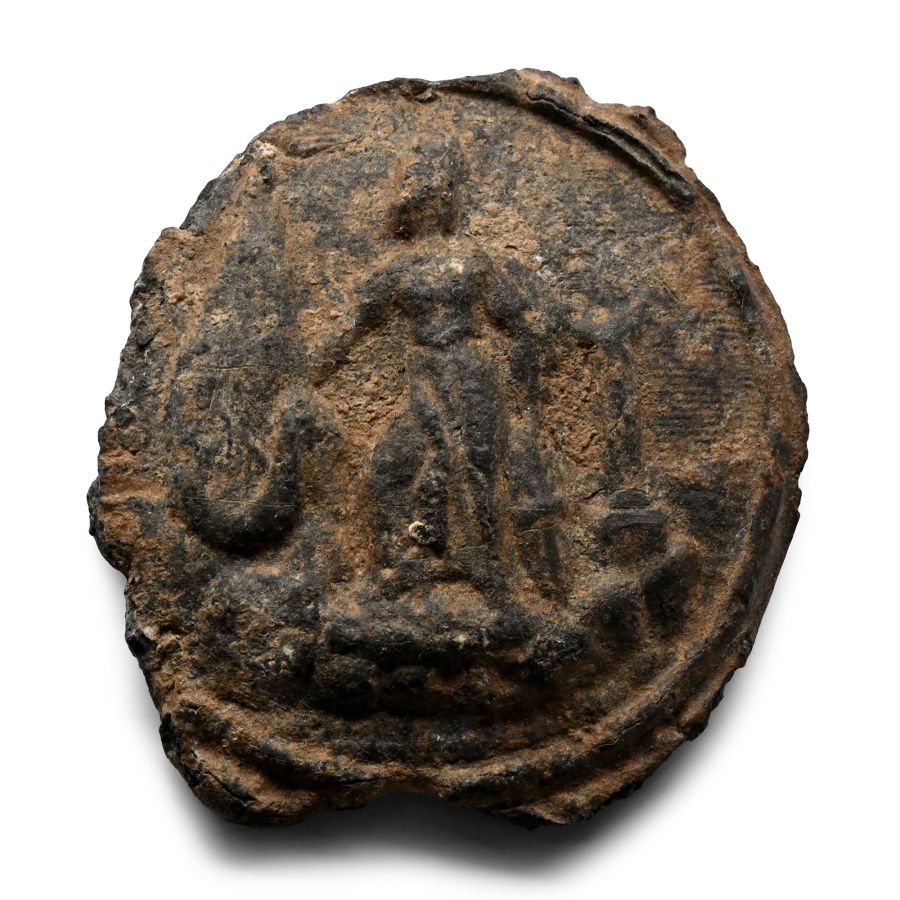
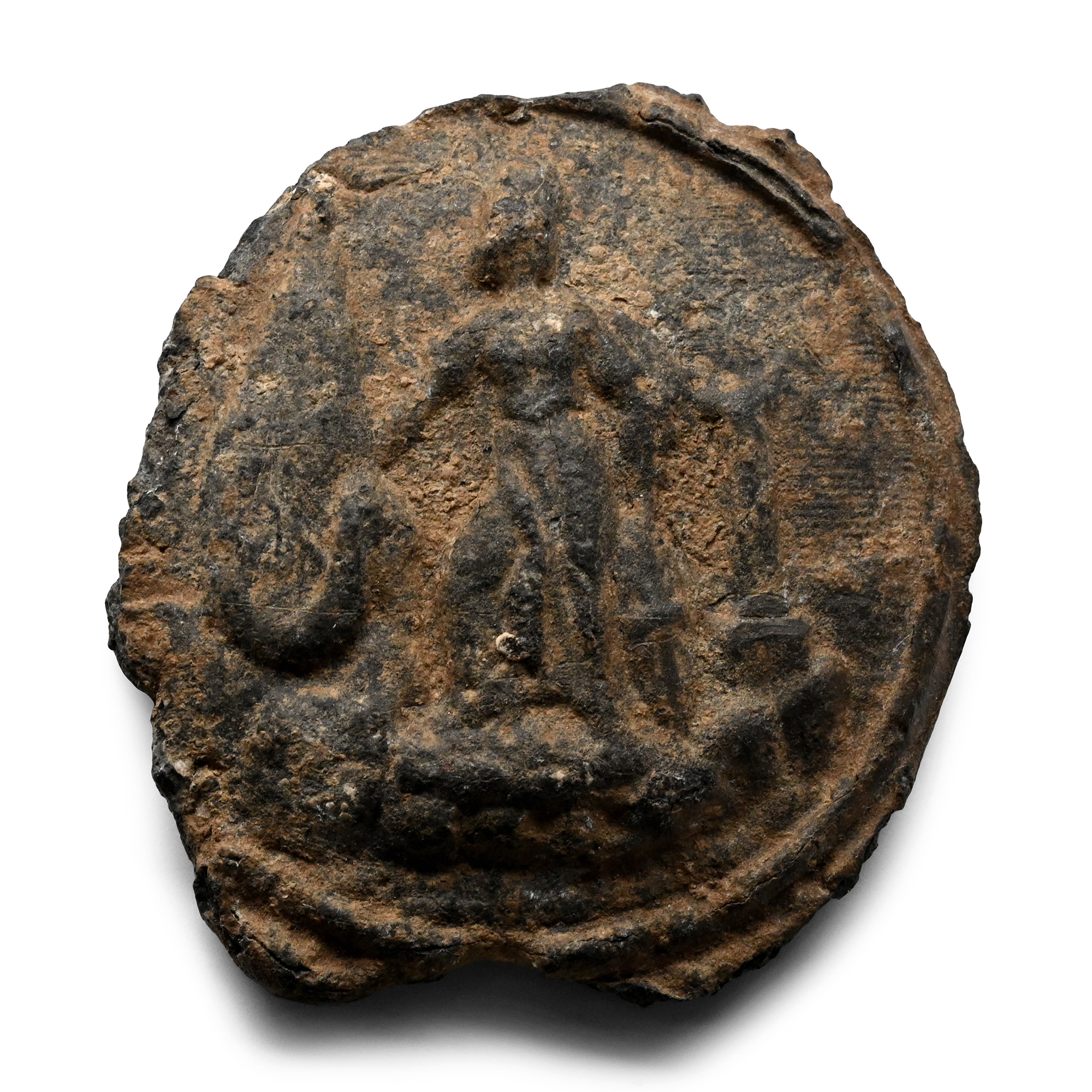
Medieval Pewter Pilgrim's Roundel
14TH-15TH CENTURY A.D.
4 7/8 in. (37.1 grams, 46 mm).
With stepped rim and slightly domed tondo; low-relief robed female figure on a plinth with shield resting against one leg, bird beside her. [No Reserve]
ProvenanceFrom a retired Lincolnshire, UK, gentleman's collection, a long time member of the Pewter Society.
CONDITIONTimeLine Auctions follows a vetting process to ensure the authenticity and legality of all items, reinforcing our commitment to integrity and responsible trading. Each antiquity, antique, and coin lot undergoes thorough examination by a vetting committee of at least ten external specialists, professional trade association members, scientists, and archaeologists: Our Vetting Process
AUCTIONS:
TimeLine is a leading auction house specialising in antiquities, ancient art, collectables, natural history, coins, medals, and books. Our auctions offer museums, collectors, historians, and enthusiasts the opportunity to acquire unique and historically significant pieces.
-
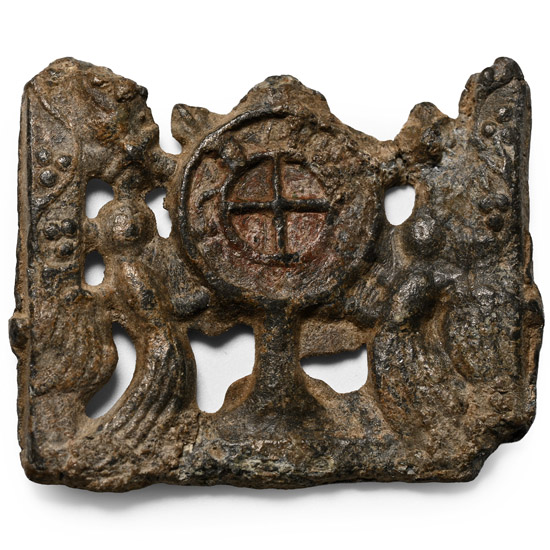
Medieval Pewter Pilgrim's Badge with Angels Holding a Cross Aloft
Circa 14th-15th century A.D.Sold for (Inc. bp): £52
Rectangular frame with vinescroll detailing, two robed figures in profile supporting a disc with a central cross. 8.56 grams, 31 mm
From a retired Lincolnshire, UK, gentleman's collection, a long time member of the Pewter Society. -
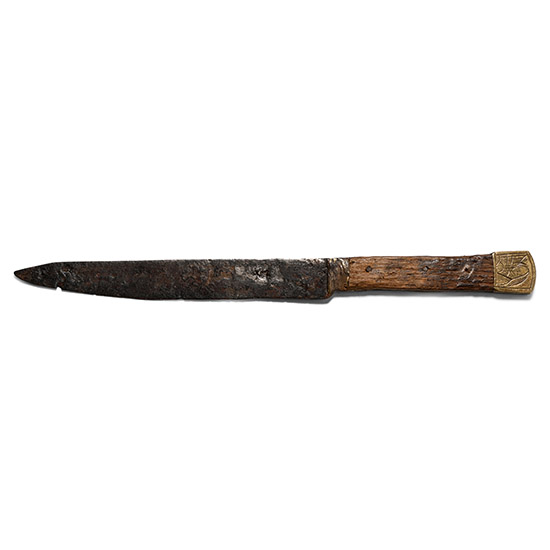
Medieval Iron Knife with Bronze Pommel
Circa 15th-16th century AD.Sold for (Inc. bp): £234
Narrow single-edged blade with integral bolster, flared scale-tang hilt with integral finial; punched 'crown' maker's mark to one face; brass finial with female bust to one face, capital 'S' to the other. 29.59 grams, 19 cm
Ex Cambridgeshire gentleman's collection, 1990s. -
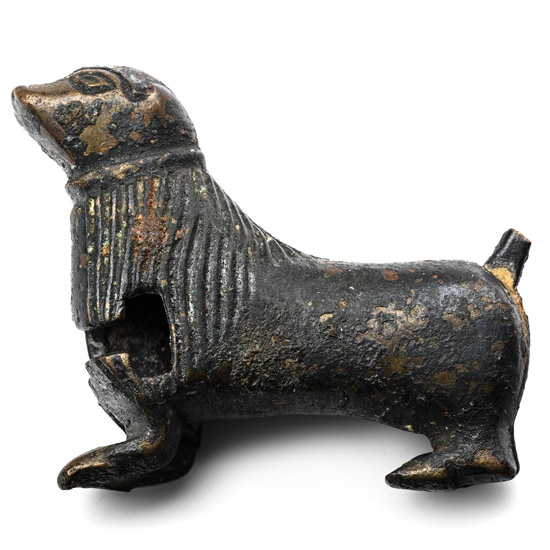
Medieval Bronze Dog-Shaped Padlock
Circa 14th-15th century A.D.Sold for (Inc. bp): £85
Formed as a standing dog with short legs and a linear fur design around the neck, socket to the chest, the now absent tail originally forming the bow. 26.2 grams, 39 mm
From the private collection of a European gentleman (1942-2024), formed since the 1970s.
