
Loading, please wait...
LOT 1892
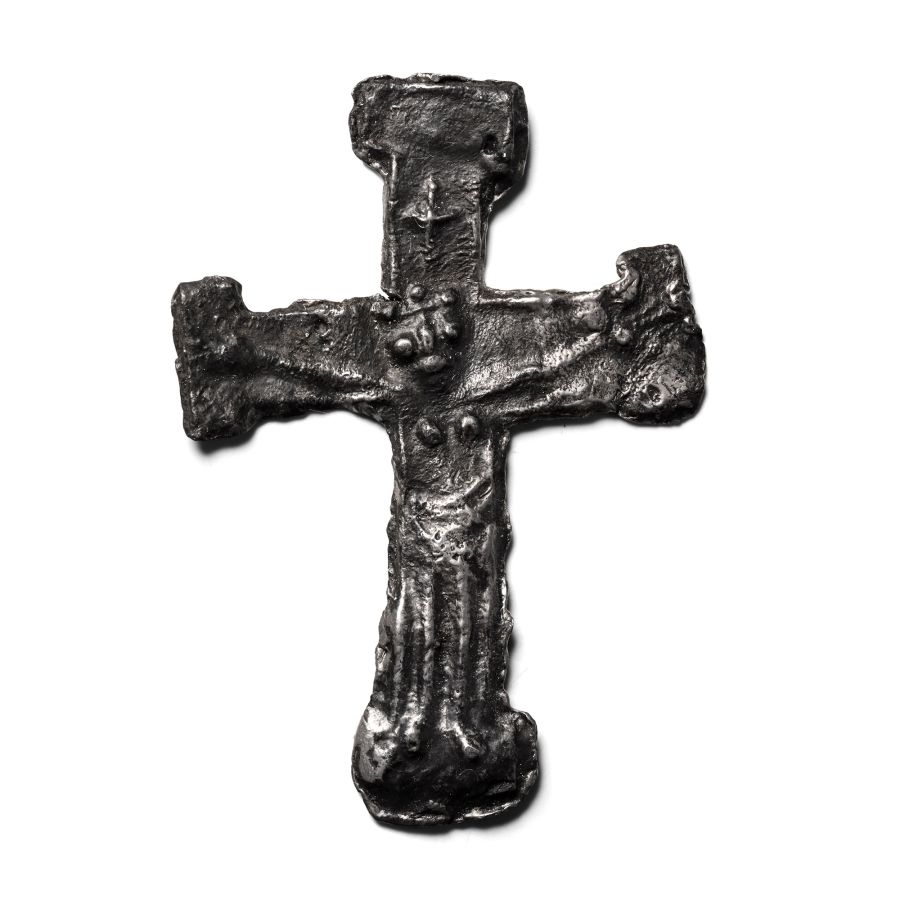
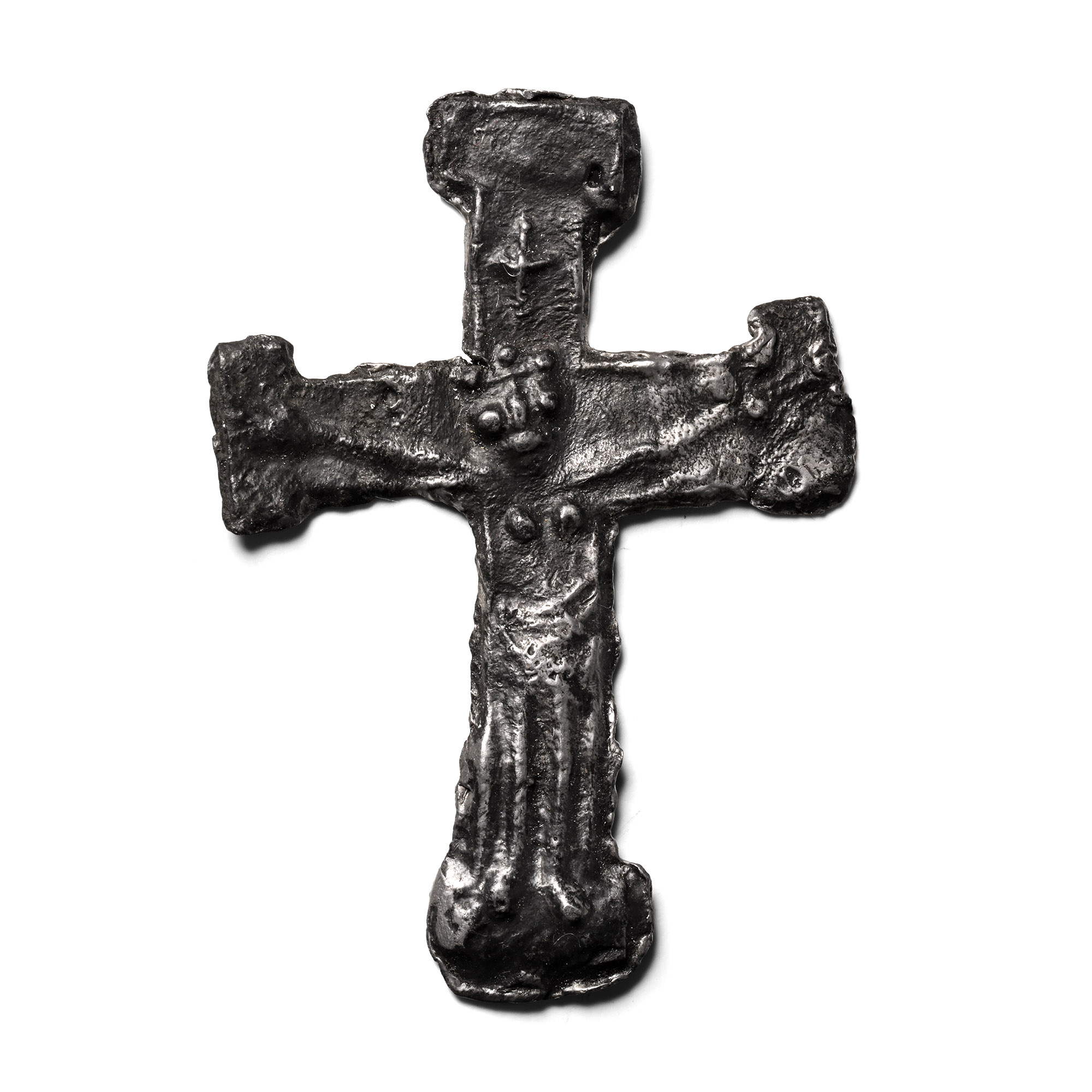
Medieval Pewter Pilgrim's Crucifix
CIRCA 15TH CENTURY A.D.
2 in. (7.5 grams, 51 mm).
Featuring the crucified Christ with his arms splayed on the cross, wearing a loincloth and a small cross placed above his head. [No Reserve]
ProvenanceFrom a European collection, 1990s.
Accompanied by a previous dealer's sales ticket.
TimeLine Auctions follows a vetting process to ensure the authenticity and legality of all items, reinforcing our commitment to integrity and responsible trading. Each antiquity, antique, and coin lot undergoes thorough examination by a vetting committee of at least ten external specialists, professional trade association members, scientists, and archaeologists: Our Vetting Process
AUCTIONS:
TimeLine is a leading auction house specialising in antiquities, ancient art, collectables, natural history, coins, medals, and books. Our auctions offer museums, collectors, historians, and enthusiasts the opportunity to acquire unique and historically significant pieces.
-
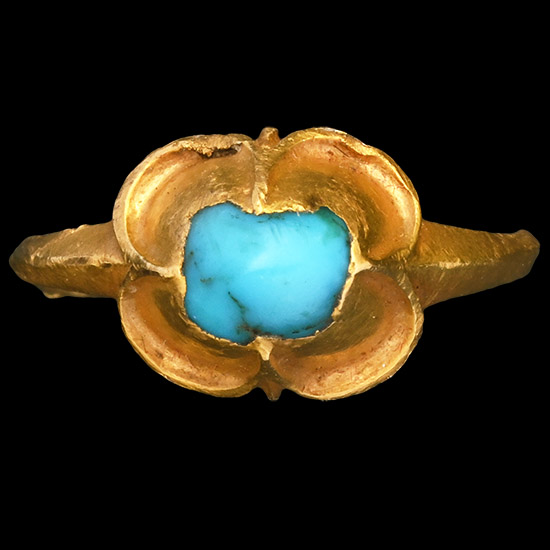
Medieval Gold Ring with Turquoise
1200-1500 A.D.Sold for (Inc. bp): £3,120
Comprising a slender hoop with a high pie-crust bezel with a cabochon turquoise within a rub-over setting. 3.46 grams, 22.77 mm overall, 16.01 mm internal diameter (approximate size British J, USA 4 3/4, Europe 8.69, Japan 8)
Acquired on the European art market. This lot has been checked against the Interpol Database of stolen works of art and is accompanied by search certificate number no.13328-257948.
This form of decorative ring with central stone setting is relatively common in the medieval period, when a focus on gemstones over metalwork became increasingly common. Several rings of this type are known and appear to have been popular in the 15th century. -
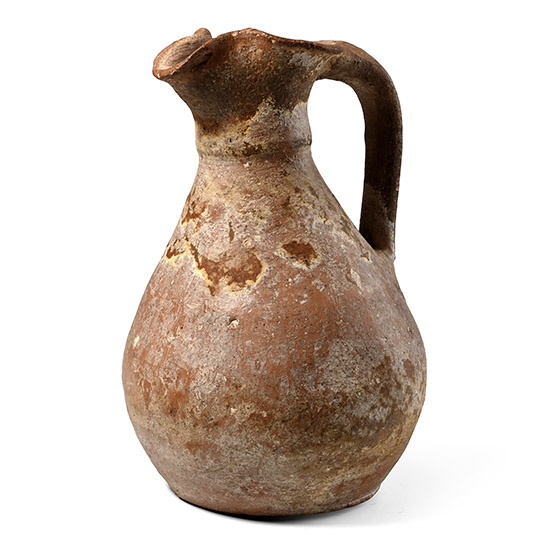
Medieval Terracotta Jug with Handle
Circa 14th-15th century A.D.Sold for (Inc. bp): £156
Comprising a piriform body with a flat base and a narrow neck with a trefoil lip, a strap handle to the rear. 368 grams, 15.5 cm
Previously from the Eileen Lewenstein collection, gifted in the 1970s. From the Ffestiniog pottery collection, Wales, UK. -
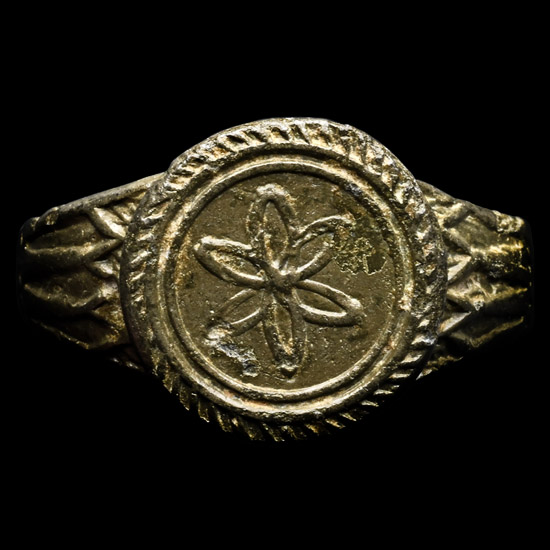
Medieval Bronze Ring with Petalled Flower
15th-16th century A.D.Sold for (Inc. bp): £130
With a wide hoop expanding towards the decorated shoulders, a round bezel with ropework border and a central six-petalled flower. 4.84 grams, 23.07 mm overall, 20.50 x 17.45 mm internal diameter (approximate size British P, USA 7 1/2, Europe 16.23, Japan 15)
Ex German art market, 2000s. Acquired from an EU collector living in London. From the collection of a Surrey, UK, gentleman.
