
Loading, please wait...
LOT 2133
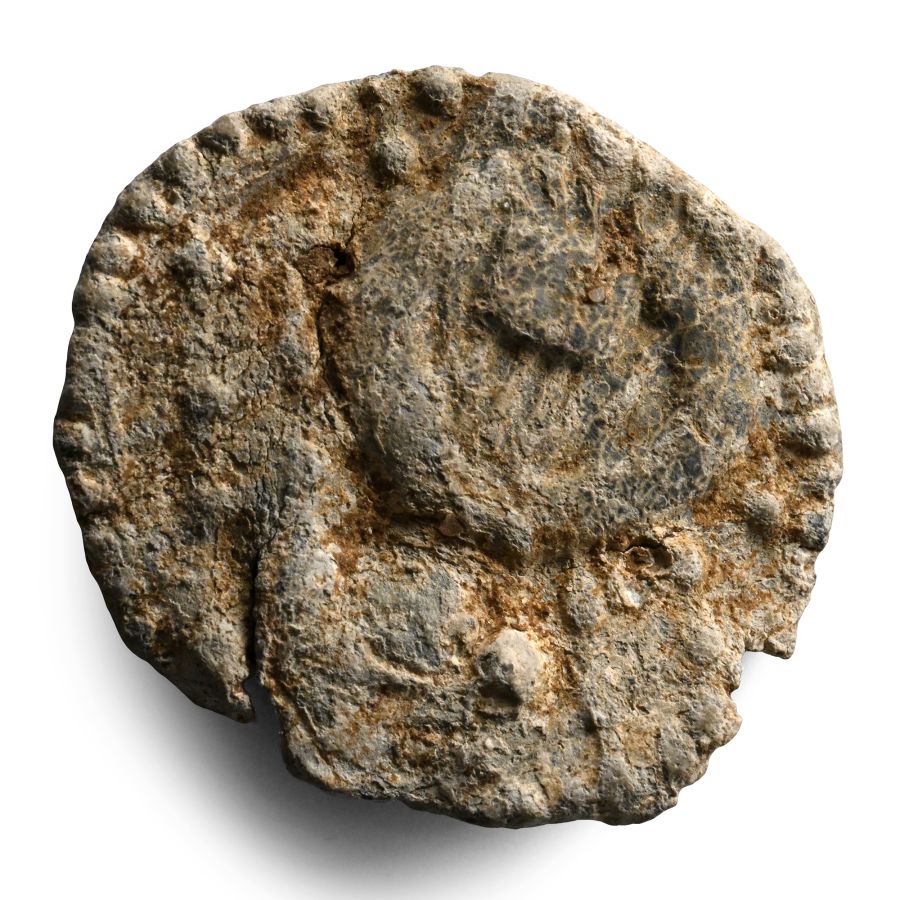
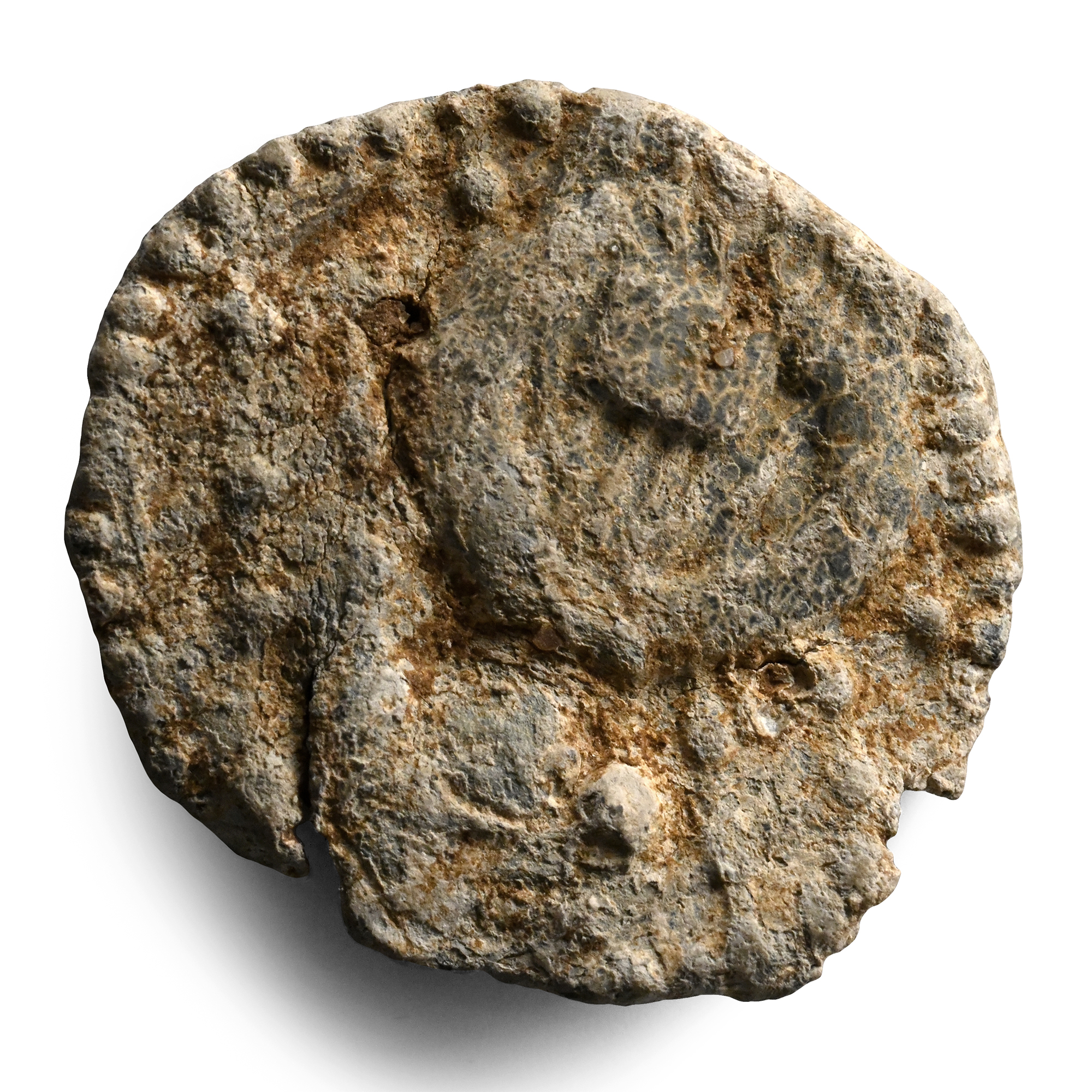
Medieval Pewter Pilgrim's Badge
14TH-15TH CENTURY A.D.
1 in. (4.55 grams, 24 mm).
Discoid in plan with pelletted border, facing bust holding a rectangular casket in both hands; perhaps Saint Pantaleon. [No Reserve]
ProvenanceFrom a retired Lincolnshire, UK, gentleman's collection, a long time member of the Pewter Society.
CONDITIONTimeLine Auctions follows a vetting process to ensure the authenticity and legality of all items, reinforcing our commitment to integrity and responsible trading. Each antiquity, antique, and coin lot undergoes thorough examination by a vetting committee of at least ten external specialists, professional trade association members, scientists, and archaeologists: Our Vetting Process
AUCTIONS:
TimeLine is a leading auction house specialising in antiquities, ancient art, collectables, natural history, coins, medals, and books. Our auctions offer museums, collectors, historians, and enthusiasts the opportunity to acquire unique and historically significant pieces.
-
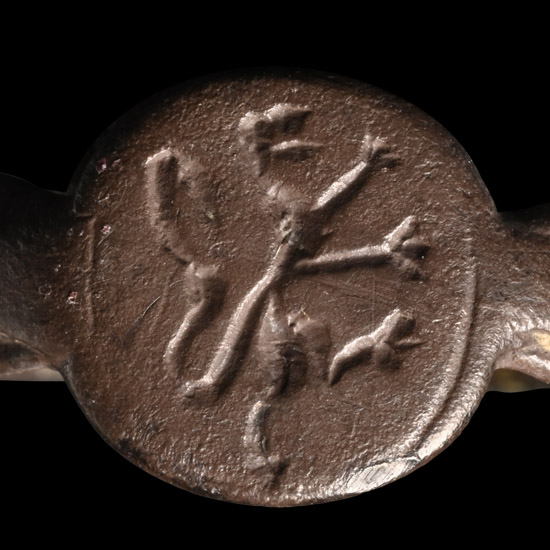
Medieval Bronze Ring with Rampant Heraldic Lion
Circa 14th-15th century A.D.Sold for (Inc. bp): £111
With median recess to each shoulder, discoid bezel with incuse lion rampant; accompanied by a museum-quality impression. 3.58 grams, 22.44 mm overall, 19.59 mm internal diameter (approximate size British T, USA 9 1/2, Europe 21.26, Japan 20)
From an old English collection, Bournemouth, UK. Ex Parthenon Gallery, London, UK, 2001. Property of a North London, UK, private collector. -
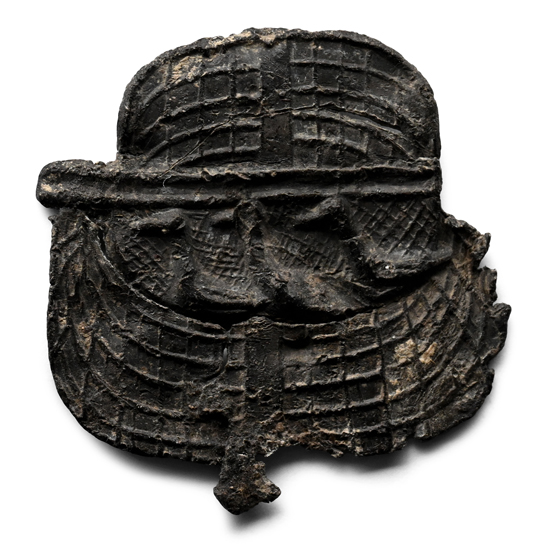
Medieval Pewter Pilgrim's Badge of Saint Werburgh
14th-15th century A.D.Sold for (Inc. bp): £169
Formed as a low-relief image of three geese on a field with wattle hurdle fence panels; inked collector's mark to the reverse 'BILL.' (Billingsgate, London). 2.71 grams, 30 mm
From a retired Lincolnshire, UK, gentleman's collection, a long time member of the Pewter Society.
St Werburgh (also Werburga in Latin documents) was an abbess, daughter of King Wulfhere of Mercia (died 675 AD ), whose emblem was geese. One of the best-known miracles was the command given by St Werburgh to a flock of geese causing havoc in the cornfields of Weedon. One version of the legend is that St Werburgh had been interested in a flock of geese that visited the convent meadow and bathed in the pond in Weedon. St Werburgh named her favourite goose with a black ring around his neck as Grayking. Subsequently, Grayking was eaten by the convent steward, Hugh, as the flock ruined his field of corn and he felt that they had not been punished enough by St Werburgh. When St Werburgh found out this she was furious with the steward. She found the bones of the goose Grayking and ordered him to arise. The bones reformed and Grayking the goose stood before her. -
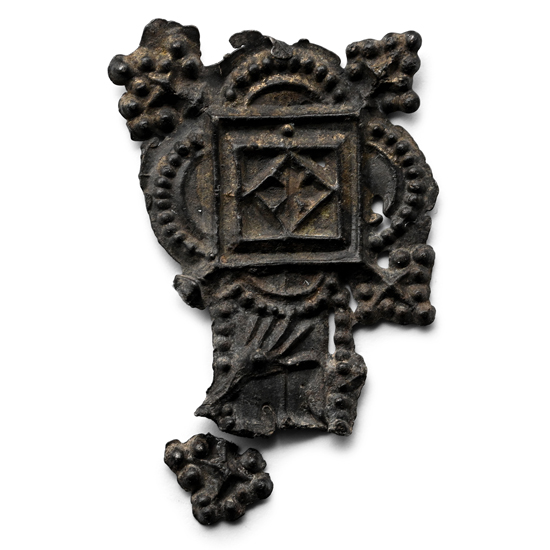
Medieval Pewter Pilgrim's Badge with Christ on Crucifix
Circa 14th-15th century A.D.Sold for (Inc. bp): £13
Comprising a quatrefoil with beaded border enclosing a square with a lozenge to the centre and a granule cluster at each node; above, torso and left hand of a figure; possibly from a crucifix with Corpus Christi. 2.71 grams, 28 mm
From a retired Lincolnshire, UK, gentleman's collection, a long time member of the Pewter Society.
