
Loading, please wait...
LOT 2144
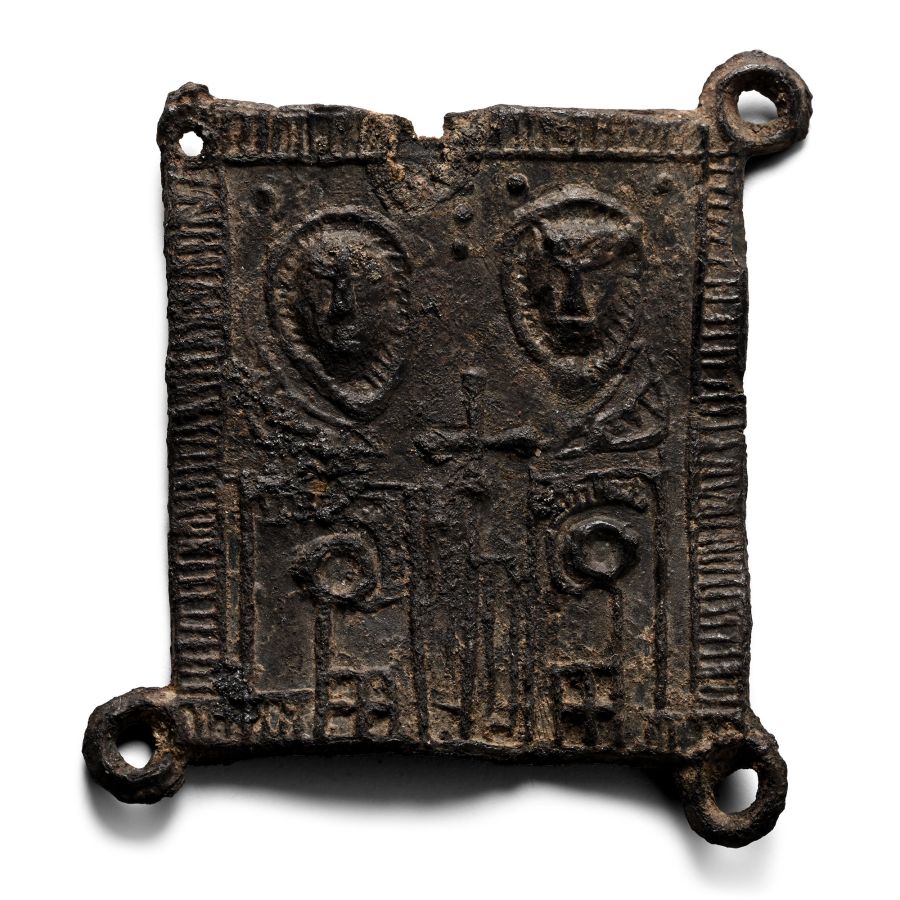
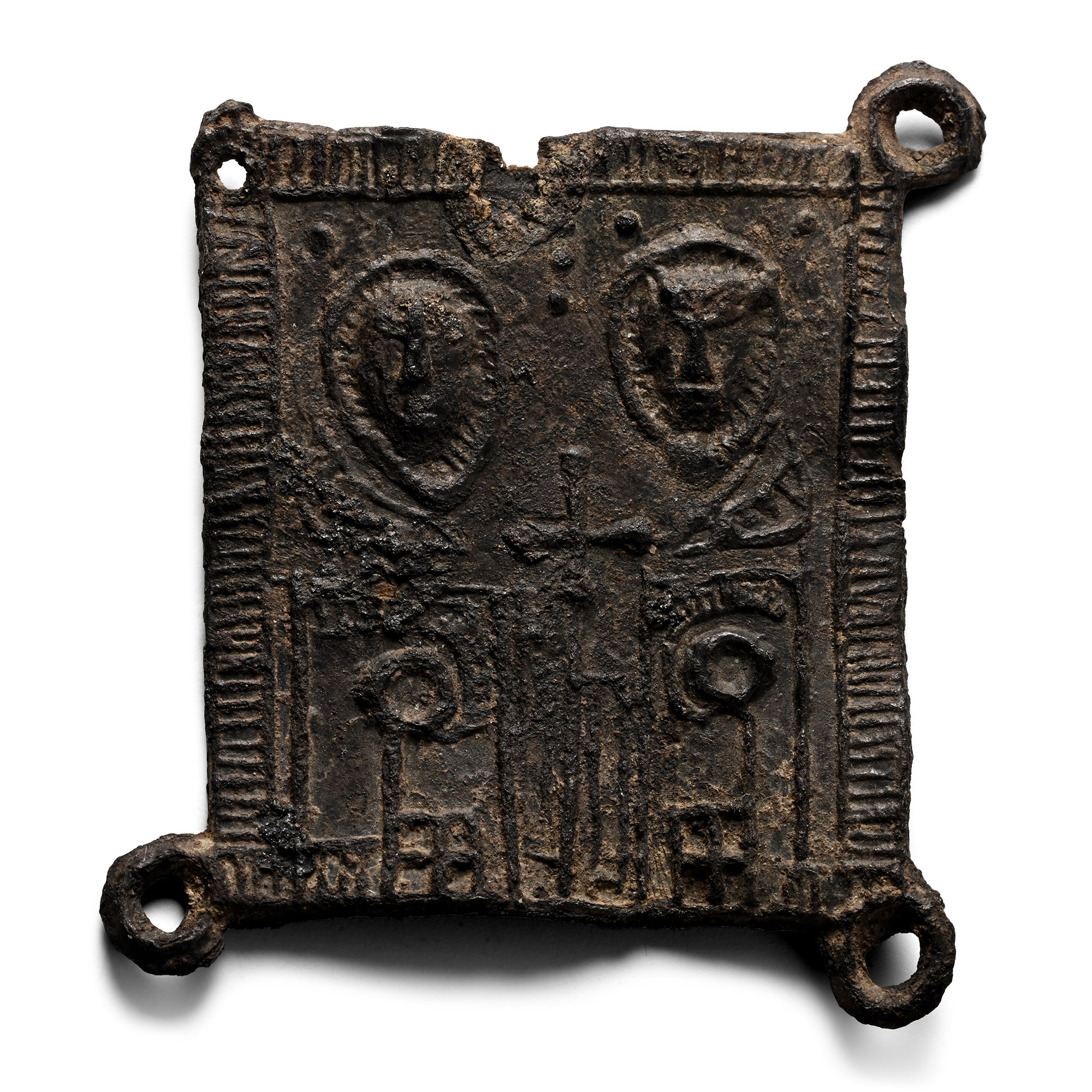
Medieval Pewter Pilgrim's Badge with Saints
CIRCA 14TH-15TH CENTURY A.D.
1 3/4 in. (9.18 grams, 45 mm high).
Rectangular with attachment loop at each corner (one absent), low-relief image of two facing figures with a cross between them, each with a key, Saints Peter and Paul. [No Reserve]
ProvenanceFrom a retired Lincolnshire, UK, gentleman's collection, a long time member of the Pewter Society.
LiteratureCf. Mitchiner, M., Medieval Pilgrim & Secular Badges, London, 1986, item 1056, for similar image.
CONDITIONTimeLine Auctions follows a vetting process to ensure the authenticity and legality of all items, reinforcing our commitment to integrity and responsible trading. Each antiquity, antique, and coin lot undergoes thorough examination by a vetting committee of at least ten external specialists, professional trade association members, scientists, and archaeologists: Our Vetting Process
AUCTIONS:
TimeLine is a leading auction house specialising in antiquities, ancient art, collectables, natural history, coins, medals, and books. Our auctions offer museums, collectors, historians, and enthusiasts the opportunity to acquire unique and historically significant pieces.
-
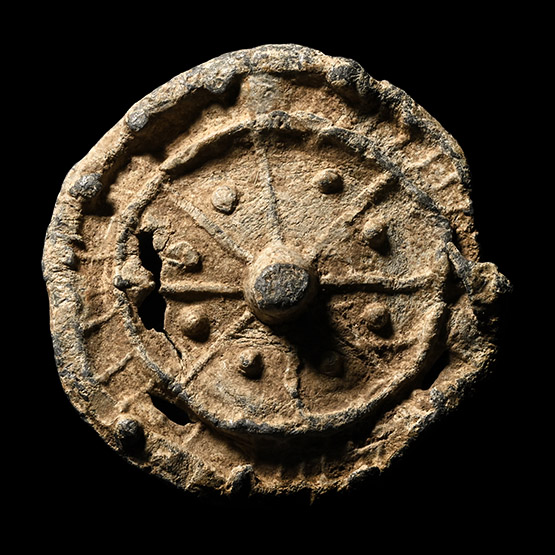
Medieval Pewter Circular Pilgrim's Badge
Circa 14th-15th century A.D.Sold for (Inc. bp): £7
Discoid in plan with raised rim and inner ring with spokes, central boss and radiating arms and interstitial pellets. 12.42 grams, 32 mm
From a retired Lincolnshire, UK, gentleman's collection, a long time member of the Pewter Society. -
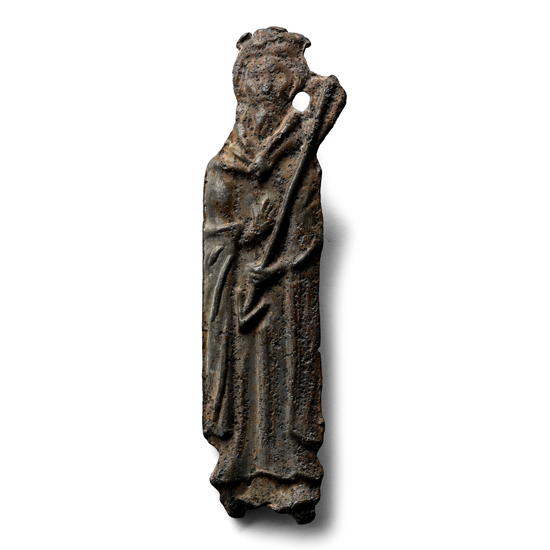
Medieval Pewter Pilgrim's Badge with Saint Edmund
14th-15th century A.D.Sold for (Inc. bp): £416
Modelled as a standing crowned and bearded figure in ankle-length robe holding a large arrow point-downwards; pin to reverse. 7.6 grams, 55 mm
From a retired Lincolnshire, UK, gentleman's collection, a long time member of the Pewter Society.
The legend of King (later Saint) Edmund was celebrated in medieval England. The king refused to submit to the Danes, who tied him to a tree and shot him with arrows thus providing him with holy martyrdom. -
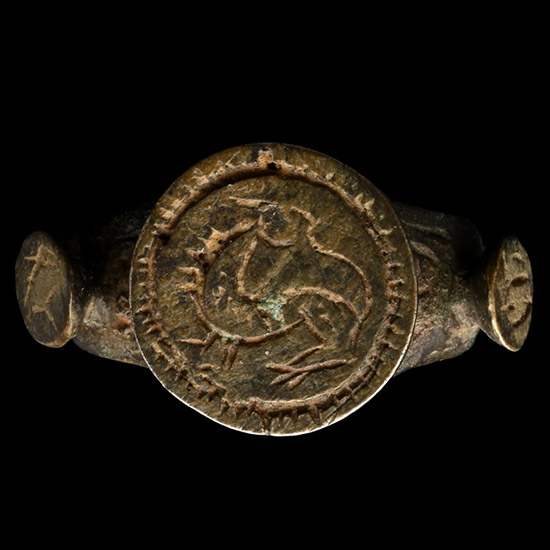
Medieval Silver Ring with Beast
Circa 15th-16th century A.D.Sold for (Inc. bp): £247
Comprising a keeled hoop with two raised discoid bosses on the shoulders, raised bezel with a regardant beast. 9.41 grams, 26.25 mm overall, 18.78 mm internal diameter (approximate size British O, USA 7, Europe 14.98, Japan 14)
Ex German art market, 2000s. Acquired from an EU collector living in London. From the collection of a Surrey, UK, gentleman.
