
Loading, please wait...
LOT 1816
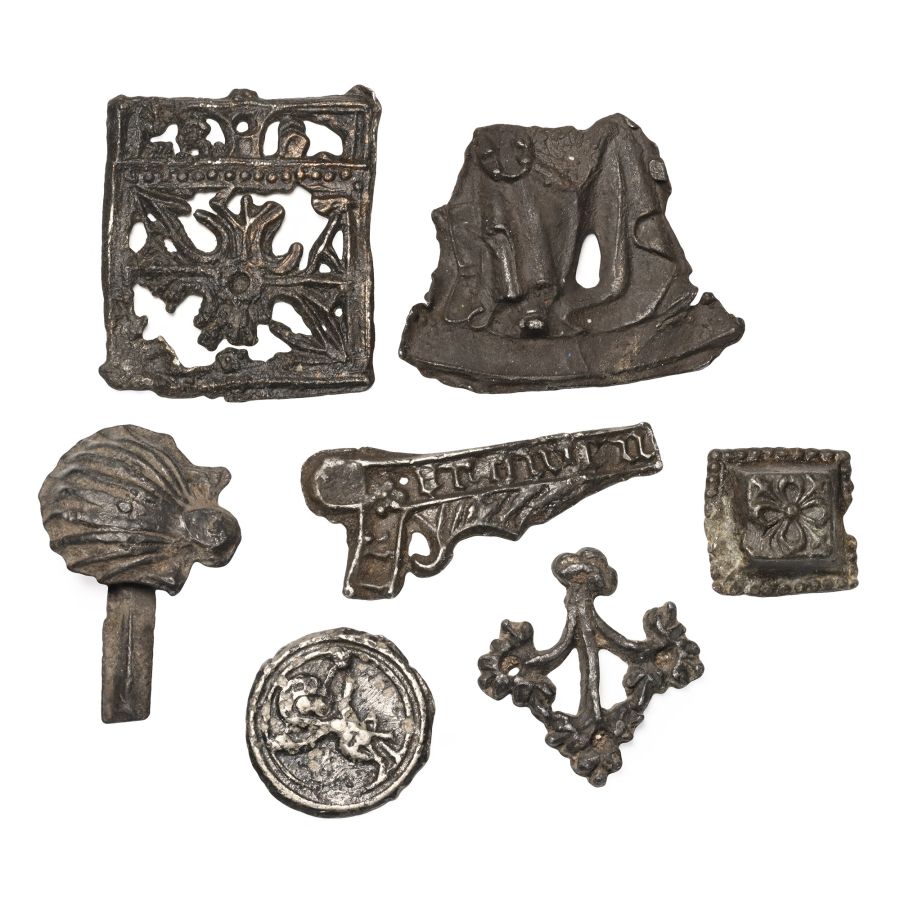
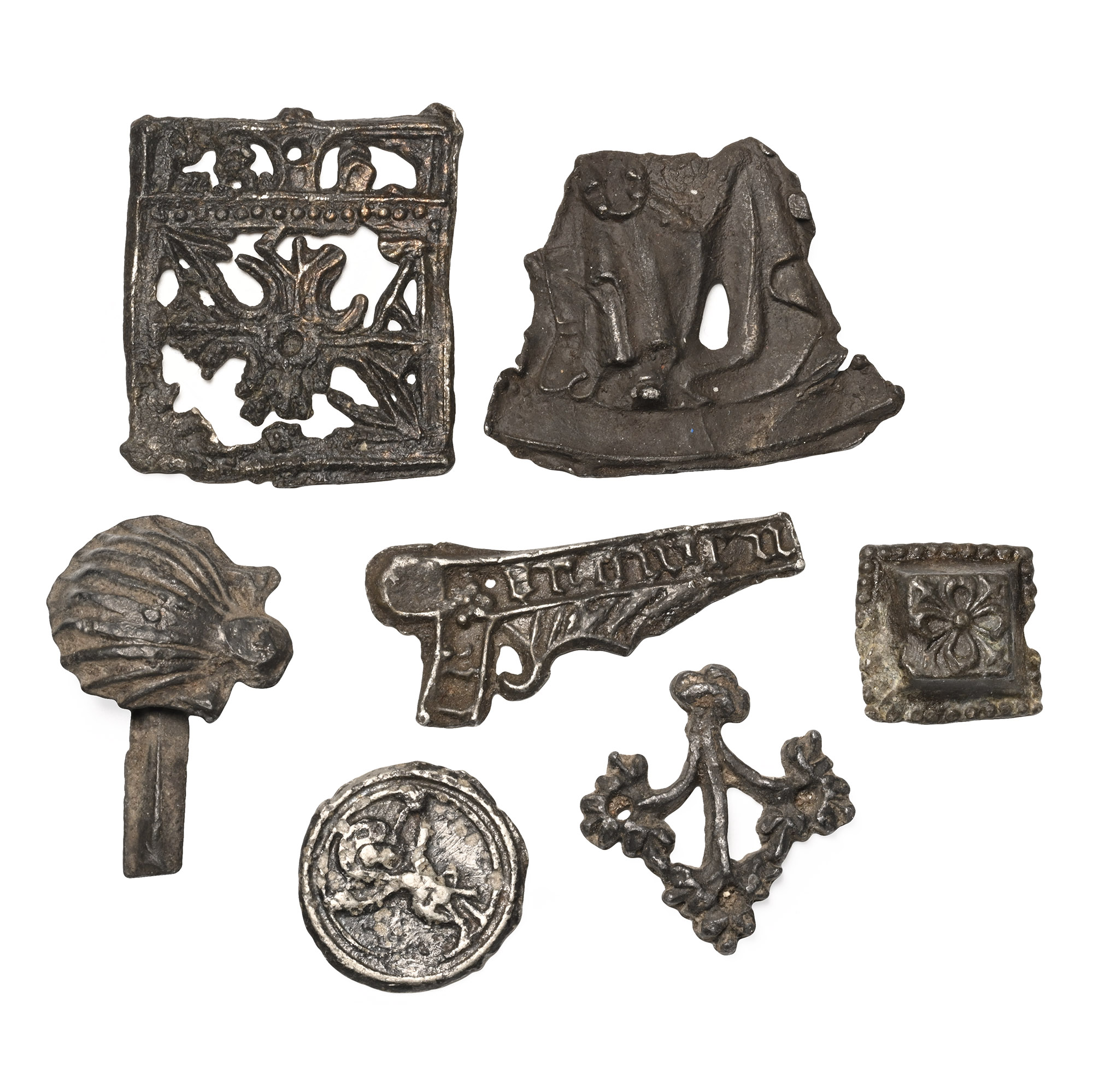
Medieval Pewter Pilgrim's Badge Fragment Collection
CIRCA 14TH-16TH CENTURY A.D.
1/2 - 1 1/8 in. (14.7 grams total,12-30 mm).
Comprising of discoid with Crucified Christ; openwork rectangular with foliage motif; shell-shaped with pin fragment; openwork trefoil; rectangular with raised centre and pelleted border; lower part of a figural scene; openwork with inscription fragment. [7, No Reserve]
ProvenanceEx Constable collection, 1990s.
Ex P. Morris collection.
TimeLine Auctions follows a vetting process to ensure the authenticity and legality of all items, reinforcing our commitment to integrity and responsible trading. Each antiquity, antique, and coin lot undergoes thorough examination by a vetting committee of at least ten external specialists, professional trade association members, scientists, and archaeologists: Our Vetting Process
AUCTIONS:
TimeLine is a leading auction house specialising in antiquities, ancient art, collectables, natural history, coins, medals, and books. Our auctions offer museums, collectors, historians, and enthusiasts the opportunity to acquire unique and historically significant pieces.
-
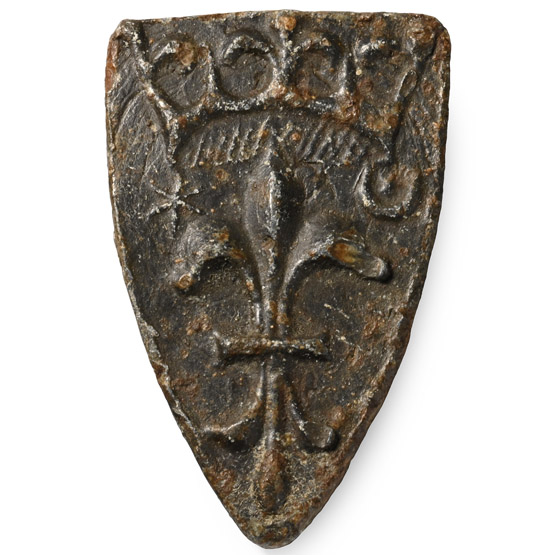
Medieval Lead Heraldic Trade Weight with Crowned Fleur-de-Lys
14th-15th century A.D.Sold for (Inc. bp): £169
Heater-shaped with high-relief of fleur-de-lys, crown, star and crescent moon. 65.4 grams, 50 mm
Found Lincolnshire, UK, in the 1990s. -
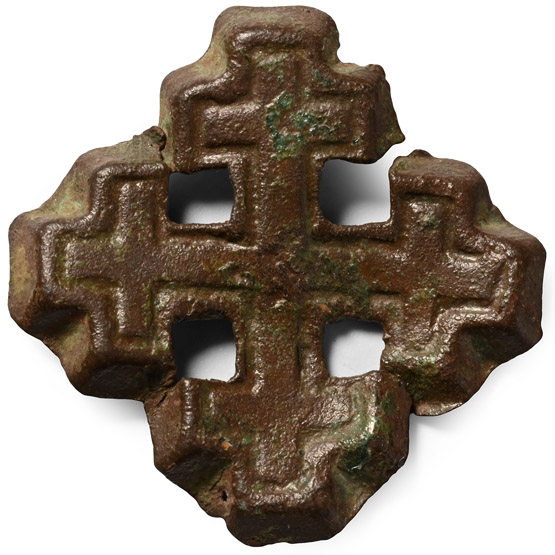
Medieval Bronze Knight's Holy Sepulchre Badge
Circa 13th-14th century A.D.Sold for (Inc. bp): £39
Formed as a cross-crosslet, the symbol of the Knights of the Holy Sepulchre, with punched-point border. 1.07 grams, 24 mm
Found Waltham St. Lawrence, Windsor and Maidenhead, UK.
The 'Equestrian Order of the Holy Sepulchre of Jerusalem' was an order of knighthood under the protection of the Pope, formed around 1099 AD by Duke Godfrey of Bouillon, the leader of the First Crusade. It was established for the protection of pilgrims travelling to the Holy Land and was recognised by a Papal Bull in about 1113 AD. -
.jpg)
Medieval Silver-Gilt Ring with Male Head Gemstone and Inscriptions
15th century A.D.Sold for (Inc. bp): £4,680
With applied outer layer of gold engraved with flowers and the words, “en bon an” (twice) (‘a good year’); the flat bezel with a recessed centre set with a medieval mother-of-pearl intaglio depicting a male bust in profile; supplied with a museum-quality impression. 4.72 grams, 23.64 mm overall, 20.45 mm internal diameter (approximate size British R 1/2, USA 8 3/4, Europe 19.38, Japan 18)
Found whilst searching with a metal detector in Dorset, UK, on Sunday, 30th December 2018. Acquired on the English art market. Accompanied by a copy of the British Museum's Portable Antiquities Scheme (PAS) report no.DEV-5E4EDA. This lot has been checked against the Interpol Database of stolen works of art and is accompanied by search certificate no.13069-248371.
The inscription is in black letter appears to read “en bon an”, a good year. The inscription is paralleled on a good number of 15th century rings, often also decorated with flowers and branches between the words, such as British Museum catalogue numbers AF.1057 and 1960,1103.1.
