
Loading, please wait...
LOT 1811
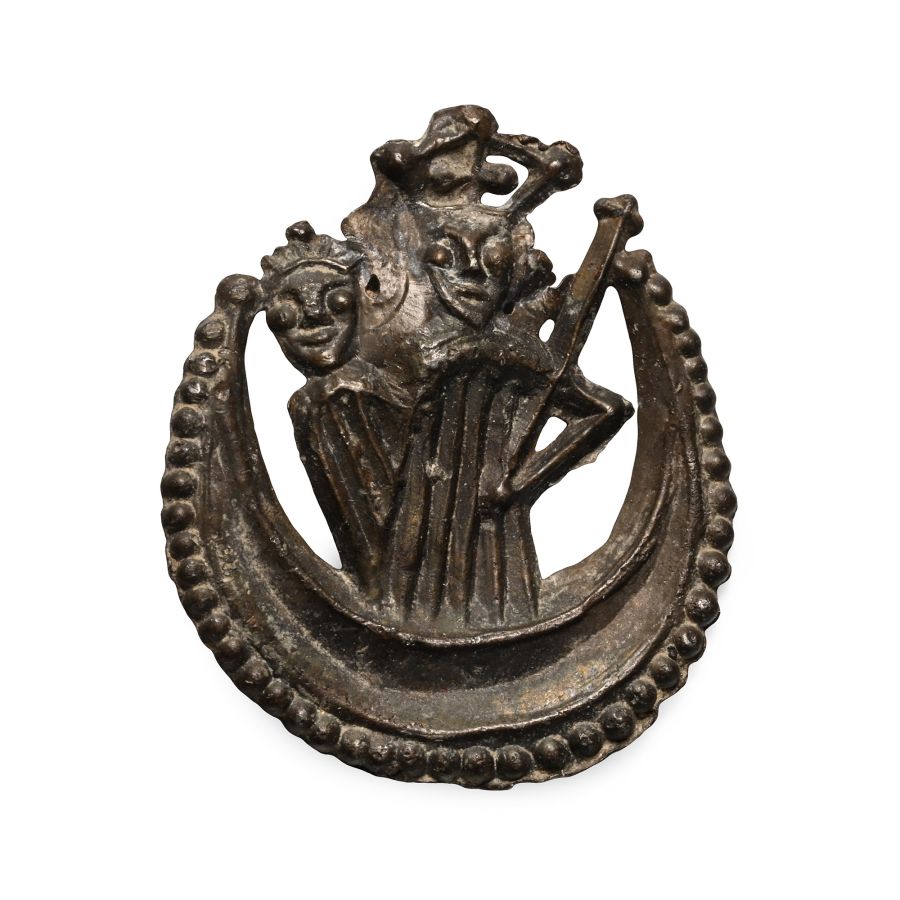
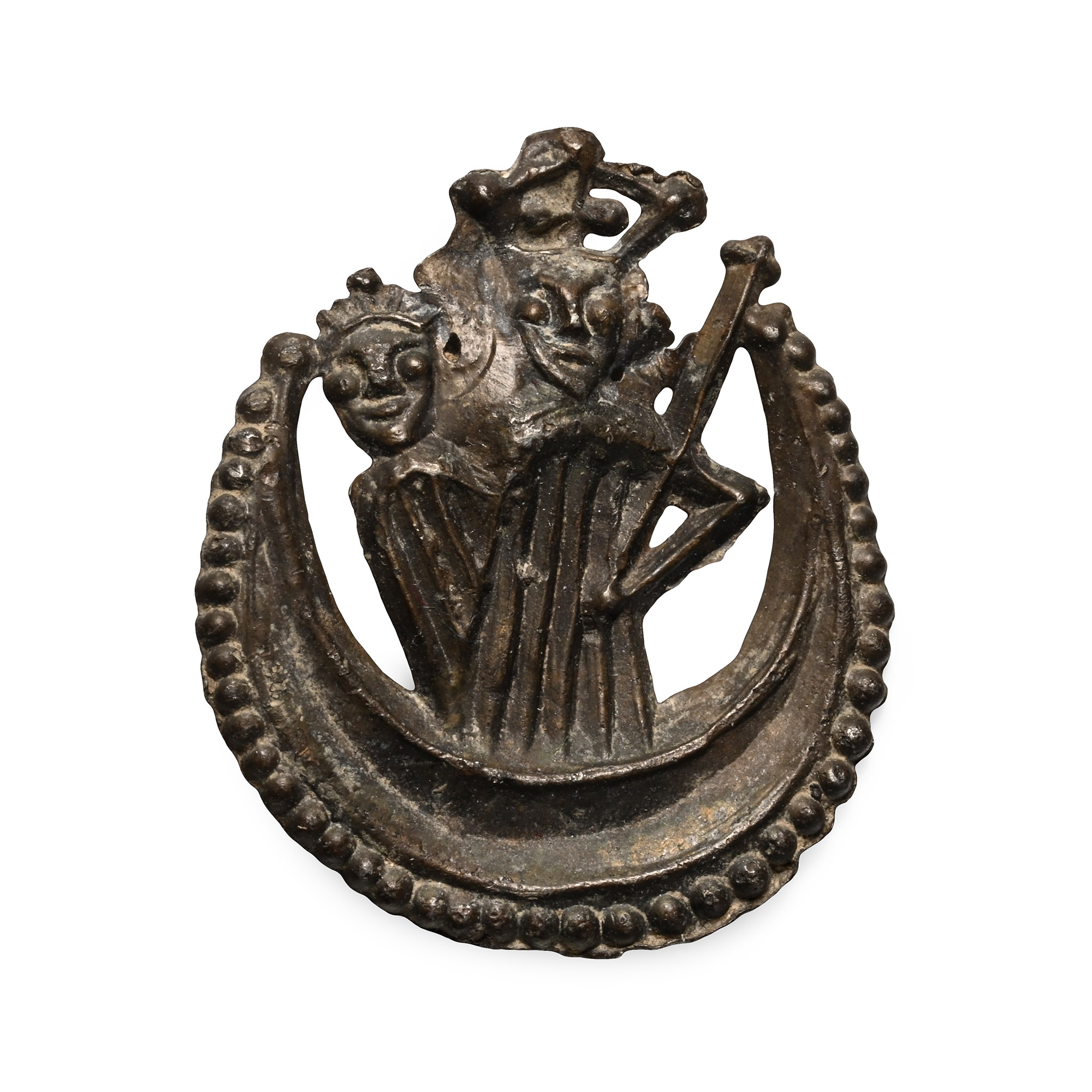
Medieval Pewter 'Our Lady of Willesden' Pilgrim's Badge
CIRCA 15TH-16TH CENTURY A.D.
1 in. (2.18 grams, 24 mm).
Showing Our Lady Mary of Willesden in a crescent moon, holding a fleur-de-lys sceptre over her left shoulder whilst the infant Christ is cradled in her right arm; pin absent; accompanied by a slip reading: 'Medieval. Pilgrim Badge of Our Lady of Willesden, C. 15th-16th century. Pilgrim pewter badge of Virgin Mary & child within a crescent moon with a beaded border. The Virgin Mary is crowned, holding a sceptre in her left hand & supporting the infant Christ with her right arm. Ref.: Similar example in Pilgrim Souvenirs & Secular Badges by B.Spencer, pg 150, No. 159a. Provenance: Ex Graham Slater Collection, Cambs, collected between 1980's-1990's." [No Reserve]
ProvenanceFrom the private collection of the late Graham Slater (1927-2024), Cambridge, UK, acquired 1980s-1990s.
Accompanied by a previous information slip.
TimeLine Auctions follows a vetting process to ensure the authenticity and legality of all items, reinforcing our commitment to integrity and responsible trading. Each antiquity, antique, and coin lot undergoes thorough examination by a vetting committee of at least ten external specialists, professional trade association members, scientists, and archaeologists: Our Vetting Process
AUCTIONS:
TimeLine is a leading auction house specialising in antiquities, ancient art, collectables, natural history, coins, medals, and books. Our auctions offer museums, collectors, historians, and enthusiasts the opportunity to acquire unique and historically significant pieces.
LOT 1811
Medieval Pewter 'Our Lady of Willesden' Pilgrim's Badge
Sold for (Inc. bp): £494
-
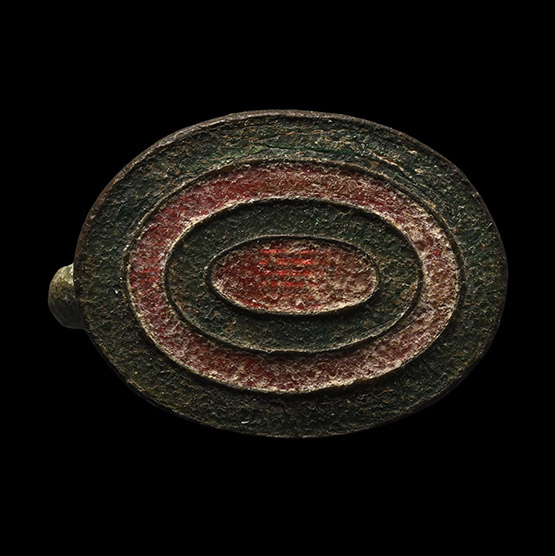
Eastern Medieval Enamelled Bronze Ring
11th-13th century A.D.Sold for (Inc. bp): £78
Comprising a round-section hoop and a large oval disc bezel; the bezel with concentric voids filled with enamel. 7.42 grams, 27.10 mm overall, 21.19 mm internal diameter (approximate size British S 1/2, USA 9 1/4, Europe 20.63, Japan 19)
Found UK. Acquired on the UK and EU art market before 2000. From the private collection of a Surrey, UK, gentleman.
This type of ring with a very large oval bezel finds a good parallel with a bronze specimen found in the area of Smederevo. The use of the enamel could suggest the continuation of the ancient Roman tradition in the territories under the Eastern Roman Empire. -
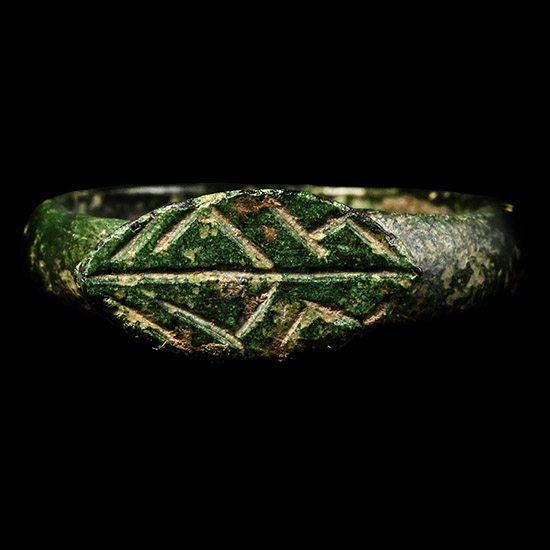
Eastern Medieval Bronze Ring with Chevron
15th century A.D.Sold for (Inc. bp): £46
Comprising a D-section hoop and a raised lentoid-shaped bezel with chevron and linear motifs. 4.48 grams, 22.84 mm overall, 16.25 mm internal diameter (approximate size British K 1/2, USA 5 1/2, Europe 10.58, Japan 10)
Acquired on the UK and EU art market before 2000. From the private collection of a Surrey, UK, gentleman.
These kinds of rings, possibly used as signet rings, find parallels with artefacts from Eastern Europe, especially in the area of Smederevo. -
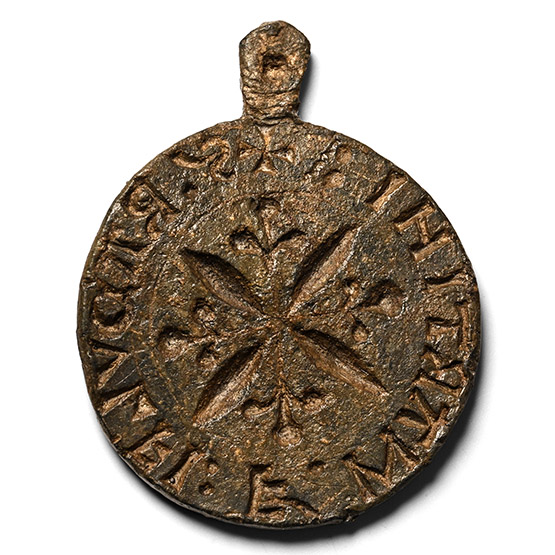
Medieval Lead Seal Matrix of Ralph Son of Martin
13th century A.D.Sold for (Inc. bp): £78
Discoid in plan with suspension lug, incuse quatrefoil motif with trefoils between, legend '+S' RADVLFI : MARTINI:' (seal of Ralph son of Martin). 23.4 grams, 42 mm
Found Norfolk, UK.
