
Loading, please wait...
LOT 0372
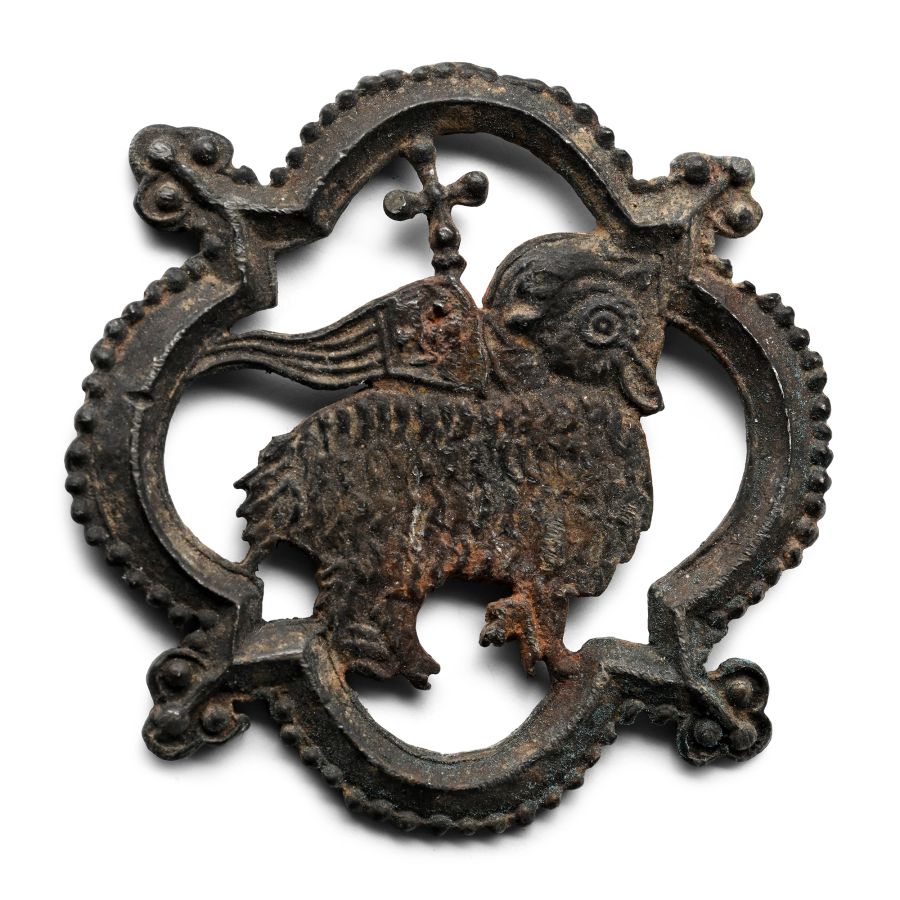
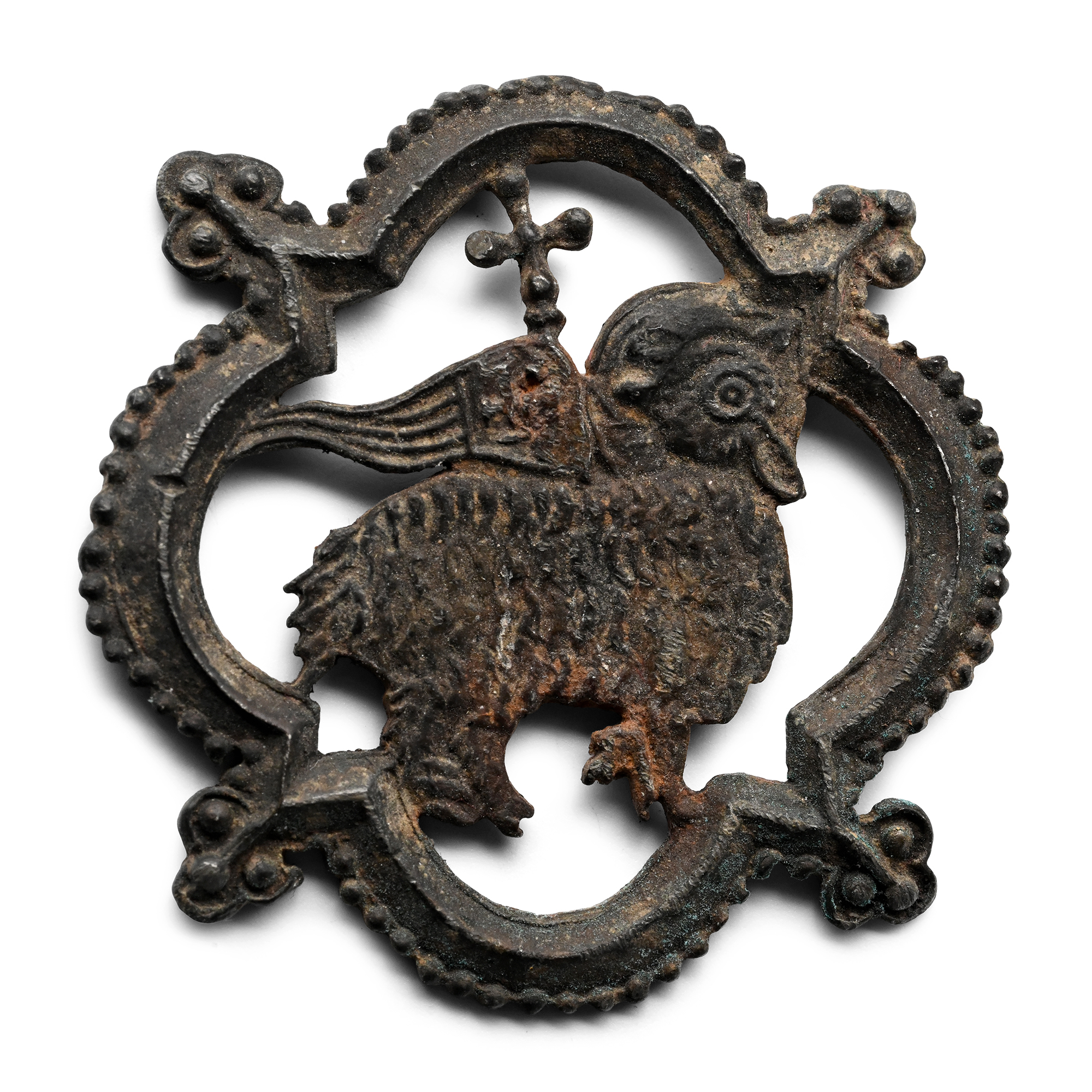
Medieval Pewter Agnus Dei Pilgrim's Badge
14TH-15TH CENTURY A.D.
1 3/4 in. (8.39 grams, 45 mm).
Quatrefoil frame with quatrefoil at each angle, beaded outer edge; central Agnus Dei motif with head reverse, cross and banner above.
ProvenanceFrom a retired Lincolnshire, UK, gentleman's collection, a long time member of the Pewter Society.
LiteratureCf. Mitchiner, M., Medieval Pilgrim & Secular Badges, London, 1986, item 608, for an annular version of the type.
CONDITIONTimeLine Auctions follows a vetting process to ensure the authenticity and legality of all items, reinforcing our commitment to integrity and responsible trading. Each antiquity, antique, and coin lot undergoes thorough examination by a vetting committee of at least ten external specialists, professional trade association members, scientists, and archaeologists: Our Vetting Process
AUCTIONS:
TimeLine is a leading auction house specialising in antiquities, ancient art, collectables, natural history, coins, medals, and books. Our auctions offer museums, collectors, historians, and enthusiasts the opportunity to acquire unique and historically significant pieces.
-
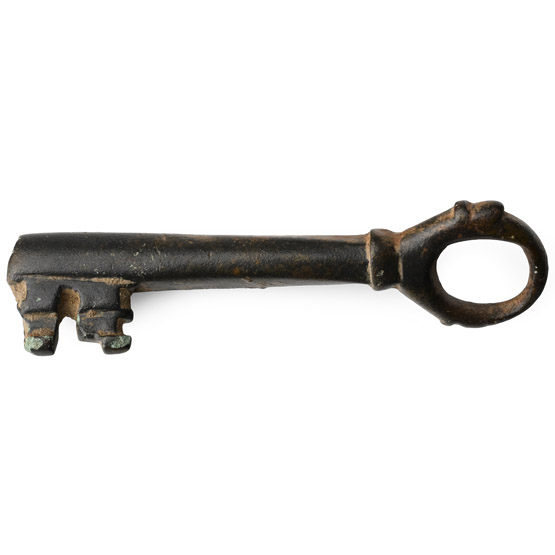
Large Medieval Bronze Door Key
14th-15th century A.D.Sold for (Inc. bp): £117
Barrel-type with lateral spurs to the bow, bit with stepped ward. 26.6 grams, 77 mm
Found Lincolnshire, UK. -
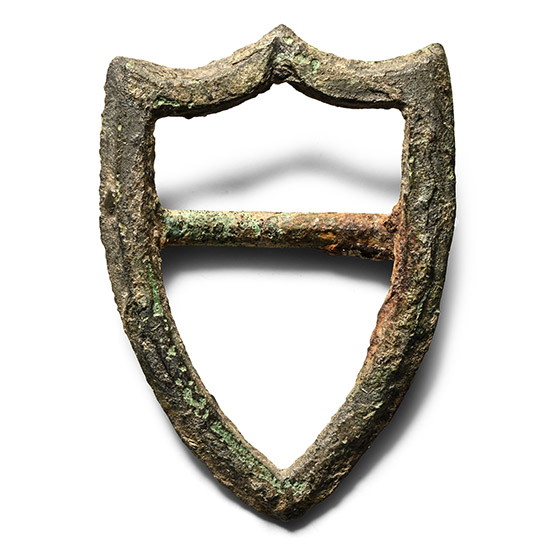
Medieval Bronze Shield-Shaped Buckle
Circa 1350 A.D.Sold for (Inc. bp): £13
Formed as an openwork shield with a transverse bar. 4.53 grams, 34 mm
From a retired Lincolnshire, UK, gentleman's collection, a long time member of the Pewter Society. -
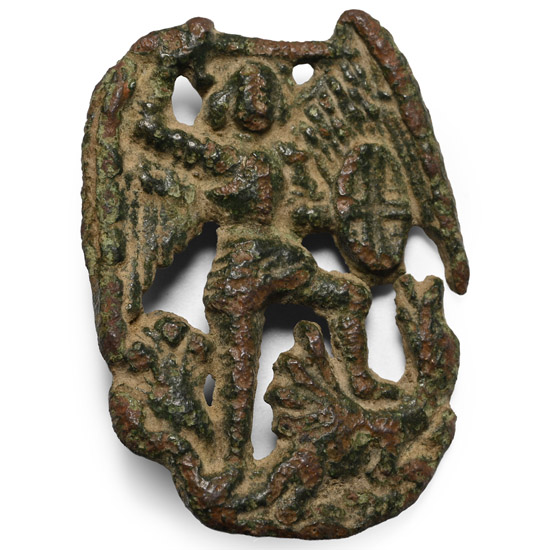
Medieval Pewter Archangel Michael Standing Over Prostrate Dragon Pilgrim's Badge
Circa 14th-15th century A.D.Sold for (Inc. bp): £286
Ellipsoid type with low-relief image of winged archangel advancing with sword raised and shield held forward, one foot resting on a supine dragon; stud to reverse. 4.69 grams, 30 mm
From a retired Lincolnshire, UK, gentleman's collection, a long time member of the Pewter Society.
Revelation 12:7-12 Michael Defeats the Dragon ‘Now war arose in heaven, Michael and his angels fighting against the dragon; and the dragon and his angels fought, but they were defeated, and there was no longer any place for them in heaven. And the great dragon was thrown down, that ancient serpent, who is called the Devil and Satan, the deceiver of the whole world, he was thrown down to the earth, and his angels were thrown down with him.’
