
Loading, please wait...
_900x900.jpg "Medieval Personal Lead Seal Matrix")
_200x200.jpg "Medieval Personal Lead Seal Matrix")
.jpg "Medieval Personal Lead Seal Matrix")
LOT 2096
Medieval Personal Lead Seal Matrix
CIRCA 14TH CENTURY A.D.
1 in. (15.3 grams, 26.5 mm).
With central cross motif and legend to the border 'S’ADE:FABRI’ (seal of Adam (the) Smith). [No Reserve]
ProvenanceFound Gloucestershire, UK.
Acquired from the early 1980s.
From the private collection of a late Gloucestershire, UK, gentleman; thence by descent.
TimeLine Auctions follows a vetting process to ensure the authenticity and legality of all items, reinforcing our commitment to integrity and responsible trading. Each antiquity, antique, and coin lot undergoes thorough examination by a vetting committee of at least ten external specialists, professional trade association members, scientists, and archaeologists: Our Vetting Process
AUCTIONS:
TimeLine is a leading auction house specialising in antiquities, ancient art, collectables, natural history, coins, medals, and books. Our auctions offer museums, collectors, historians, and enthusiasts the opportunity to acquire unique and historically significant pieces.
-
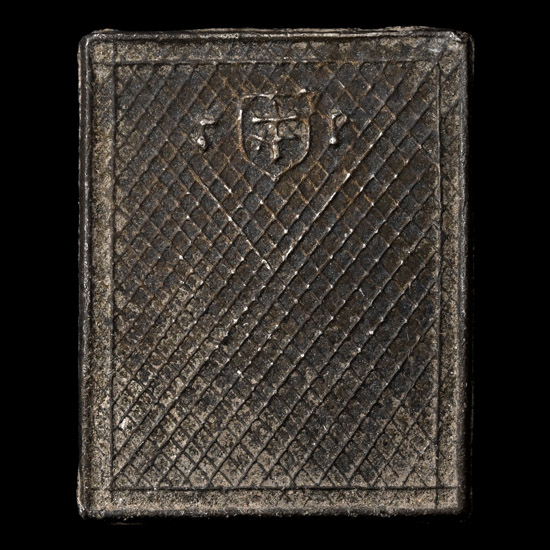
Medieval Pewter Miniature Plaque with Shield
14th-16th century A.D.Sold for (Inc. bp): £33
Rectangular panel with low-relief hatching to both faces; obverse with heater shield bearing 'AF' monogram flanked by initials 'A' and 'F'; probably from a miniature furniture item. 5.10 grams, 41.18 mm
From the private collection of a European gentleman (1942-2024), formed since the 1970s. -
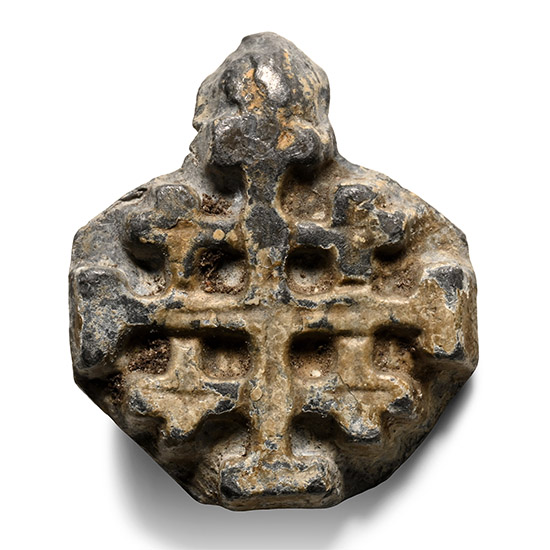
Medieval Bronze Jerusalem Cross Pilgrim's Pendant
14th-15th century A.D.Sold for (Inc. bp): £52
Hexagonal pendant with raised Jerusalem cross, loop at the top. 20.9 grams, 30 mm
From a retired Lincolnshire, UK, gentleman's collection, a long time member of the Pewter Society. -
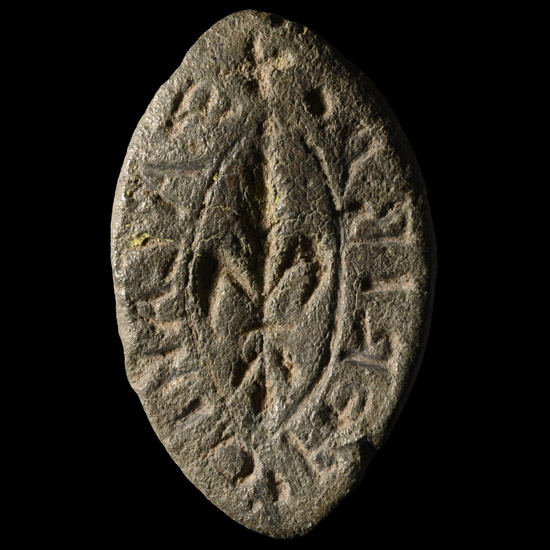
Medieval Lead Vesica-Shaped Personal Seal Matrix
Lincolnshire, circa 13th century A.D.Sold for (Inc. bp): £52
Scaphoid in plan with chamfered edges and raised fleur-de-lys motif; underside with central fleur-de-lys and border with legend '+ S' ALANI D'FERIBY' for 'seal of Alan of Ferriby'. 11 grams, 31 mm
Found Lincolnshire, UK. Acquired on the UK art market from the 1990s. From the private collection of a Lincolnshire, UK, gentleman.
